
Title
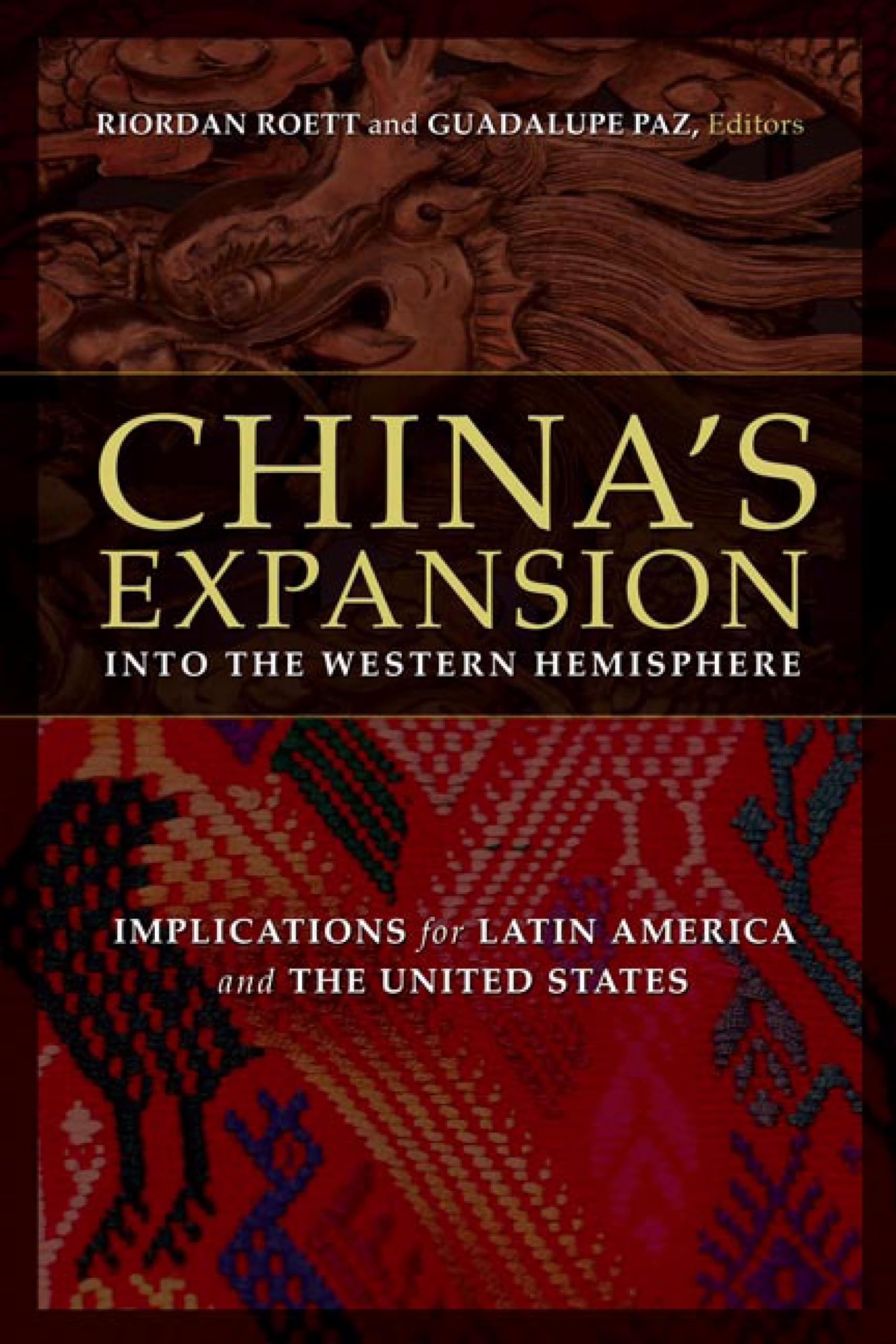
China'S Expansion Into The Western Hemisphere: Implications For Latin America And The United States,Used
Sold by Ergodebooks, an authorized reseller.
Returns accepted within 30 days | support@ergodebooks.com
Shipping Information
- Free Standard Shipping — United States only
- Processing Time: 3–5 business days
- Estimated Delivery: 6–10 business days after dispatch
- Double-boxed, fully insured & discreetly packaged
- Tracking number sent via email once dispatched
Returns & Refund
Returns accepted within 30 days of delivery.
Damaged or Defective Item
Free return shipping + replacement or full refund
Wrong Item Received
Free return shipping + replacement or full refund
Change of Mind
Return shipping at customer's expense · 25% restocking fee applies
Payment Option

With President Hu Jintao's November 2004 visit to Latin America, China signaled to the rest of the world its growing interest in the region. Many observers welcome this development, highlighting the benefits of increased trade and investment, as well as diplomatic cooperation, for both sides. But other analysts have raised concerns about the relationship's impact on Latin American competitiveness and its implications for U.S. influence in Washington's traditional backyard. In C hina's Expansion into the Western Hemisphere, experts from Latin America, China, and the United States, as well as Europe, analyze the history of this triangular relationship and the motivations of each of the major players. Several chapters focus on China's growing economic ties to the region, including Latin America's role in China's search for energy resources worldwide. Other essays highlight the geopolitical implications of Chinese hemispheric policy and set recent developments in the broader context of China's role in the developing world. Together, they provide an absorbing look at a particularly sensitive aspect of China's emergence as a world power. Contributors include Christopher Alden (London School of Economics), Robert Devlin (ECLAC), Francisco Gonzlez (Johns HopkinsSAIS), Monica Hirst (Torcuato Di Tella University), Josh Kurlantzick (Carnegie Endowment for International Peace), Xiang Lanxin (Graduate Institute of International Studies, Geneva), Luisa Palacios (Barclays), Jiang Shixue (Chinese Academy of Social Sciences), Barbara Stallings (Brown University), Juan Tokatlin (San Andrs University), and Zheng Kai (Fudan University).'
⚠️ WARNING (California Proposition 65):
This product may contain chemicals known to the State of California to cause cancer, birth defects, or other reproductive harm.
For more information, please visit www.P65Warnings.ca.gov.