
Title
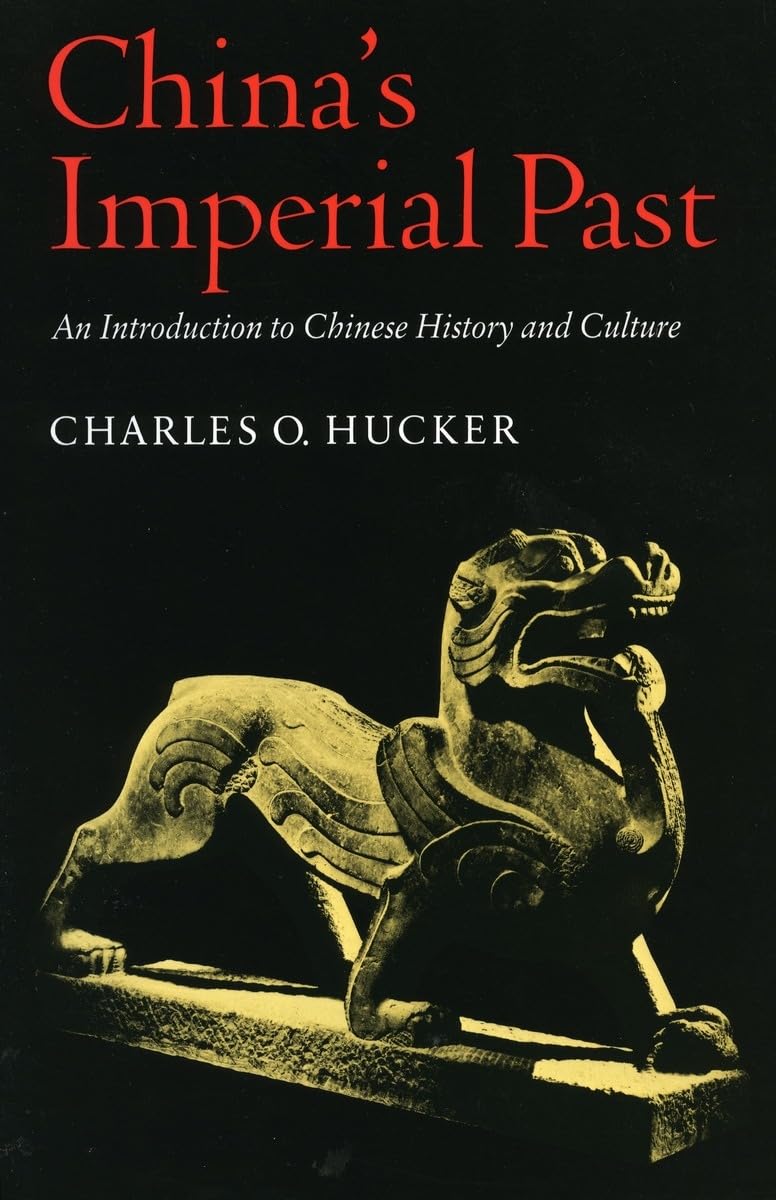
Stanford University Press China’s Imperial Past: An Introduction to Chinese History and Culture Book
Sold by Ergodebooks, an authorized reseller.
Returns accepted within 30 days | support@ergodebooks.com
Shipping Information
- Free Standard Shipping — United States only
- Processing Time: 3–5 business days
- Estimated Delivery: 6–10 business days after dispatch
- Double-boxed, fully insured & discreetly packaged
- Tracking number sent via email once dispatched
Returns & Refund
Returns accepted within 30 days of delivery.
Damaged or Defective Item
Free return shipping + replacement or full refund
Wrong Item Received
Free return shipping + replacement or full refund
Change of Mind
Return shipping at customer's expense · 25% restocking fee applies
Payment Option

Discover a comprehensive exploration of Chinese civilization through "China's Imperial Past," a scholarly work intended for readers interested in human history and culture. This book serves as an accessible yet in-depth survey of China's vast historical landscape, spanning from prehistory to 1850.
Unlike traditional historical surveys that often focus on specific dynasties or periods, this book offers a balanced narrative that covers three major epochs of Chinese history. The author emphasizes the interpretive aspects of history, highlighting patterns of change and development while preserving the unique characteristics that define traditional Chinese civilization. With ample translations of Chinese poetry, including over twenty exquisite pieces from renowned T'ang poets, this work enriches readers' understanding of China's literary and artistic achievements.
Key Features:- Comprehensive Coverage: Explores three major periods of Chinese history: formative age, early imperial age, and later imperial age.
- Interpretive Approach: Focuses on patterns of change and development rather than just chronological facts.
- Literary and Artistic Focus: Includes translations of over twenty Chinese poems, showcasing the richness of Chinese literature.
- Topical Chapters: Each epoch is divided into detailed chapters covering history, political institutions, religion, and the arts.
- Visual Aids: Contains 47 plates, eight maps, and various charts to enhance understanding.
- Additional Resources: Features appendices, a detailed chronological table, notes on the Chinese language, and reading suggestions.
- Well-Respected Publisher: Published by Stanford University Press, ensuring academic credibility.
"China's Imperial Past" is an invaluable resource for students, educators, and history enthusiasts seeking to deepen their understanding of Chinese civilization. Its balanced narrative and interpretive insights make it suitable for anyone interested in the complexities of human history and culture. This book not only serves as a historical account but also as a gateway to appreciating the rich literary and artistic traditions of China.
⚠️ WARNING (California Proposition 65):
This product may contain chemicals known to the State of California to cause cancer, birth defects, or other reproductive harm.
For more information, please visit www.P65Warnings.ca.gov.
- Q: How many pages are in China's Imperial Past? A: This book contains four hundred ninety-two pages. It offers a detailed exploration of Chinese history and culture.
- Q: What is the binding type of this book? A: This book is available in paperback binding. This makes it lightweight and flexible for easy handling.
- Q: What are the dimensions of China's Imperial Past? A: The book measures six inches in length, one point twenty-three inches in width, and nine point zero two inches in height. These dimensions make it a standard-sized paperback.
- Q: Who is the author of China's Imperial Past? A: The author is Charles O. Hucker. He provides a comprehensive analysis of Chinese civilization through various historical epochs.
- Q: What is the main focus of this book? A: The book focuses on the major periods of Chinese history, emphasizing cultural, political, and social developments. It aims to integrate these complexities into a cohesive narrative.
- Q: Can this book be read by beginners in Chinese history? A: Yes, this book is suitable for general readers and beginners. It presents Chinese history in an accessible manner without overwhelming details.
- Q: What topics are covered in China's Imperial Past? A: The book covers general history, political institutions, socioeconomic organization, religion, thought, literature, and the arts. Each topic is explored in thematic chapters.
- Q: Is there a specific reading level recommended for this book? A: There is no specific reading level, but it is aimed at general readers interested in history and culture. It is written in a clear and engaging style.
- Q: How should I care for this paperback book? A: To keep the book in good condition, store it upright in a cool, dry place. Avoid exposing it to direct sunlight or moisture.
- Q: Are there any illustrations or maps in this book? A: Yes, the book includes forty-seven plates and eight maps. These visual elements enhance the understanding of Chinese historical contexts.
- Q: What if the book arrives damaged? A: If the book arrives damaged, you should contact the seller for a return or replacement. Most sellers have policies in place for such issues.
- Q: Does this book include a bibliography or reading suggestions? A: Yes, the book includes suggestions for supplementary reading. This can help readers explore further topics of interest in Chinese history.
- Q: Can I find translations of poetry in this book? A: Yes, there are translations of more than twenty exquisite poems from notable T'ang poets. These translations add cultural depth to the historical analysis.
- Q: Is this book focused only on the early dynasties? A: No, the book treats three major epochs of Chinese history equally. It covers from prehistory to the mid-nineteenth century.
- Q: Is China's Imperial Past suitable for academic study? A: Yes, it can serve as a valuable resource for academic study in Chinese history. Its comprehensive approach makes it suitable for both casual readers and scholars.