
Title
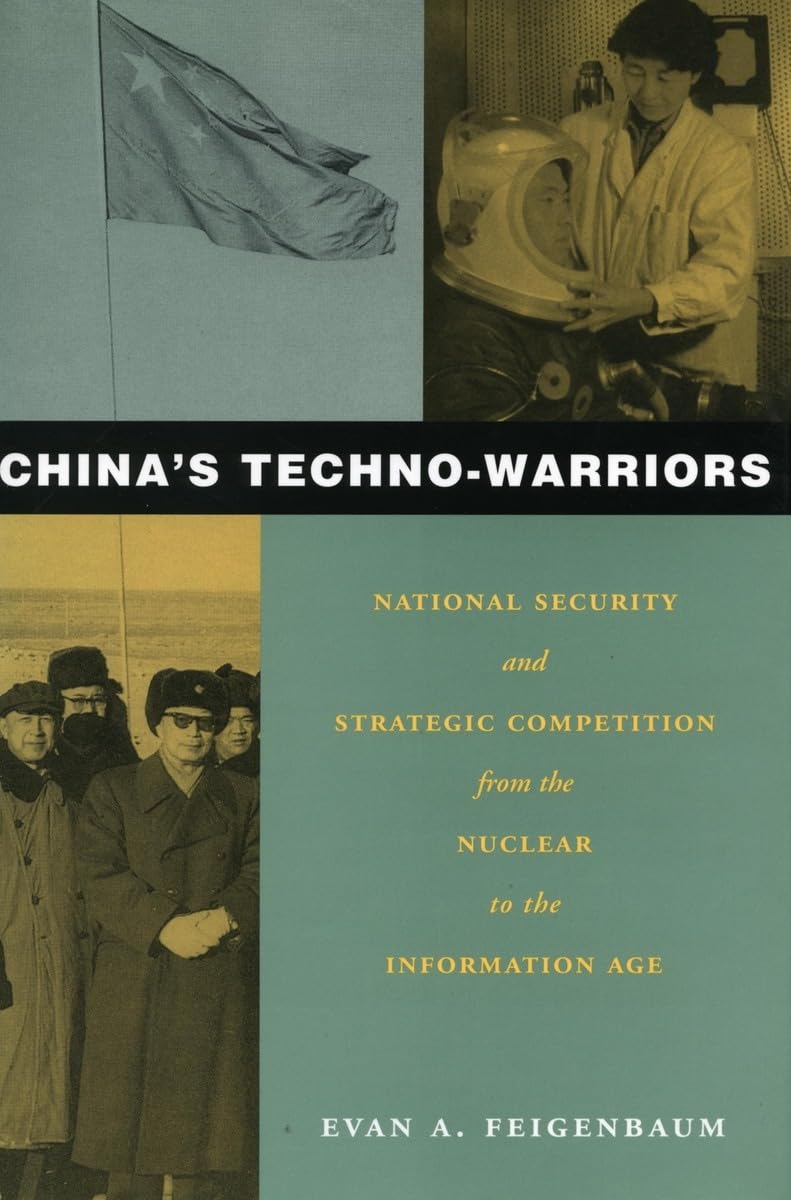
China's TechnoWarriors: National Security and Strategic Competition from the Nuclear to the Information Age,New
Sold by Ergodebooks, an authorized reseller.
Returns accepted within 30 days | support@ergodebooks.com
Shipping Information
- Free Standard Shipping — United States only
- Processing Time: 3–5 business days
- Estimated Delivery: 6–10 business days after dispatch
- Double-boxed, fully insured & discreetly packaged
- Tracking number sent via email once dispatched
Returns & Refund
Returns accepted within 30 days of delivery.
Damaged or Defective Item
Free return shipping + replacement or full refund
Wrong Item Received
Free return shipping + replacement or full refund
Change of Mind
Return shipping at customer's expense · 25% restocking fee applies
Payment Option

In the spring of 1987, the father of Chinas strategic missile program, Qian Xuesen, told colleagues that China must steel itself for a century of sustained intellectual warfare. His use of a military metaphor was not a linguistic quirk, but reflected the central role of the military in Chinas emergence as a modern state, especially in the period since the establishment of the People's Republic of China in 1949. Over the course of the Communist era, a uniquely military approach to China's development became embedded in the ideologies of the country's political leadership, in policy choices about national security and economic development, and in the organizational solutions adopted to put these policies into practice.This book tells the story of how and why the Chinese military came to play such a powerful role in China's economic and institutional development. It weaves together four stories: Chinese views of technology since 1950, the role of the military in Chinas political and economic life, the evolution of open and flexible conceptions of public management in China, and the technological dimensions of the rise of Chinese power.But the book primarily explores and explains a paradox. This military approach to technology and development emerged during China's period of greatest external threat, 195069. Yet these policies and management methods persist even as China enjoys perhaps its most benign strategic environment since the 1840s.
⚠️ WARNING (California Proposition 65):
This product may contain chemicals known to the State of California to cause cancer, birth defects, or other reproductive harm.
For more information, please visit www.P65Warnings.ca.gov.