
Title
Chips 2020: A Guide to the Future of Nanoelectronics (The Frontiers Collection),Used
Sold by Ergodebooks, an authorized reseller.
Returns accepted within 30 days | support@ergodebooks.com
Shipping Information
- Free Standard Shipping — United States only
- Processing Time: 3–5 business days
- Estimated Delivery: 6–10 business days after dispatch
- Double-boxed, fully insured & discreetly packaged
- Tracking number sent via email once dispatched
Returns & Refund
Returns accepted within 30 days of delivery.
Damaged or Defective Item
Free return shipping + replacement or full refund
Wrong Item Received
Free return shipping + replacement or full refund
Change of Mind
Return shipping at customer's expense · 25% restocking fee applies
Payment Option

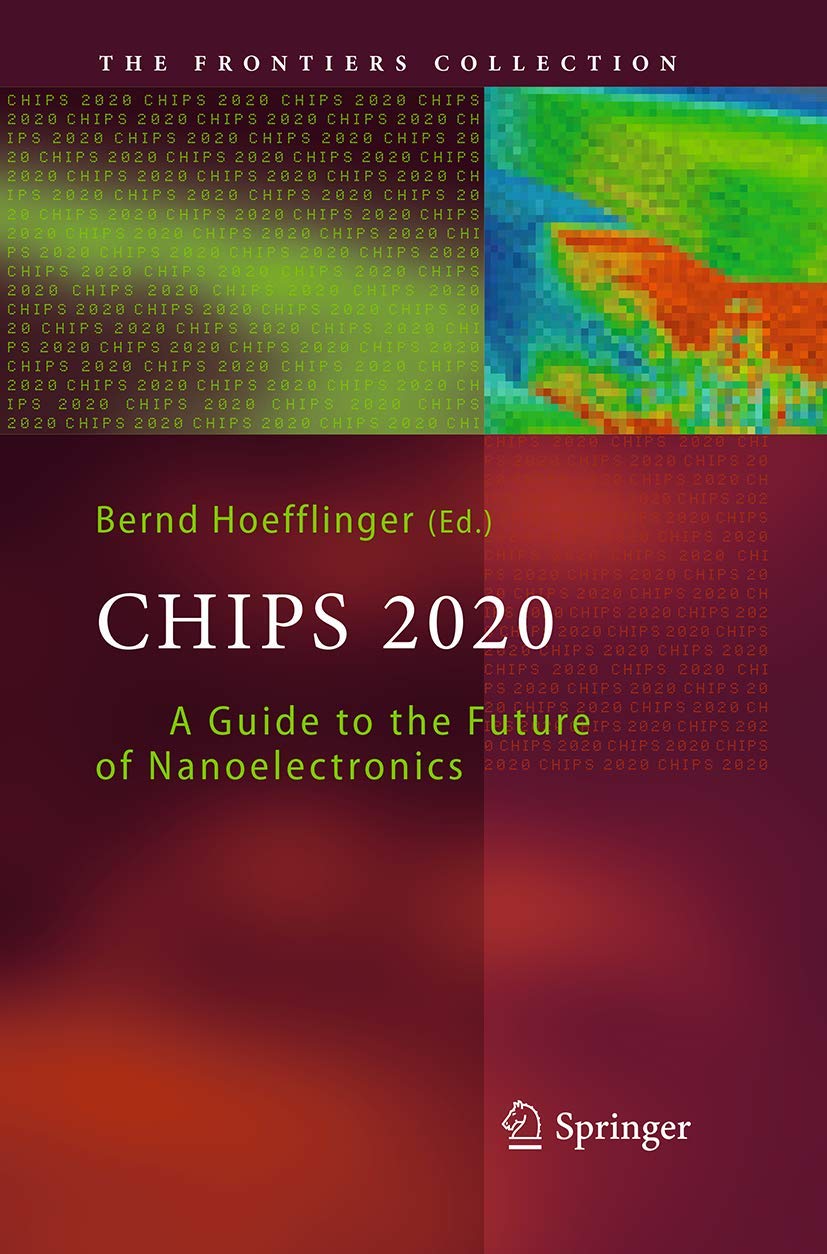
The chips in presentday cell phones already contain billions of sub100nanometer transistors. By 2020, however, we will see systemsonchips with trillions of 10nanometer transistors. But this will be the end of the miniaturization, because yet smaller transistors, containing just a few control atoms, are subject to statistical fluctuations and thus no longer useful. We also need to worry about a potential energy crisis, because in less than five years from now, with current chip technology, the internet alone would consume the total global electrical power!This book presents a new, sustainable roadmap towards ultralowenergy (femtoJoule), highperformance electronics. The focus is on the energyefficiency of the various chip functions: sensing, processing, and communication, in a topdown spirit involving new architectures such as silicon brains, ultralowvoltage circuits, energy harvesting, and 3D silicon technologies. Recognized world leaders from industry and from the research community share their views of this nanoelectronics future. They discuss, among other things, ubiquitous communication based on mobile companions, health and care supported by autonomous implants and by personal carebots, safe and efficient mobility assisted by copilots equipped with intelligent microelectromechanical systems, and internetbased education for a billion people from kindergarden to retirement. This book should help and interest all those who will have to make decisions associated with future electronics: students, graduates, educators, and researchers, as well as managers, investors, and policy makers.Introduction: Towards Sustainable 2020 Nanoelectronics. From Microelectronics to Nanoelectronics. The Future of Eight Chip Technologies. AnalogDigital Interfaces. Interconnects and Transceivers. Requirements and Markets for Nanoelectronics. ITRS: The International Technology Roadmap for Semiconductors. Nanolithography. PowerEfficientDesign Challenges. Superprocessors and Supercomputers. Towards Terabit Memories. 3D Integration for Wireless Multimedia. The NextGeneration Mobile UserExperience. MEMS (MicroElectroMechanical Systems) for Automotive and Consumer. Vision Sensors and Cameras. Digital Neural Networks for New Media. Retinal Implants for Blind Patients. Silicon Brains. Energy Harvesting and Chip Autonomy. The Energy Crisis. The ExtremeTechnology Industry. Education and Research for the Age of Nanoelectronics. 2020 World with Chips.
⚠️ WARNING (California Proposition 65):
This product may contain chemicals known to the State of California to cause cancer, birth defects, or other reproductive harm.
For more information, please visit www.P65Warnings.ca.gov.