If you have any questions, you are always welcome to contact us. We'll get back to you as soon as possible, withing 24 hours on weekdays.
Customer service
All questions about your order, return and delivery must be sent to our customer service team by e-mail at yourstore@yourdomain.com
Sale & Press
If you are interested in selling our products, need more information about our brand or wish to make a collaboration, please contact us at press@yourdomain.com
Help
If you have any questions, you are always welcome to contact us. We'll get back to you as soon as possible, withing 24 hours on weekdays.
Customer service
All questions about your order, return and delivery must be sent to our customer service team by e-mail at yourstore@yourdomain.com
Sale & Press
If you are interested in selling our products, need more information about our brand or wish to make a collaboration, please contact us at press@yourdomain.com
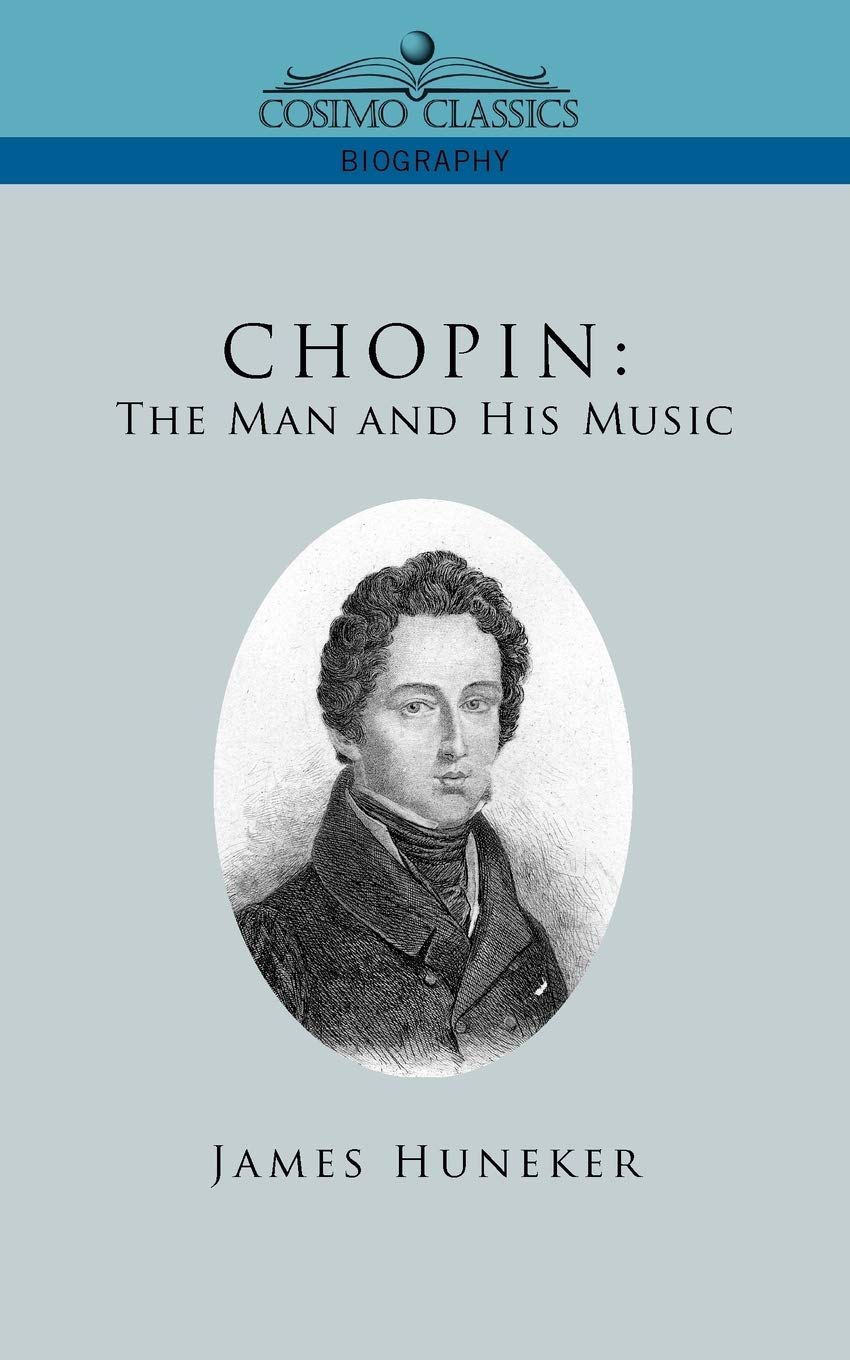
Chopin, "subtlesouled psychologist," is more kin to Keats than Shelley, he is a greater artist than a thinker. His philosophy is of the beautiful, as was Keats', and while he lingers by the river's edge to catch the song of the reeds, his gaze is oftener fixed on the quiring planets. He is nature's most exquisite soundingboard and vibrates to her with intensity, color and vivacity that have no parallel. Stained with melancholy, his joy is never that of the strong man rejoicing in his muscles. from "Poet and Psychologist" James Huneker describes Chopin's mazurkas as the music in which "the Pole suffers in song the joy of his sorrow." Such distinctive literary lyricism fills this classic 1900 life of the 19thcentury FrenchPolish pianist and composer. After exploring the storied artistic circles in which Frdric Chopin moved in Paris and his tempestuous relationship with the novelist George Sand, Huneker delves into the artistic psychology of his music, with indepth analyses of Chopin's studies, many of which Huneker finds "poetic"; his preludes, which Huneker deems "moods in miniature"; and the "melancholy mysteries" of Chopin's nocturnes. A striking portrait of genius, Huneker captures an artist who was "pleasant" and "persuasive" in public and "a neurotic being" in private, and finds a composer whose music aches with "the pathos of spiritual distance." American arts critic JAMES HUNEKER (18601921) also wrote Iconoclasts: A Book of Dramatists (1905), Egoists: A Book of Supermen (1909), Franz Liszt: Illustrated (1911), and The Pathos of Distance (1912).
⚠️ WARNING (California Proposition 65):
This product may contain chemicals known to the State of California to cause cancer,
birth defects, or other reproductive harm.
For MAP (Minimum Advertised Price) violations and Intellectual Property (IP) or Trademark concerns, please contact:
support@ergodebooks.com
⚠️ California Proposition 65 Warning: Some products sold on this website may expose you to chemicals known to the State of California to cause cancer, birth defects, or other reproductive harm. For more information, visit www.P65Warnings.ca.gov.