
Title
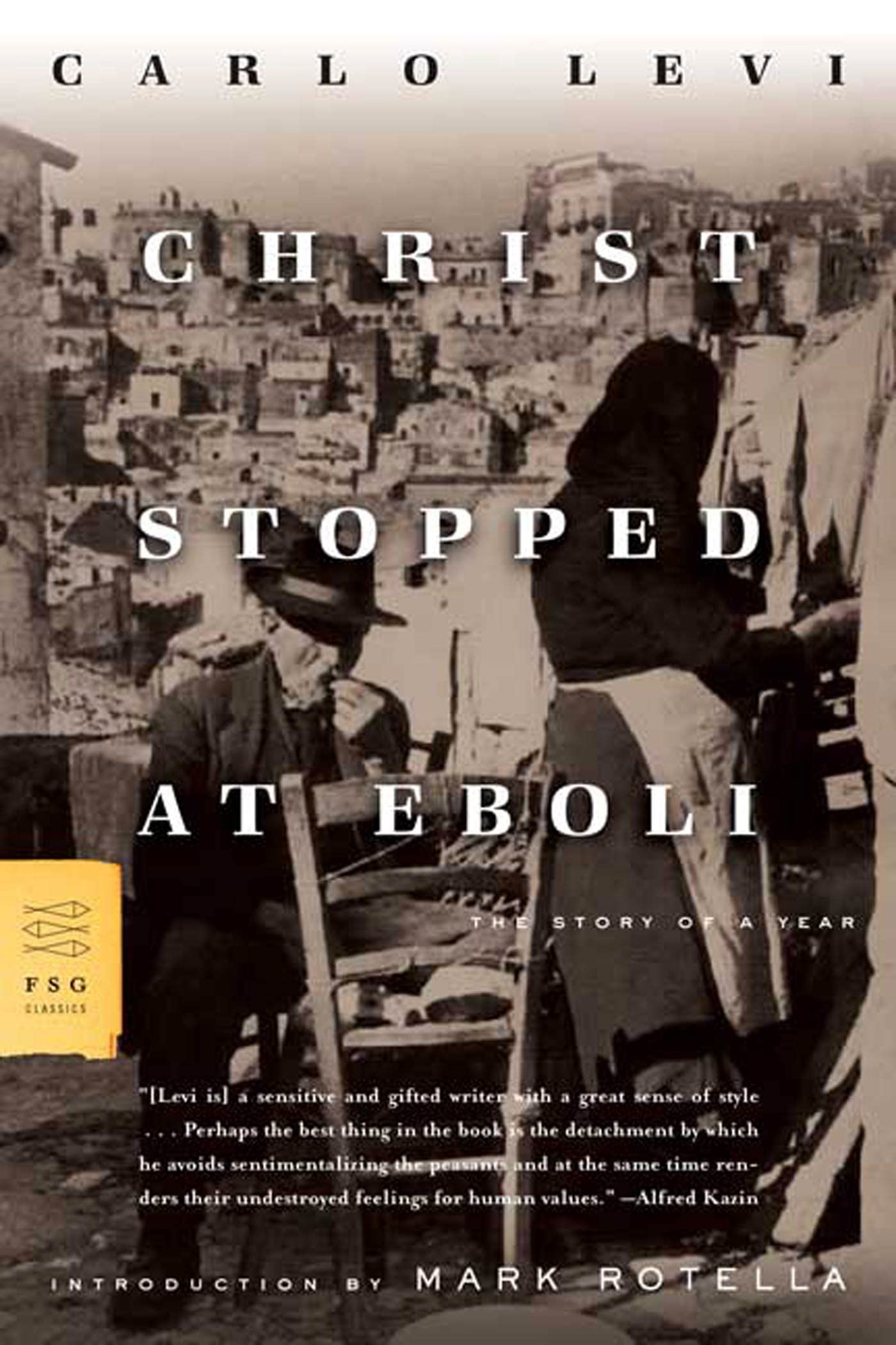
Christ Stopped At Eboli: The Story Of A Year (Fsg Classics)
Sold by Ergodebooks, an authorized reseller.
Returns accepted within 30 days | support@ergodebooks.com
Shipping Information
- Free Standard Shipping — United States only
- Processing Time: 3–5 business days
- Estimated Delivery: 6–10 business days after dispatch
- Double-boxed, fully insured & discreetly packaged
- Tracking number sent via email once dispatched
Returns & Refund
Returns accepted within 30 days of delivery.
Damaged or Defective Item
Free return shipping + replacement or full refund
Wrong Item Received
Free return shipping + replacement or full refund
Change of Mind
Return shipping at customer's expense · 25% restocking fee applies
Payment Option

It Was To Lucania, A Desolate Land In Southern Italy, That Carlo Levia Doctor, Painter, Philosopher, And Man Of Letterswas Confined As A Political Prisoner Because Of His Opposition To Italy'S Fascist Government At The Start Of The Ethiopian War In 1935. While There, Levi Reflected On The Harsh Landscape And Its Inhabitants, Peasants Who Lived The Same Lives Their Ancestors Had, Constantly Fearing Black Magic And The Near Presence Of Death. In So Doing, Levi Offered A Starkly Beautiful And Moving Account Of A Place And A People Living Outside The Boundaries Of Progress And Time.
⚠️ WARNING (California Proposition 65):
This product may contain chemicals known to the State of California to cause cancer, birth defects, or other reproductive harm.
For more information, please visit www.P65Warnings.ca.gov.
- Q: What is the page count of 'Christ Stopped at Eboli'? A: The book has three hundred four pages. This provides ample space for Carlo Levi's detailed narrative and reflections.
- Q: What are the dimensions of 'Christ Stopped at Eboli'? A: The book measures five point five one inches in length, eight point two three inches in height, and zero point seven nine inches in width. These dimensions make it a convenient size for reading.
- Q: What type of binding does 'Christ Stopped at Eboli' have? A: The book is paperback bound. This makes it lightweight and easy to handle, suitable for casual reading.
- Q: Who is the author of 'Christ Stopped at Eboli'? A: The author is Carlo Levi. He was a notable figure, recognized as a doctor, painter, and philosopher.
- Q: What genre does 'Christ Stopped at Eboli' belong to? A: The book falls under the genre of memoir and historical narrative. It provides personal insights into life in Italy during the Fascist regime.
- Q: How should I read 'Christ Stopped at Eboli'? A: You can read this book in any comfortable setting. It reflects on life in southern Italy, making it engaging for those interested in history and culture.
- Q: Is 'Christ Stopped at Eboli' suitable for all ages? A: Yes, the book is generally suitable for older teens and adults. Its themes may resonate more with readers interested in historical and political contexts.
- Q: What themes are explored in 'Christ Stopped at Eboli'? A: The book explores themes of political oppression, rural life, and the struggle against Fascism. It delves into the human experience amid adversity.
- Q: How do I keep 'Christ Stopped at Eboli' in good condition? A: Store the book in a cool, dry place to prevent moisture damage. Avoid exposing it to direct sunlight to preserve the cover and pages.
- Q: Are there any special care instructions for 'Christ Stopped at Eboli'? A: No special care is needed beyond normal handling. Keep it away from food and drink to avoid stains.
- Q: Can I return 'Christ Stopped at Eboli' if I'm not satisfied? A: Yes, you can typically return it within a specified time frame. Check the return policy of the retailer for details.
- Q: What if 'Christ Stopped at Eboli' arrives damaged? A: If the book arrives damaged, contact the retailer immediately for a replacement or refund. Most retailers have policies for such cases.
- Q: How does 'Christ Stopped at Eboli' compare to other historical memoirs? A: This book stands out for its poetic prose and vivid descriptions of rural Italy. It offers a unique perspective compared to other historical memoirs.
- Q: Is 'Christ Stopped at Eboli' recommended for book clubs? A: Yes, it's highly recommended for book clubs. Its rich themes and historical context provide plenty of discussion material.
- Q: What other works are similar to 'Christ Stopped at Eboli'? A: Similar works include 'The Garden of Angels' by David Hewson and 'A Farewell to Arms' by Ernest Hemingway, both exploring similar themes.
- Q: What should I expect from reading 'Christ Stopped at Eboli'? A: Expect a deep, reflective narrative about life and survival under a repressive regime. The writing is both beautiful and poignant.