
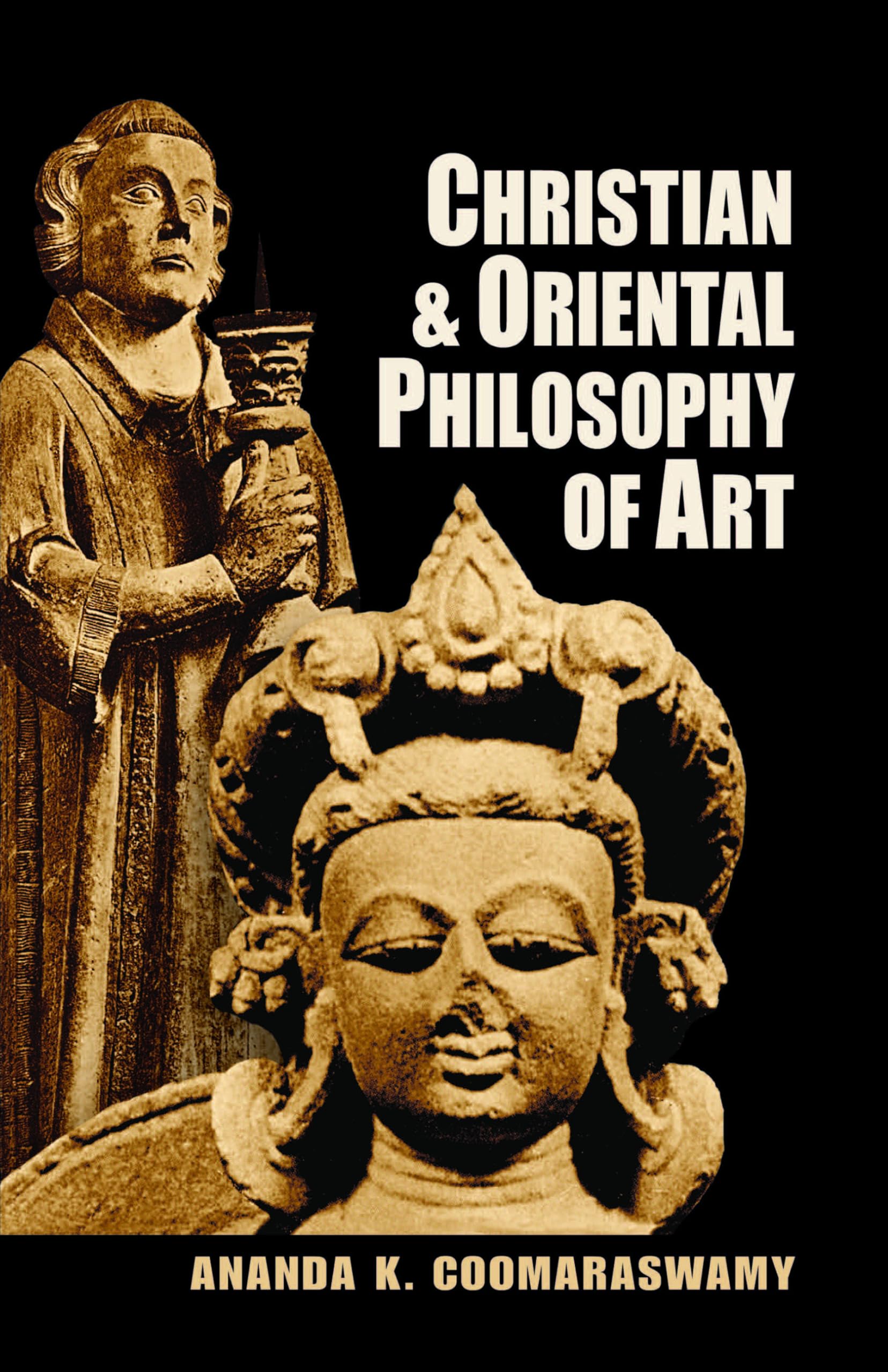
Title
Christian and Oriental Philosophy of Art,Used
Sold by Ergodebooks, an authorized reseller.
Returns accepted within 30 days | support@ergodebooks.com
Shipping Information
- Free Standard Shipping — United States only
- Processing Time: 3–5 business days
- Estimated Delivery: 6–10 business days after dispatch
- Double-boxed, fully insured & discreetly packaged
- Tracking number sent via email once dispatched
Returns & Refund
Returns accepted within 30 days of delivery.
Damaged or Defective Item
Free return shipping + replacement or full refund
Wrong Item Received
Free return shipping + replacement or full refund
Change of Mind
Return shipping at customer's expense · 25% restocking fee applies
Payment Option

The late Ananda K. Coomaraswamy, curator of Indian art at the Boston Museum of Fine Arts, uniquely combined art historian, philosopher, orientalist, linguist, and expositor in his person. His knowledge of the arts and handcrafts of the Orient was unexcelled and his numerous monographs on Oriental art either established or revolutionized entire fields. He was also a great Orientalist, with an almost unmatched understanding of traditional culture. He covered the philosophic and religious experience of the entire premodern world, east and west, and for him primitive, medieval European, and classical Indian experiences of truth and art were only different dialects in a common language.Finally, Coomaraswamy was a provocative writer, whose erudition was expressed in a delightful, aphoristic style. The nine essays in this book are among his most stimulating. They discuss such matters as the true function of aesthetics in art, the importance of symbolism, and the importance of intellectual and philosophical background to the artists; they demonstrate that abstract art and primitive art, despite superficial resemblances, are completely divergent; and they deal with the common philosophy which pervades all great art, the nature of medieval art, folklore, and modern art, the beauty inherent in mathematics, and the union of traditional symbolism and individual portraiture in premodern cultures.
⚠️ WARNING (California Proposition 65):
This product may contain chemicals known to the State of California to cause cancer, birth defects, or other reproductive harm.
For more information, please visit www.P65Warnings.ca.gov.
- Q: What is the page count of this book? A: This book has one hundred sixty pages. It offers a comprehensive exploration of Christian and Oriental philosophy of art.
- Q: What are the dimensions of this book? A: The book measures five point thirty-nine inches in length, zero point fifty-one inches in width, and eight point thirty-one inches in height.
- Q: What type of binding does this book have? A: This book features a paperback binding. It is designed to be lightweight and portable for easy reading.
- Q: How do I read this book? A: To read this book, simply open it and start from the first page. The essays are structured to engage readers with deep philosophical discussions.
- Q: Is this book suitable for beginners in philosophy? A: Yes, this book can be suitable for beginners. The essays are written in an engaging style that makes complex ideas accessible.
- Q: What themes are explored in this book? A: The book explores themes such as the function of aesthetics in art, symbolism, and the relationship between art and traditional culture.
- Q: How should I store this book? A: Store this book in a cool, dry place away from direct sunlight. This will help preserve the quality of the pages and binding.
- Q: Can I clean the book cover? A: Yes, you can gently wipe the cover with a soft, dry cloth. Avoid using water or cleaning solutions to prevent damage.
- Q: How long will this book last? A: With proper care, this book can last for many years. Avoid exposure to moisture and direct sunlight to ensure its longevity.
- Q: Is this book appropriate for children? A: The content may not be suitable for young children due to its philosophical themes. It is recommended for older teens and adults.
- Q: How does this book compare to other philosophy books? A: This book stands out due to its unique integration of art history and philosophy, specifically focusing on Eastern and Western perspectives.
- Q: Who is the author of this book? A: The author is Ananda K. Coomaraswamy, a renowned art historian and philosopher known for his work on Oriental art.
- Q: Where can I buy this book? A: You can purchase this book from various online retailers, including major bookstores and e-commerce platforms.
- Q: What if I receive a damaged copy? A: If you receive a damaged copy, contact the retailer for their return policy. Most retailers offer easy return or replacement options.
- Q: Are there any illustrations in this book? A: The book does not specifically mention illustrations. It focuses more on written essays and philosophical discussions.
- Q: Is there a digital version available? A: Availability of a digital version may vary. Check with the publisher or online retailers for e-book options.