
Title
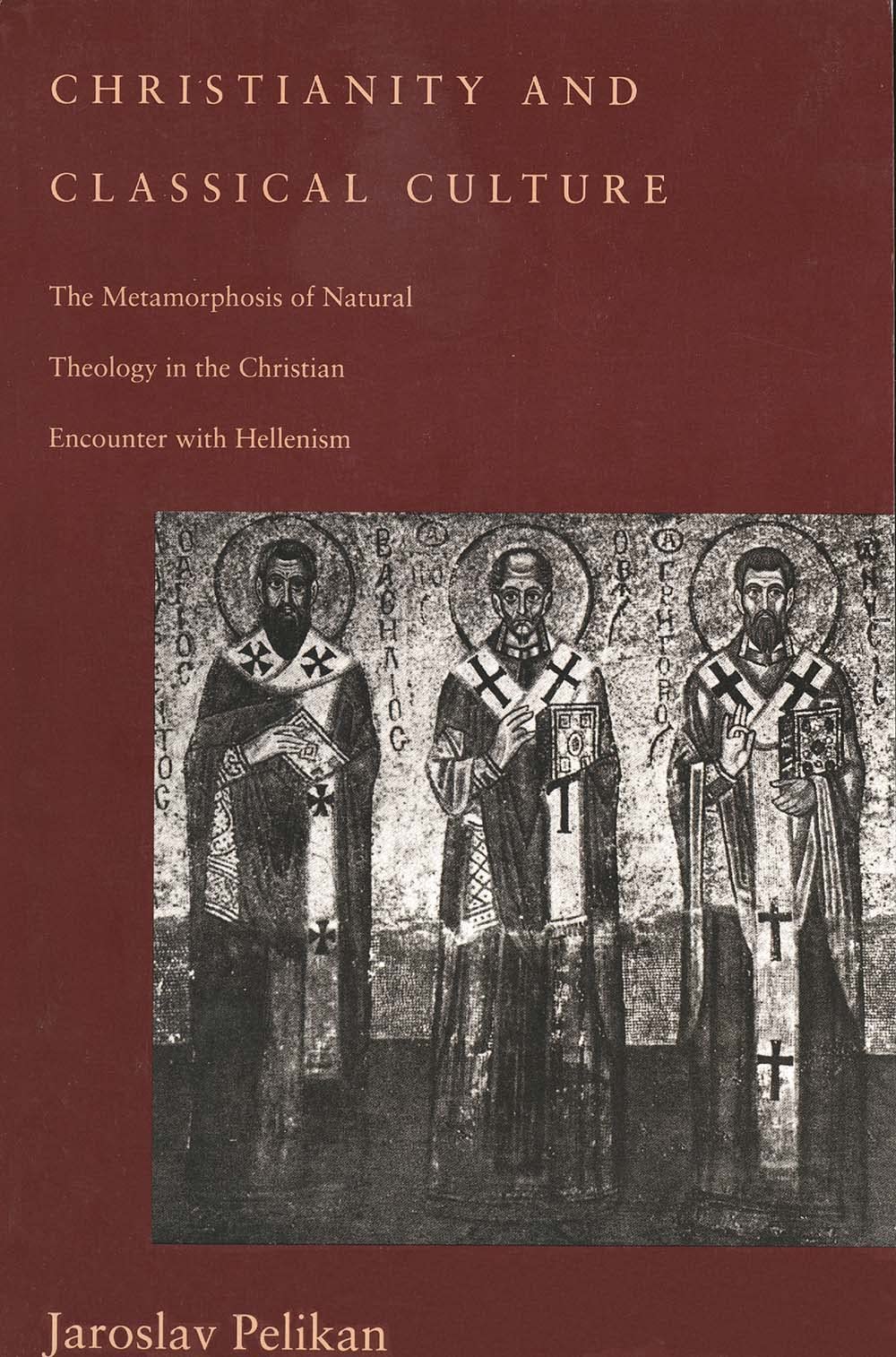
Christianity and Classical Culture: The Metamorphosis of Natural Theology in the Christian Encounter with Hellenism (Gifford Lec,New
Sold by Ergodebooks, an authorized reseller.
Returns accepted within 30 days | support@ergodebooks.com
Shipping Information
- Free Standard Shipping — United States only
- Processing Time: 3–5 business days
- Estimated Delivery: 6–10 business days after dispatch
- Double-boxed, fully insured & discreetly packaged
- Tracking number sent via email once dispatched
Returns & Refund
Returns accepted within 30 days of delivery.
Damaged or Defective Item
Free return shipping + replacement or full refund
Wrong Item Received
Free return shipping + replacement or full refund
Change of Mind
Return shipping at customer's expense · 25% restocking fee applies
Payment Option

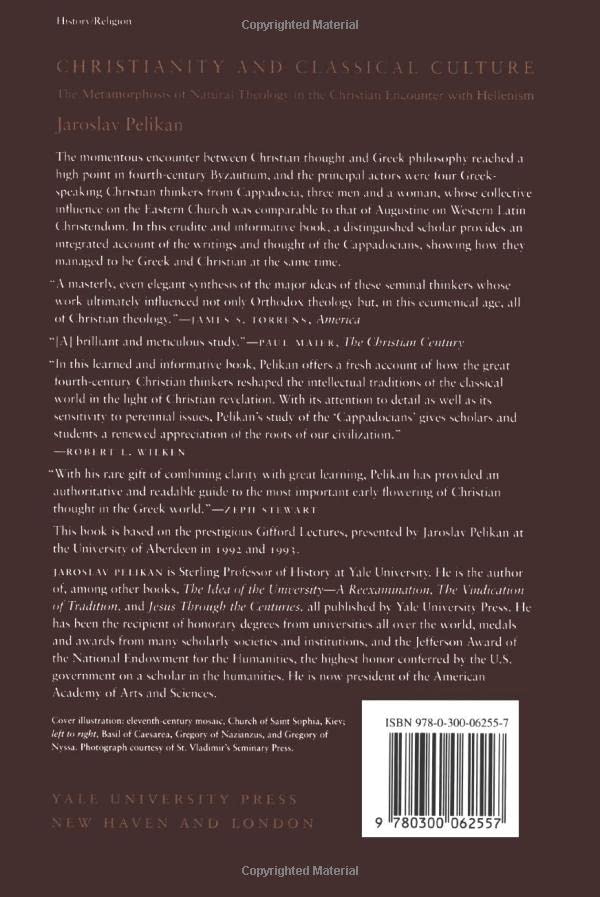
The momentous encounter between Christian thought and Greek philosophy reached a high point in fourthcentury Byzantium, and the principal actors were four Greekspeaking Christian thinkers whose collective influence on the Eastern Church was comparable to that of Augustine on Western Latin Christendom. In this erudite and informative book, a distinguished scholar provides the first coherent account of the lives and writings of these socalled Cappadocians (named for a region in what is now eastern Turkey), showing how they managed to be Greek and Christian at the same time.Jaroslav Pelikan describes the four CappadociansGregory of Nazianzus, Basil of Caesarea, Gregory of Nyssa, and Macrina, sister and teacher of the last twowho were trained in Classical culture, philosophy, and rhetoric but who were also defenders and expositors of Christian orthodoxy. On one issue of faith and life after anotherthe nature of religious language, the ways of knowing, the existence of God, the universe as cosmos, time, and space, free will and immortality, the nature of the good life, the purpose of the universethey challenged and debated the validity of the Greek philosophical tradition in interpreting Scripture. Because the way they resolved these issues became the very definition of normative Christian belief, says Pelikan, their system is still a key to our understanding not only of Christianity's diverse religious traditions but also of its intellectual and philosophical traditions.This book is based on the prestigious Gifford Lectures, presented by Jaroslav Pelikan at the University of Aberdeen in 1992 and 1993.
⚠️ WARNING (California Proposition 65):
This product may contain chemicals known to the State of California to cause cancer, birth defects, or other reproductive harm.
For more information, please visit www.P65Warnings.ca.gov.
- Q: What is the main focus of 'Christianity and Classical Culture'? A: The book explores the significant interaction between Christian thought and Greek philosophy, particularly through the lives and writings of four Greek-speaking Christian thinkers known as the Cappadocians.
- Q: Who are the four Cappadocians discussed in the book? A: The four Cappadocians are Gregory of Nazianzus, Basil of Caesarea, Gregory of Nyssa, and Macrina, who played crucial roles in shaping Christian orthodoxy during the fourth century.
- Q: What topics does the author address in this book? A: The author addresses various issues of faith and life, including the nature of religious language, the existence of God, free will, and the purpose of the universe, all through the lens of Greek philosophical tradition.
- Q: Who is the author of 'Christianity and Classical Culture'? A: The book is authored by Jaroslav Pelikan, a distinguished scholar known for his work on Christian history and theology.
- Q: When was 'Christianity and Classical Culture' published? A: The book was published on February 22, 1995.
- Q: Is this book suitable for someone new to Christian philosophy? A: Yes, the book provides a coherent account of complex ideas in Christian philosophy, making it accessible for readers new to the subject.
- Q: What is the binding type of this book? A: The book is available in paperback binding.
- Q: How many pages does 'Christianity and Classical Culture' contain? A: The book contains a total of 384 pages.
- Q: What can readers expect to learn from this book? A: Readers can expect to gain insights into how the Cappadocians reconciled Greek philosophy with Christian teachings, influencing both religious and philosophical traditions.
- Q: Are there any notable lectures that this book is based on? A: Yes, this book is based on the Gifford Lectures presented by Jaroslav Pelikan at the University of Aberdeen in 1992 and 1993.