
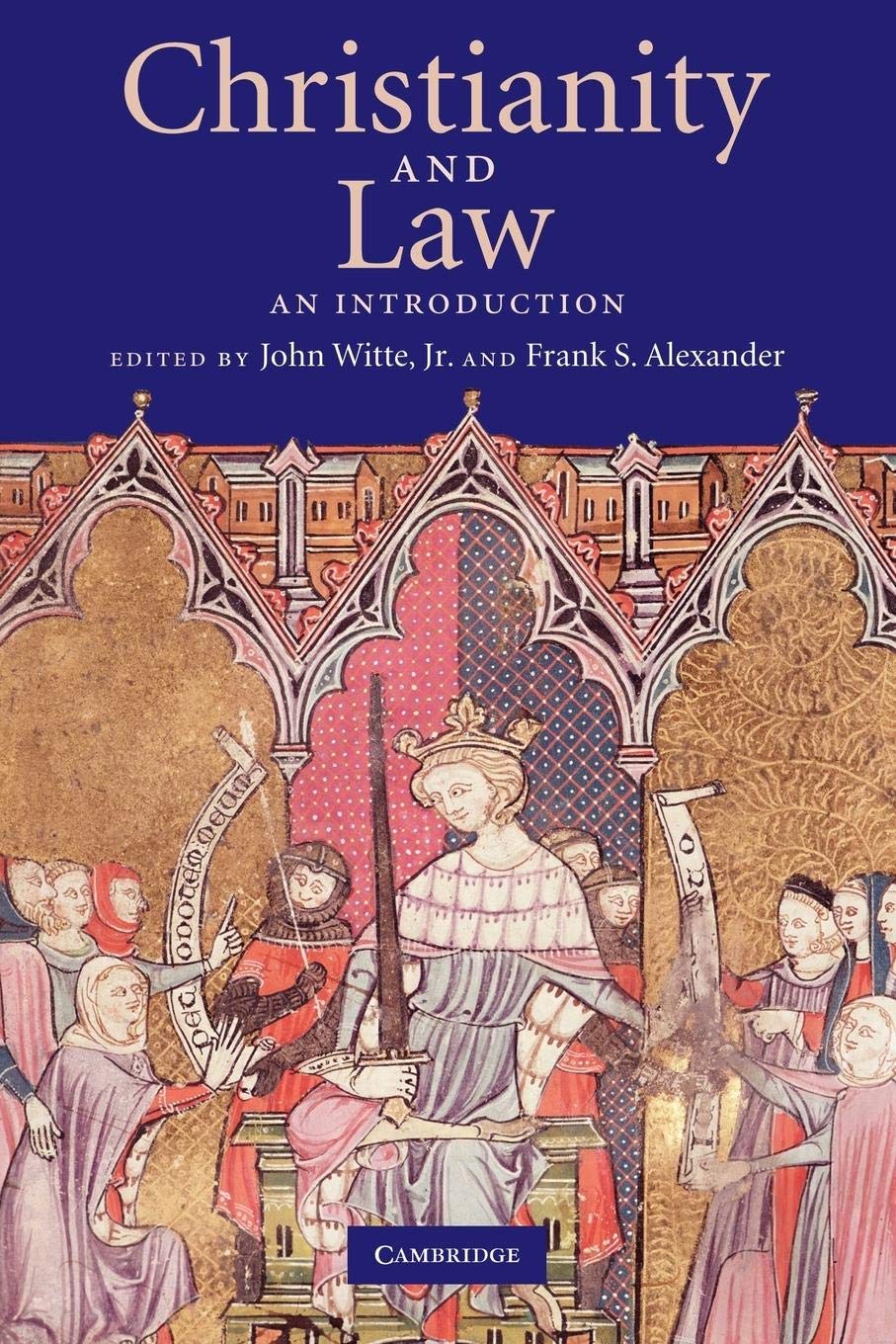
Title
Christianity and Law: An Introduction,Used
Sold by Ergodebooks, an authorized reseller.
Returns accepted within 30 days | support@ergodebooks.com
Shipping Information
- Free Standard Shipping — United States only
- Processing Time: 3–5 business days
- Estimated Delivery: 6–10 business days after dispatch
- Double-boxed, fully insured & discreetly packaged
- Tracking number sent via email once dispatched
Returns & Refund
Returns accepted within 30 days of delivery.
Damaged or Defective Item
Free return shipping + replacement or full refund
Wrong Item Received
Free return shipping + replacement or full refund
Change of Mind
Return shipping at customer's expense · 25% restocking fee applies
Payment Option

What impact has Christianity had on the law from its beginnings to the present day? This introduction explores the main legal teachings of Western Christianity, set out in the texts and traditions of scripture and theology, philosophy and jurisprudence. It takes up the weightier matters of the law that Christianity has profoundly shaped justice and mercy, rule and equity, discipline and love as well as more technical topics of canon law, natural law, and state law. Some of these legal creations were wholly original to Christianity. Others were converted from Jewish and classical traditions. Still others were reformed by Renaissance humanists and Enlightenment philosophers. But whether original or reformed, these Christian teachings on law, politics and society have made and can continue to make fundamental contributions to modern law in the West and beyond.
⚠️ WARNING (California Proposition 65):
This product may contain chemicals known to the State of California to cause cancer, birth defects, or other reproductive harm.
For more information, please visit www.P65Warnings.ca.gov.
- Q: What is the page count of 'Christianity and Law: An Introduction'? A: This book has three hundred sixty pages. It provides a comprehensive overview of the intersection of Christianity and law.
- Q: What are the dimensions of this book? A: The dimensions are six inches in length, zero point eighty-three inches in width, and nine point zero two inches in height. This size makes it convenient for reading.
- Q: What type of binding does this book have? A: It has a paperback binding. This makes it lightweight and easy to handle.
- Q: Who is the author of 'Christianity and Law: An Introduction'? A: The author is John Witte Jr. He is well-regarded for his expertise in legal history and Christian thought.
- Q: What is the main subject of this book? A: The book explores the impact of Christianity on law. It covers both historical and contemporary legal teachings influenced by Christian thought.
- Q: Is this book suitable for academic use? A: Yes, it is suitable for academic use. It provides in-depth analysis beneficial for students and scholars of law and theology.
- Q: How do I best read this book? A: You can read it at your own pace. It is structured to facilitate both casual reading and in-depth study.
- Q: Is this book appropriate for beginners in law? A: Yes, it is appropriate for beginners. The introduction is accessible and provides foundational knowledge about Christianity's legal influence.
- Q: What prior knowledge should I have before reading this book? A: A basic understanding of Christian teachings and legal concepts is helpful. However, the book is designed to guide readers through these topics.
- Q: How should I store this book to keep it in good condition? A: Store it in a cool, dry place away from direct sunlight. This will help preserve the quality of the paper and binding.
- Q: Can I clean the book if it gets dirty? A: Yes, you can clean it gently. Use a soft, dry cloth to wipe the cover, avoiding moisture.
- Q: What if my book arrives damaged? A: If your book arrives damaged, contact the seller for a return or exchange. Most sellers have policies to address such issues.
- Q: Is there a warranty for this book? A: Typically, books do not come with warranties. However, check with the seller for their specific return policy.
- Q: How do I know if this book is the right choice for me? A: Consider your interest in Christianity and law. If these topics intrigue you, this book will likely be a good fit.
- Q: What makes this book stand out from other law books? A: Its unique focus on the historical impact of Christianity on Western law sets it apart. It combines legal analysis with theological insights.
- Q: Are there other books similar to 'Christianity and Law: An Introduction'? A: Yes, there are other books on similar topics. Look for titles that explore law and religion, particularly those focusing on Christianity.