
Title
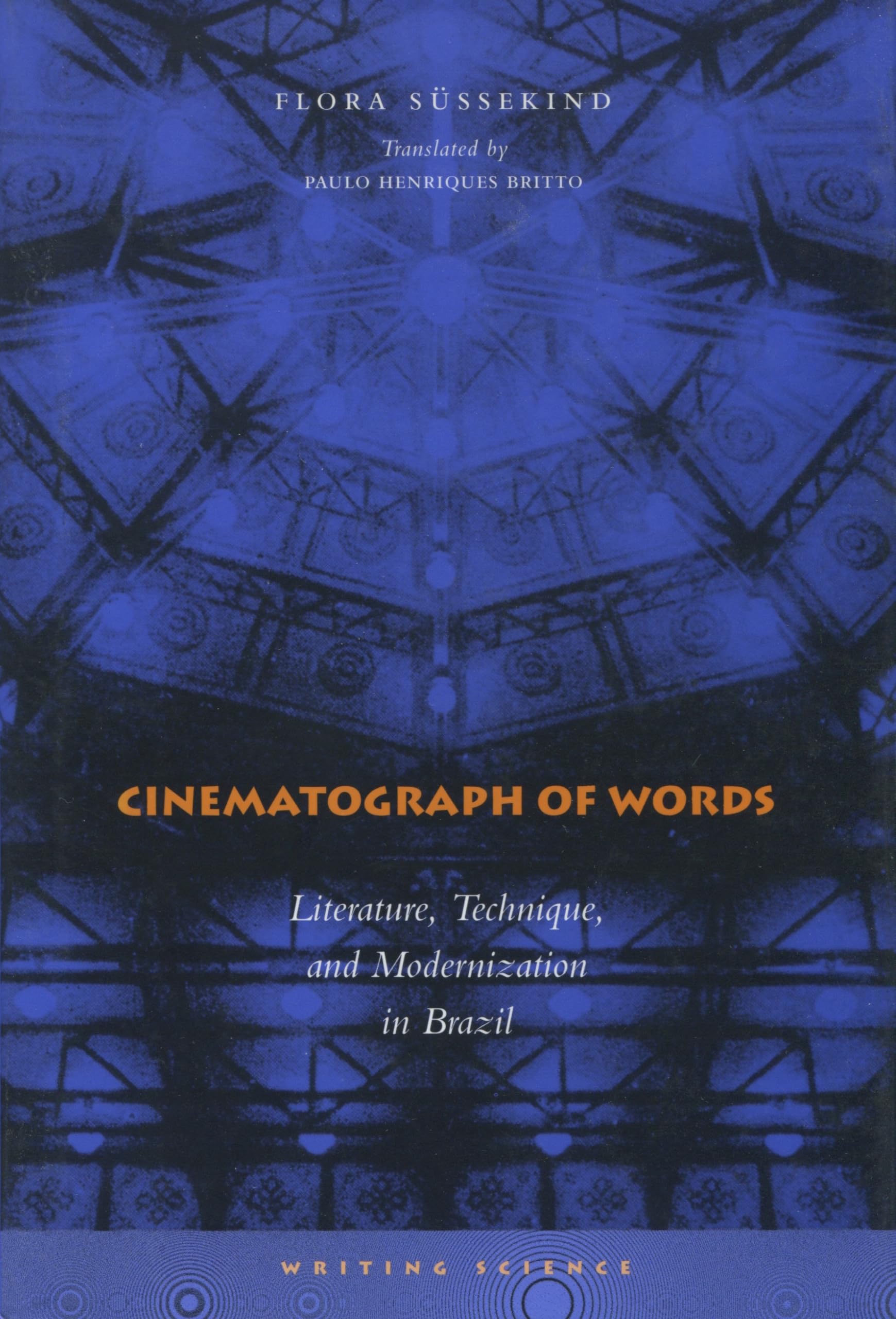
Cinematograph Of Words: Literature, Technique, And Modernization In Brazil (Writing Science),Used
Sold by Ergodebooks, an authorized reseller.
Returns accepted within 30 days | support@ergodebooks.com
Shipping Information
- Free Standard Shipping — United States only
- Processing Time: 3–5 business days
- Estimated Delivery: 6–10 business days after dispatch
- Double-boxed, fully insured & discreetly packaged
- Tracking number sent via email once dispatched
Returns & Refund
Returns accepted within 30 days of delivery.
Damaged or Defective Item
Free return shipping + replacement or full refund
Wrong Item Received
Free return shipping + replacement or full refund
Change of Mind
Return shipping at customer's expense · 25% restocking fee applies
Payment Option

This is an extraordinarily imaginative attempt to analyze the relations between literature and technique in Brazil from the 1880's to the 1920's. The author suggests that in these relations we can see more clearly the shape of a period that is otherwise usually defined from a literary perspective as 'pre' or 'post' something or other, rather than in terms of its own characteristics. One such characteristic is the intense interaction with the new technologies then arising in Brazil, the beginning of the professionalization of writers, and a revision of the concept of literature, redefined as technique.The author's chief concern is to determine what is distinctive about the literary production of the period. Rather than focusing on literature's relations with visual art, with a rising social class, or with the sociopolitical divisions within the educated classes of Brazilian society, the author examines the crnica (a kind of journalistic essay), poetry, and fiction of these decades in terms of their encounter with a burgeoning technological and industrial landscape.This encounter is examined from two perspectives. The first is explicit representation: the portrayal in Brazilian literature of modern artifacts, new means of transformation and communication, and the newborn industries of advertising and commercial publication. The second perspective examines how these close contacts with the technological world came to shape cultural productionthat is, not how literature represents technique, but how literary technique changed as it incorporated procedures characteristic of photography, film, and poster art. This transformation was consistent and concurrent with significant changes taking place in the perceptions and sensibilities of the population of major Brazilian cities, a population increasingly attuned to images, the instant, and technology as allpowerful mediators of the urban landscape, time, and a subjectivity constantly under the threat of extinction.
⚠️ WARNING (California Proposition 65):
This product may contain chemicals known to the State of California to cause cancer, birth defects, or other reproductive harm.
For more information, please visit www.P65Warnings.ca.gov.