If you have any questions, you are always welcome to contact us. We'll get back to you as soon as possible, withing 24 hours on weekdays.
Customer service
All questions about your order, return and delivery must be sent to our customer service team by e-mail at yourstore@yourdomain.com
Sale & Press
If you are interested in selling our products, need more information about our brand or wish to make a collaboration, please contact us at press@yourdomain.com
Help
If you have any questions, you are always welcome to contact us. We'll get back to you as soon as possible, withing 24 hours on weekdays.
Customer service
All questions about your order, return and delivery must be sent to our customer service team by e-mail at yourstore@yourdomain.com
Sale & Press
If you are interested in selling our products, need more information about our brand or wish to make a collaboration, please contact us at press@yourdomain.com
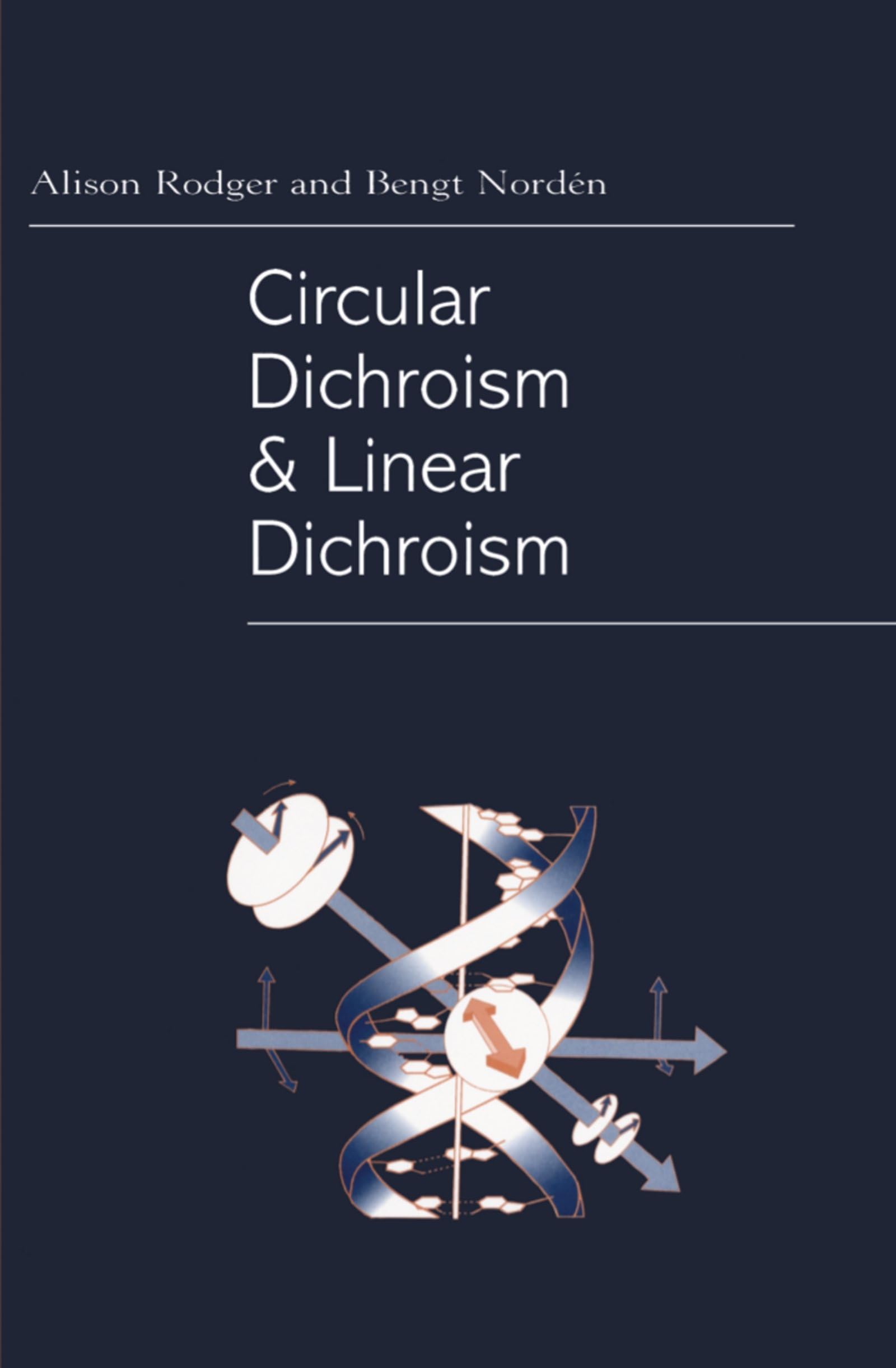
This book provides an introduction to all those who wish to use the complementary spectroscopic techniques of optical activity (circular dichroism, CD) and optical anisotropy (linear dichroism, LD) for the study of the structure of molecules and interactions between molecules in solution. It emphasizes these techniques and how to use them for both low and high molecular weight molecules. The book begins by describing the principles behind CD and LD and how these techniques can be used in the laboratory without using advanced maths or quantum mechanics. The next chapters describe how both techniques may be applied to the study of biological macromolecules and give a detailed description of how they may be used on small molecules to investigate molecular and electronic structure. The final part contains theoretical derivations of all the equations required for the applications described previously. Specific molecular examples are used to illustrate concepts and to show the reader how to use the techniques in chemical and biological systems. Circular Dichroism and Linear Dichroism is an easy guide to what a prospective user of CD needs to know and explains how LD is not merely an exotic technique only to be practiced by experienced spectroscopists, but may be routinely and usefully employed as an aid to molecular structure determination.
⚠️ WARNING (California Proposition 65):
This product may contain chemicals known to the State of California to cause cancer,
birth defects, or other reproductive harm.
For MAP (Minimum Advertised Price) violations and Intellectual Property (IP) or Trademark concerns, please contact:
support@ergodebooks.com
⚠️ California Proposition 65 Warning: Some products sold on this website may expose you to chemicals known to the State of California to cause cancer, birth defects, or other reproductive harm. For more information, visit www.P65Warnings.ca.gov.