If you have any questions, you are always welcome to contact us. We'll get back to you as soon as possible, withing 24 hours on weekdays.
Customer service
All questions about your order, return and delivery must be sent to our customer service team by e-mail at yourstore@yourdomain.com
Sale & Press
If you are interested in selling our products, need more information about our brand or wish to make a collaboration, please contact us at press@yourdomain.com
Help
If you have any questions, you are always welcome to contact us. We'll get back to you as soon as possible, withing 24 hours on weekdays.
Customer service
All questions about your order, return and delivery must be sent to our customer service team by e-mail at yourstore@yourdomain.com
Sale & Press
If you are interested in selling our products, need more information about our brand or wish to make a collaboration, please contact us at press@yourdomain.com
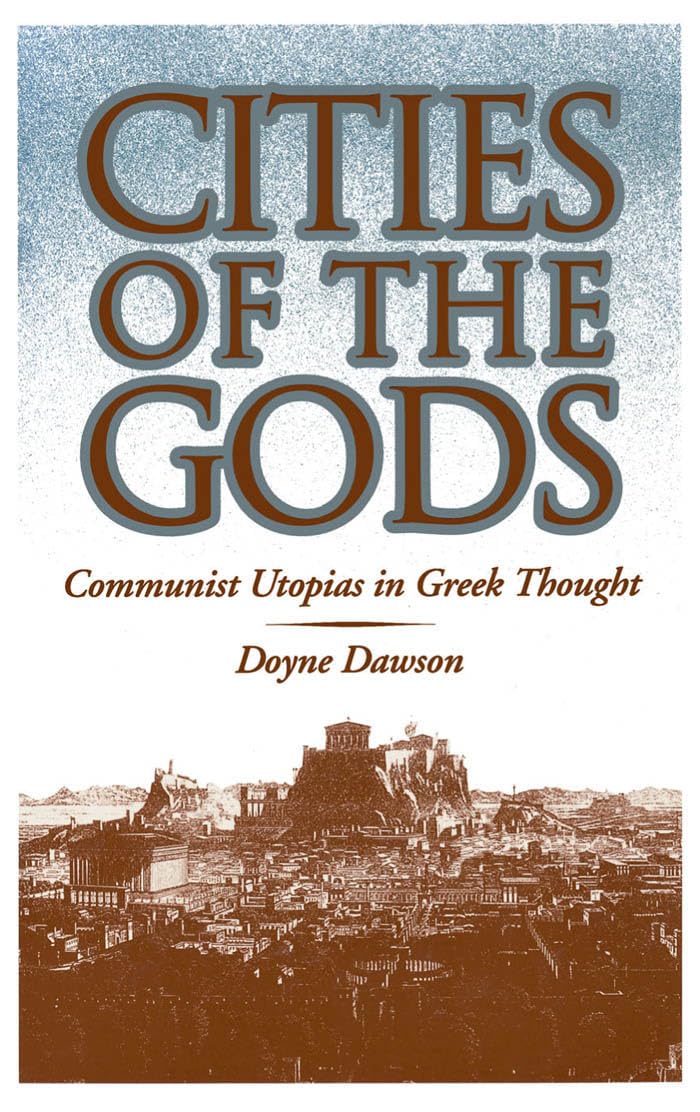
Modern studies of classical utopian thought are usually restricted to the Republic and Laws of Plato, producing the impression that Greek speculation about ideal states was invariably authoritarian and hierarchical. This book, however, sets Plato in the context of the whole ancient tradition of philosophical utopia. It distinguishes two types of Greek utopia, relating both to the social and the political background of Greece between the fifth and third centuries B.C. There was a lower utopianism, meant for literal implementation, which arose from the Greek colonizing movement, and a higher theoretical form which arose from the practical utopias. Dawson focuses on the higher utopianism, whose main theme was total communism in property and family. He attempts to reconstruct the lost utopian works of the Stoics, arguing that their ideal state was universal and egalitarian, in deliberate contrast to the hierarchical and militaristic utopia of Plato; and that both theories were intended to bring about longrange social reform, though neither was meant for direct implementation. Dawson offers an explanation for the disappearance of the utopian tradition in the later Hellenistic age. A final chapter traces the survival of communistic ideas in early Christianity.
⚠️ WARNING (California Proposition 65):
This product may contain chemicals known to the State of California to cause cancer,
birth defects, or other reproductive harm.
For MAP (Minimum Advertised Price) violations and Intellectual Property (IP) or Trademark concerns, please contact:
support@ergodebooks.com
⚠️ California Proposition 65 Warning: Some products sold on this website may expose you to chemicals known to the State of California to cause cancer, birth defects, or other reproductive harm. For more information, visit www.P65Warnings.ca.gov.