
Title
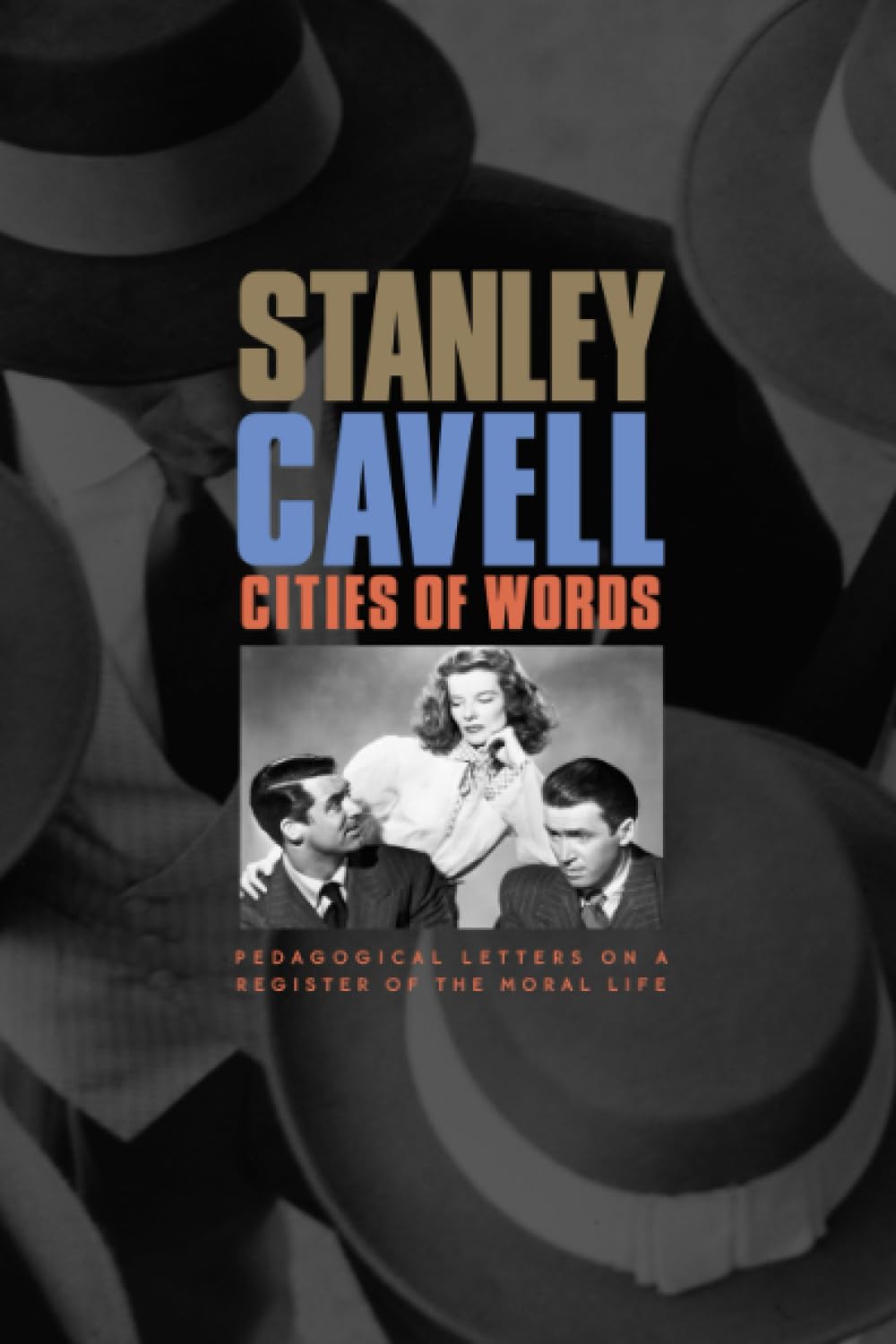
Cities of Words: Pedagogical Letters on a Register of the Moral Life,New
Sold by Ergodebooks, an authorized reseller.
Returns accepted within 30 days | support@ergodebooks.com
Shipping Information
- Free Standard Shipping — United States only
- Processing Time: 3–5 business days
- Estimated Delivery: 6–10 business days after dispatch
- Double-boxed, fully insured & discreetly packaged
- Tracking number sent via email once dispatched
Returns & Refund
Returns accepted within 30 days of delivery.
Damaged or Defective Item
Free return shipping + replacement or full refund
Wrong Item Received
Free return shipping + replacement or full refund
Change of Mind
Return shipping at customer's expense · 25% restocking fee applies
Payment Option

Since Socrates and his circle first tried to frame the Just City in words, discussion of a perfect communal lifea life of justice, reflection, and mutual respecthas had to come to terms with the distance between that idea and reality. Measuring this distance step by practical step is the philosophical project that Stanley Cavell has pursued on his exploratory path. Situated at the intersection of two of his longstanding interestsEmersonian philosophy and the Hollywood comedy of remarriageCavell's new work marks a significant advance in this project. The bookwhich presents a course of lectures Cavell presented several times toward the end of his teaching career at Harvardlinks masterpieces of moral philosophy and classic Hollywood comedies to fashion a new way of looking at our lives and learning to live with ourselves.This book offers philosophy in the key of life. Beginning with a rereading of Emerson's 'SelfReliance,' Cavell traces the idea of perfectionism through works by Plato, Aristotle, Locke, Kant, Mill, Nietzsche, and Rawls, and by such artists as Henry James, George Bernard Shaw, and Shakespeare. Cities of Words shows that this everevolving idea, brought to dramatic life in movies such as It Happened One Night, The Awful Truth, The Philadelphia Story, and The Lady Eve, has the power to reorient the perception of Western philosophy.
⚠️ WARNING (California Proposition 65):
This product may contain chemicals known to the State of California to cause cancer, birth defects, or other reproductive harm.
For more information, please visit www.P65Warnings.ca.gov.
- Q: What is the main theme of 'Cities of Words'? A: 'Cities of Words' explores the philosophical journey of understanding justice and communal life, drawing connections between classic moral philosophy and Hollywood comedies.
- Q: Who is the author of 'Cities of Words'? A: The author of 'Cities of Words' is Stanley Cavell, a prominent philosopher known for his works on Emersonian philosophy and film.
- Q: What type of binding does this book have? A: 'Cities of Words' is available in a paperback binding.
- Q: How many pages are in 'Cities of Words'? A: 'Cities of Words' contains a total of 480 pages.
- Q: When was 'Cities of Words' published? A: 'Cities of Words' was published on October 31, 2005.
- Q: Is 'Cities of Words' a new or used book? A: 'Cities of Words' is categorized as a new book.
- Q: What are some key philosophical figures discussed in the book? A: The book discusses key philosophical figures such as Plato, Aristotle, Locke, Kant, Mill, Nietzsche, and Rawls.
- Q: Does 'Cities of Words' include any discussion on films? A: Yes, 'Cities of Words' links classic Hollywood comedies to philosophical themes, discussing films like 'It Happened One Night' and 'The Philadelphia Story'.
- Q: What is the significance of Emerson's 'Self-Reliance' in the book? A: Emerson's 'Self-Reliance' is reinterpreted by Cavell as a starting point for discussing the theme of perfectionism throughout the book.
- Q: What is the intended audience for 'Cities of Words'? A: 'Cities of Words' is intended for readers interested in philosophy, ethics, and film studies, as well as those exploring the intersection of these fields.