
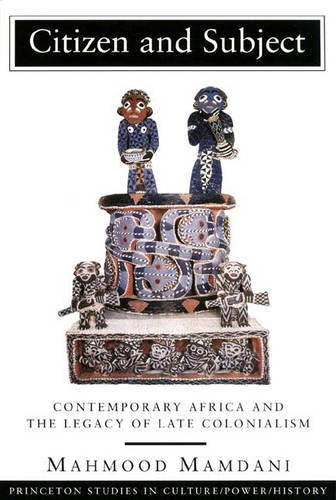
Title
Citizen And Subject: Contemporary Africa And The Legacy Of Late Colonialism (Princeton Series In Culture/Power/History),New
Sold by Ergodebooks, an authorized reseller.
Returns accepted within 30 days | support@ergodebooks.com
Shipping Information
- Free Standard Shipping — United States only
- Processing Time: 3–5 business days
- Estimated Delivery: 6–10 business days after dispatch
- Double-boxed, fully insured & discreetly packaged
- Tracking number sent via email once dispatched
Returns & Refund
Returns accepted within 30 days of delivery.
Damaged or Defective Item
Free return shipping + replacement or full refund
Wrong Item Received
Free return shipping + replacement or full refund
Change of Mind
Return shipping at customer's expense · 25% restocking fee applies
Payment Option

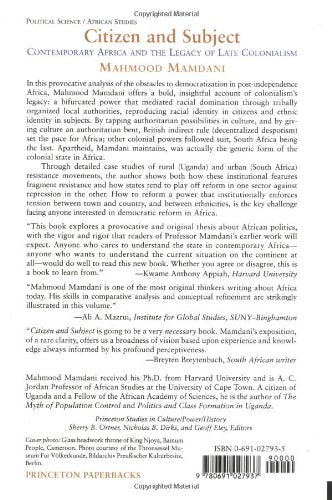
In Analyzing The Obstacles To Democratization In Post Independence Africa, Mahmood Mamdani Offers A Bold, Insightful Account Of Colonialism'S Legacya Bifurcated Power That Mediated Racial Domination Through Tribally Organized Local Authorities, Reproducing Racial Identity In Citizens And Ethnic Identity In Subjects. Many Writers Have Understood Colonial Rule As Either 'Direct' (French) Or 'Indirect' (British), With A Third Variantapartheidas Exceptional. This Benign Terminology, Mamdani Shows, Masks The Fact That These Were Actually Variants Of A Despotism. While Direct Rule Denied Rights To Subjects On Racial Grounds, Indirect Rule Incorporated Them Into A 'Customary' Mode Of Rule, With Stateappointed Native Authorities Defining Custom. By Tapping Authoritarian Possibilities In Culture, And By Giving Culture An Authoritarian Bent, Indirect Rule (Decentralized Despotism) Set The Pace For Africa; The French Followed Suit By Changing From Direct To Indirect Administration, While Apartheid Emerged Relatively Later. Apartheid, Mamdani Shows, Was Actually The Generic Form Of The Colonial State In Africa.Through Case Studies Of Rural (Uganda) And Urban (South Africa) Resistance Movements, We Learn How These Institutional Features Fragment Resistance And How States Tend To Play Off Reform In One Sector Against Repression In The Other. Reforming A Power That Institutionally Enforces Tension Between Town And Country, And Between Ethnicities, Is The Key Challenge For Anyone Interested In Democratic Reform In Africa.
⚠️ WARNING (California Proposition 65):
This product may contain chemicals known to the State of California to cause cancer, birth defects, or other reproductive harm.
For more information, please visit www.P65Warnings.ca.gov.
- Q: What is the page count of the book? A: The book has three hundred forty-four pages. It offers an in-depth analysis of colonialism's legacy and its impact on Africa.
- Q: What type of binding does this book have? A: This book is paperback bound. The paperback format makes it lightweight and easy to handle.
- Q: What are the dimensions of this book? A: The book measures six point two six inches in length, one inch in width, and nine point two five inches in height. These dimensions make it a standard size for easy reading.
- Q: Who is the author of the book? A: The author is Mahmood Mamdani. He provides a critical perspective on the political dynamics in post-independence Africa.
- Q: What are the main themes of the book? A: The book explores themes of colonialism, democratization, and racial identity. It critically analyzes the impact of colonial rule on contemporary African politics.
- Q: Is this book suitable for academic research? A: Yes, this book is suitable for academic research. It offers insights and case studies relevant to studies on African history and politics.
- Q: How should I store this book? A: Store the book in a cool, dry place. Keeping it away from direct sunlight will help preserve its condition over time.
- Q: Can I clean the book if it gets dirty? A: Yes, you can gently wipe the cover with a soft, damp cloth. Avoid using harsh chemicals that could damage the cover or pages.
- Q: Is this book appropriate for young adults? A: Yes, the book is appropriate for young adults. However, it contains complex themes that may be more suitable for mature readers.
- Q: What makes this book different from others on colonialism? A: This book provides a unique perspective by analyzing the bifurcated power structures created by colonialism. It contrasts direct and indirect rule, offering a nuanced view.
- Q: What if I receive a damaged book? A: If you receive a damaged book, you can return it for a refund or replacement. Make sure to contact customer service promptly to resolve the issue.
- Q: Is there a warranty on this book? A: No, there is no warranty on this book. However, it can be returned if it arrives damaged or defective.
- Q: How do I return the book if needed? A: To return the book, follow the return policy outlined by the retailer. Generally, you will need to contact customer service for instructions.
- Q: How is this book received by critics? A: This book has received positive reviews from critics for its in-depth analysis and insightful arguments. It is regarded as an important contribution to African studies.
- Q: Can this book help in understanding modern African politics? A: Yes, this book provides valuable insights into modern African politics. It connects historical context with current political challenges faced by the continent.