If you have any questions, you are always welcome to contact us. We'll get back to you as soon as possible, withing 24 hours on weekdays.
Customer service
All questions about your order, return and delivery must be sent to our customer service team by e-mail at yourstore@yourdomain.com
Sale & Press
If you are interested in selling our products, need more information about our brand or wish to make a collaboration, please contact us at press@yourdomain.com
Help
If you have any questions, you are always welcome to contact us. We'll get back to you as soon as possible, withing 24 hours on weekdays.
Customer service
All questions about your order, return and delivery must be sent to our customer service team by e-mail at yourstore@yourdomain.com
Sale & Press
If you are interested in selling our products, need more information about our brand or wish to make a collaboration, please contact us at press@yourdomain.com
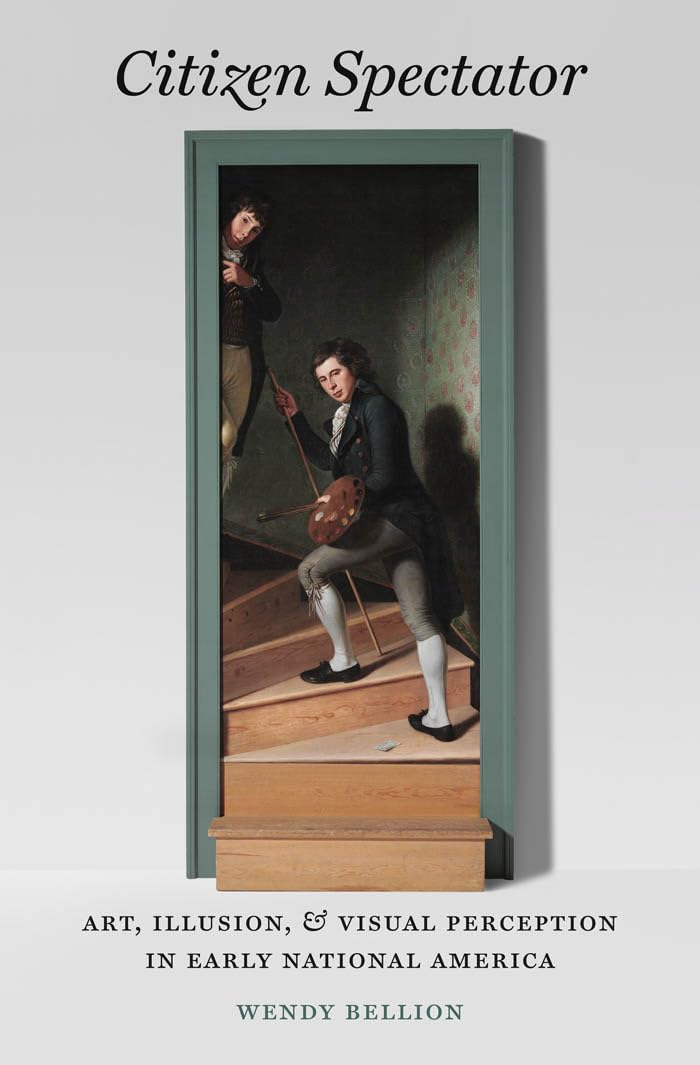
In this richly illustrated study, the first booklength exploration of illusionistic art in the early United States, Wendy Bellion investigates Americans' experiences with material forms of visual deception and argues that encounters with illusory art shaped their understanding of knowledge, representation, and subjectivity between 1790 and 1825. Focusing on the work of the wellknown Peale family and their Philadelphia Museum, as well as other Philadelphians, Bellion explores the range of illusions encountered in public spaces, from trompe l'oeil paintings and drawings at art exhibitions to ephemeral displays of phantasmagoria, 'Invisible Ladies,' and other spectacles of deception.Bellion reconstructs the elite and vernacular sites where such art and objects appeared and argues that early national exhibitions doubled as spaces of citizen formation. Within a postRevolutionary culture troubled by the social and political consequences of deception, keen perception signified able citizenship. Setting illusions into dialogue with Enlightenment cultures of science, print, politics, and the senses, Citizen Spectator demonstrates that pictorial and optical illusions functioned to cultivate but also to confound discernment. Bellion reveals the equivocal nature of illusion during the early republic, mapping its changing forms and functions, and uncovers surprising links between early American art, culture, and citizenship.
⚠️ WARNING (California Proposition 65):
This product may contain chemicals known to the State of California to cause cancer,
birth defects, or other reproductive harm.
For MAP (Minimum Advertised Price) violations and Intellectual Property (IP) or Trademark concerns, please contact:
support@ergodebooks.com
⚠️ California Proposition 65 Warning: Some products sold on this website may expose you to chemicals known to the State of California to cause cancer, birth defects, or other reproductive harm. For more information, visit www.P65Warnings.ca.gov.