
Title
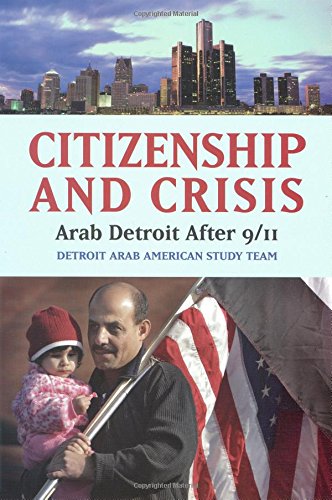
Citizenship and Crisis: Arab Detroit After 9/11,Used
Sold by Ergodebooks, an authorized reseller.
Returns accepted within 30 days | support@ergodebooks.com
Shipping Information
- Free Standard Shipping — United States only
- Processing Time: 3–5 business days
- Estimated Delivery: 6–10 business days after dispatch
- Double-boxed, fully insured & discreetly packaged
- Tracking number sent via email once dispatched
Returns & Refund
Returns accepted within 30 days of delivery.
Damaged or Defective Item
Free return shipping + replacement or full refund
Wrong Item Received
Free return shipping + replacement or full refund
Change of Mind
Return shipping at customer's expense · 25% restocking fee applies
Payment Option

Is citizenship simply a legal status or does it describe a sense of belonging to a national community? For Arab Americans, these questions took on new urgency after 9/11, as the cultural prejudices that have often marginalized their community came to a head. Citizenship and Crisis reveals that, despite an evershifting definition of citizenship and the ease with which it can be questioned in times of national crisis, the Arab communities of metropolitan Detroit continue to thrive. A groundbreaking study of social life, religious practice, cultural values, and political views among Detroit Arabs after 9/11, Citizenship and Crisis argues that contemporary Arab American citizenship and identity have been shaped by the chronic tension between social inclusion and exclusion that has been central to this population's experience in America. According to the landmark Detroit Arab American Study, which surveyed more than 1,000 Arab Americans and is the focus of this book, Arabs express pride in being American at rates higher than the general population. In nine wideranging essays, the authors of Citizenship and Crisis argue that the 9/11 backlash did not substantially transform the Arab community in Detroit, nor did it alter the identities that prevail there. The city's Arabs are now receiving more mainstream institutional, educational, and political support than ever before, but they remain a constituency defined as essentially foreign. The authors explore the role of religion in cultural integration and identity formation, showing that Arab Muslims feel more alienated from the mainstream than Arab Christians do. Arab Americans adhere more strongly to traditional values than do other Detroit residents, regardless of religion. Active participants in the religious and cultural life of the Arab American community attain higher levels of education and income, yet assimilation to the American mainstream remains important for achieving enduring social and political gains. The contradictions and dangers of being Arab and American are keenly felt in Detroit, but even when Arab Americans oppose U.S. policies, they express more confidence in U.S. institutions than do nonArabs in the general population. The Arabs of greater Detroit, whether nativeborn, naturalized, or permanent residents, are part of a political and historical landscape that limits how, when, and to what extent they can call themselves American. When analyzed against this complex backdrop, the results of The Detroit Arab American Study demonstrate that the pervasive notion in American society that Arabs are not like 'us' is simply inaccurate. Citizenship and Crisis makes a rigorous and impassioned argument for putting to rest this exhausted cultural and political stereotype.
⚠️ WARNING (California Proposition 65):
This product may contain chemicals known to the State of California to cause cancer, birth defects, or other reproductive harm.
For more information, please visit www.P65Warnings.ca.gov.