If you have any questions, you are always welcome to contact us. We'll get back to you as soon as possible, withing 24 hours on weekdays.
Customer service
All questions about your order, return and delivery must be sent to our customer service team by e-mail at yourstore@yourdomain.com
Sale & Press
If you are interested in selling our products, need more information about our brand or wish to make a collaboration, please contact us at press@yourdomain.com
Help
If you have any questions, you are always welcome to contact us. We'll get back to you as soon as possible, withing 24 hours on weekdays.
Customer service
All questions about your order, return and delivery must be sent to our customer service team by e-mail at yourstore@yourdomain.com
Sale & Press
If you are interested in selling our products, need more information about our brand or wish to make a collaboration, please contact us at press@yourdomain.com
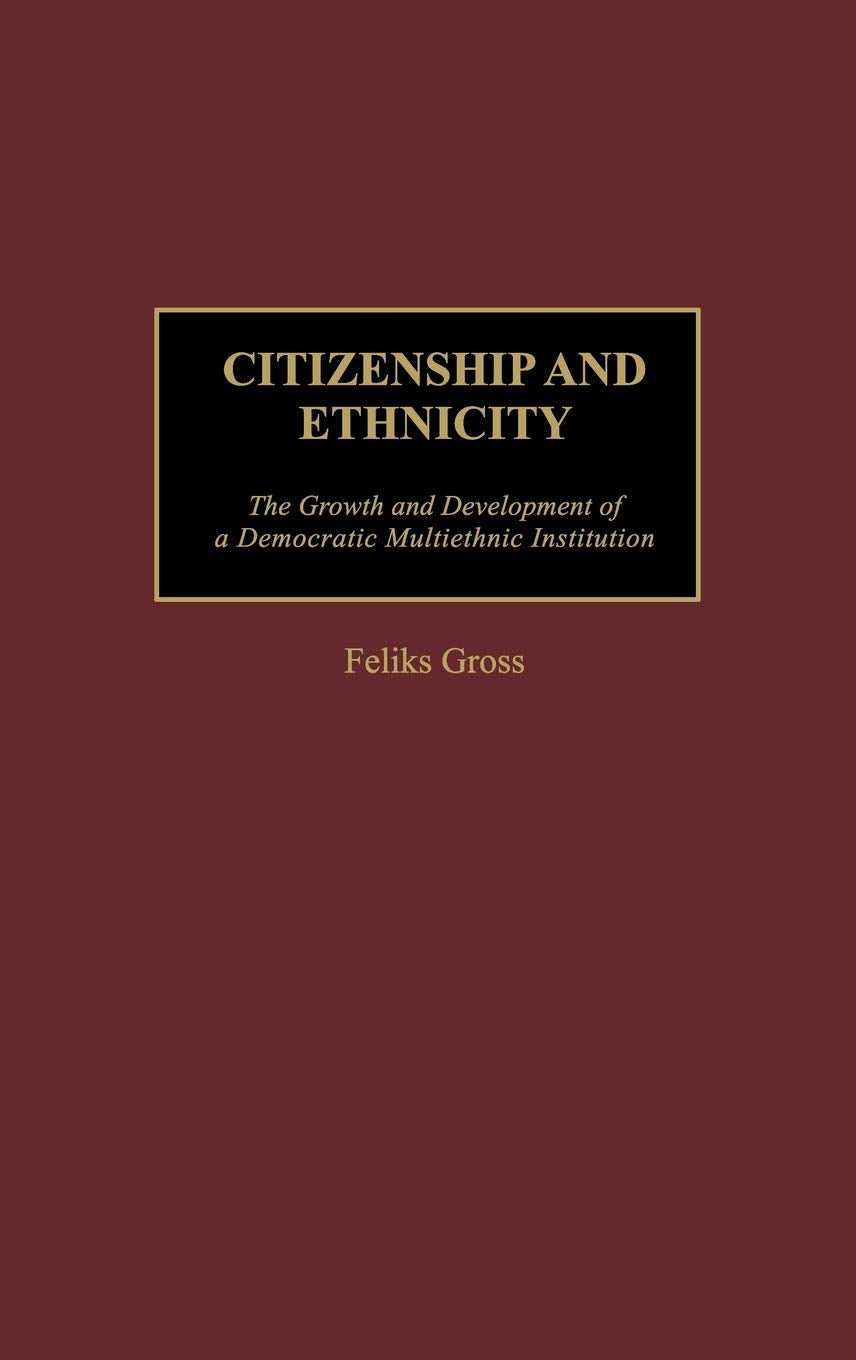
Today, all industrialized states are multinational. However, as Political Sociologist Feliks Gross points out, there remains considerable debate and experimentation on how to organize a multiethnic, democratic, and humane state. Gross examines various types of multiethnic states as well as their early origins and prospects for success. In the past, minorities were usually formed as a consequence of conquest or migration; minorities tended to have an inferior status, subordinated to the ruling, dominant ethnic class.While Athens provides an early example of a state formed by alliance and association, the Romans advanced this concept when they extended to subjected peoples the status by means of citizenship. After the fall of Rome, citizenship continued in Italian and other continental cities. In England, subjectship associated with individual freedom had native roots. The American and French Revolutions revived and created the modern definition of citizenship. Along with Rome, however, only the United States provides an example of a successful multiethnic state of continental dimensions.
⚠️ WARNING (California Proposition 65):
This product may contain chemicals known to the State of California to cause cancer,
birth defects, or other reproductive harm.
For MAP (Minimum Advertised Price) violations and Intellectual Property (IP) or Trademark concerns, please contact:
support@ergodebooks.com
⚠️ California Proposition 65 Warning: Some products sold on this website may expose you to chemicals known to the State of California to cause cancer, birth defects, or other reproductive harm. For more information, visit www.P65Warnings.ca.gov.