
Title
City at the Water's Edge: A Natural History of New York,Used
Sold by Ergodebooks, an authorized reseller.
Returns accepted within 30 days | support@ergodebooks.com
Shipping Information
- Free Standard Shipping — United States only
- Processing Time: 3–5 business days
- Estimated Delivery: 6–10 business days after dispatch
- Double-boxed, fully insured & discreetly packaged
- Tracking number sent via email once dispatched
Returns & Refund
Returns accepted within 30 days of delivery.
Damaged or Defective Item
Free return shipping + replacement or full refund
Wrong Item Received
Free return shipping + replacement or full refund
Change of Mind
Return shipping at customer's expense · 25% restocking fee applies
Payment Option

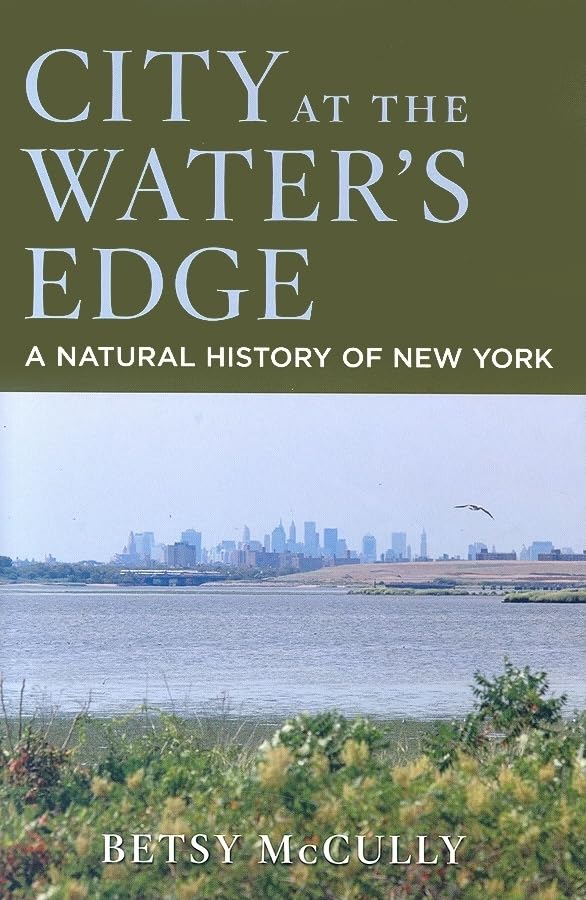
Concrete floors and concrete walls, buildings that pierce the sky, taxicabs and subway corridors, a steady din of noise. These things, along with a virtually unrivaled collection of museums, galleries, performance venues, media outlets, international corporations, and stock exchanges make New York City not only the cultural and financial capital of the United States, but one of the largest and most impressive urban conglomerations in the world. With distinctions like these, is it possible to imagine the city as any more than this?City at the Water's Edge invites readers to do just that. Betsy McCully, a longtime urban dweller, argues that this city of lights is much more than a humanmade metropolis. It has a rich natural history that is every bit as fascinating as the glitzy veneer that has been built atop it. Through twenty years of nature exploration, McCully has come to know New York as part of the Lower Hudson Bioregiona place of salt marshes and estuaries, sand dunes and barrier islands, glacially sculpted ridges and kettle holes, rivers and streams, woodlands and outwash plains. Here she tells the story of New York that began before the first humans settled in the region twelve thousand years ago, and long before immigrants ever arrived at Ellis Island. The timeline that she recounts is one that extends backward half a billion years; it plumbs the depths of Manhattan's geological history and forecasts a possible future of global warming, with rising seas lapping at the base of the Empire State Building.Counter to popular views that see the city as a marvel of human ingenuity diametrically opposed to nature, this unique account shows how the region has served as an evolving habitat for a diversity of species, including our own. The author chronicles the growth of the city at the expense of the environment, but leaves the reader with a vision of a future city as a human habitat that is brought into balance with nature.
⚠️ WARNING (California Proposition 65):
This product may contain chemicals known to the State of California to cause cancer, birth defects, or other reproductive harm.
For more information, please visit www.P65Warnings.ca.gov.
- Q: What is the size of the book? A: The book measures five point seventy-five inches in length, zero point eight inches in width, and nine point zero two inches in height.
- Q: How many pages does this book have? A: This book contains two hundred pages, providing ample content for readers interested in New York's natural history.
- Q: What is the binding type of the book? A: The book is bound in hardcover, ensuring durability for frequent handling and reading.
- Q: Is this book suitable for children? A: Yes, this book is suitable for older children and teenagers, particularly those interested in nature and urban history.
- Q: What age group is this book appropriate for? A: This book is best suited for readers aged twelve and up, due to its complex themes and language.
- Q: How should I read this book for the best experience? A: To fully appreciate the content, read the book in a quiet environment, allowing for reflection on its themes and insights.
- Q: How should I care for this hardcover book? A: To keep the book in good condition, store it upright in a dry place and avoid exposure to direct sunlight.
- Q: Can I clean the book if it gets dirty? A: Yes, lightly dust the cover with a dry cloth, but avoid using water or cleaning solutions that may damage the pages.
- Q: Is this book environmentally safe? A: Yes, the book is printed on standard paper, and proper disposal methods can minimize environmental impact.
- Q: How does this book compare to other urban nature histories? A: This book is unique as it blends urban history with natural exploration, unlike many others that focus strictly on either aspect.
- Q: Should I buy this book if I'm a history enthusiast? A: Yes, if you enjoy urban history and natural environments, this book offers a compelling perspective on New York's evolution.
- Q: Is this book suitable for academic study? A: Yes, this book can serve as a valuable resource for students studying urban ecology or environmental history.
- Q: What if the book arrives damaged? A: If the book arrives damaged, you should contact the seller for a return or replacement within the specified return policy period.
- Q: Is there a warranty for this book? A: Typically, books do not come with a warranty, but check with the seller for any available guarantees or return policies.
- Q: What should I do if I have questions about the book? A: For questions about the book, consider reaching out to the publisher or checking online resources for additional information.
- Q: Can I find more books like this one? A: Yes, you can find similar titles in the State & Local category, especially those focusing on urban ecology or natural history.