
Title
Civic Engagement: Social Science And Progressiveera Reform In New York City,Used
Sold by Ergodebooks, an authorized reseller.
Returns accepted within 30 days | support@ergodebooks.com
Shipping Information
- Free Standard Shipping — United States only
- Processing Time: 3–5 business days
- Estimated Delivery: 6–10 business days after dispatch
- Double-boxed, fully insured & discreetly packaged
- Tracking number sent via email once dispatched
Returns & Refund
Returns accepted within 30 days of delivery.
Damaged or Defective Item
Free return shipping + replacement or full refund
Wrong Item Received
Free return shipping + replacement or full refund
Change of Mind
Return shipping at customer's expense · 25% restocking fee applies
Payment Option

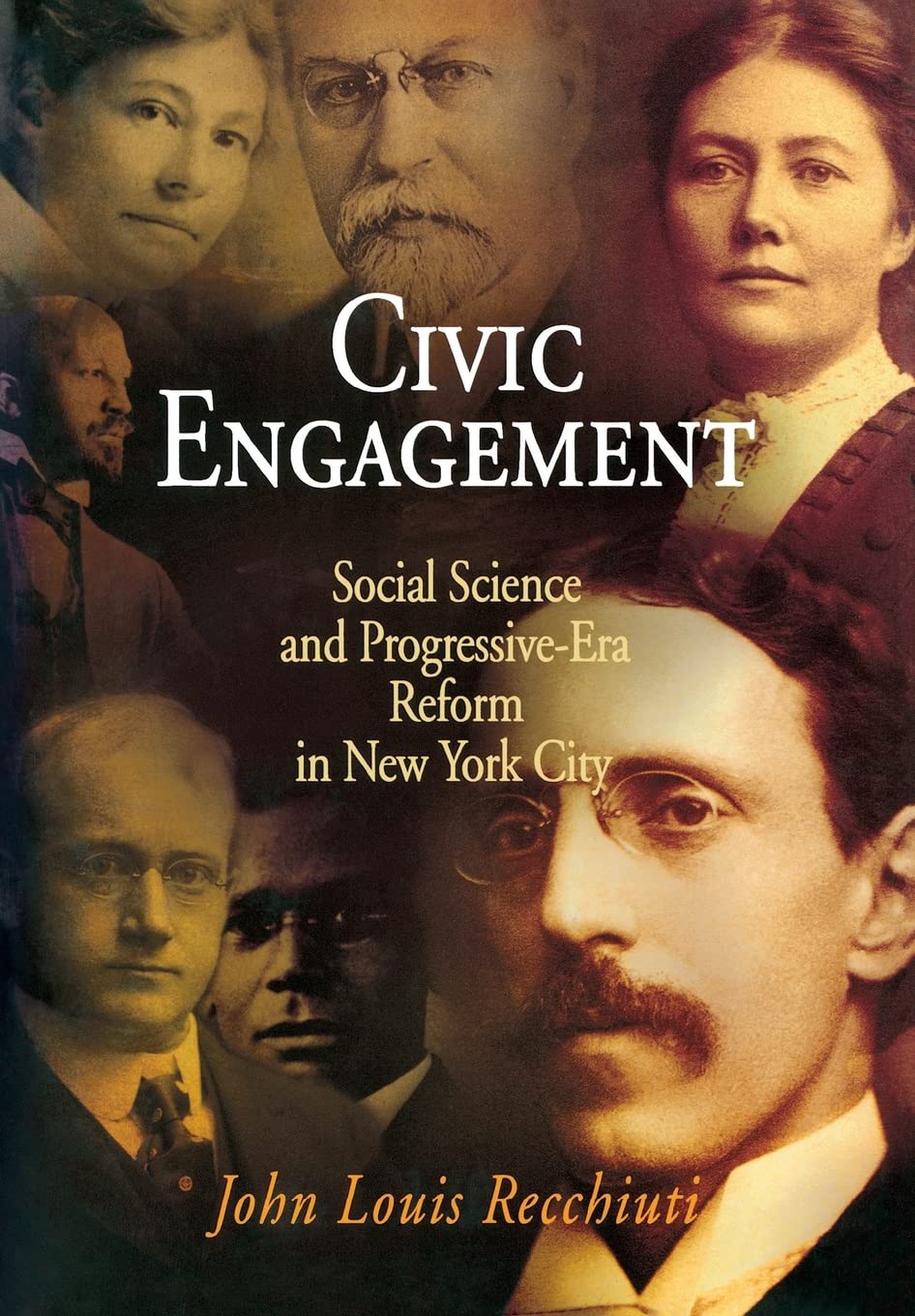
John Recchiuti recounts the history of a vibrant network of young American scholars and social activists who helped transform a city and a nation. New York, in the late Gilded Age and Progressive Era, was the nation's financial capital, its principal hub for immigration, and its premier center for the arts. It was also a center of civic engagement: most of the nation's main reform organizations were headquartered there. As public intellectuals, members of the city's social science network championed the fight for civil rights through the NAACP and National Urban League; sought solutions to labor problems through the American Association for Labor Legislation, National Consumers' League, and National Child Labor Committee; founded the nation's first settlement houses; and established the first center for social science and social work, the New York School of Philanthropy.In New York, which one group of social scientists called 'the greatest social science laboratory in the world,' these men and women lived and worked in Greenwich Village's workingclass haunts, amid immigrant poverty on the Lower East Side, and on Columbia University's Upper West Side campus. They debated how much government should regulate laissezfaire capitalism, whether poverty was caused by individual character flaws, and how, through the New York Bureau of Municipal Research, to thwart municipal corruption. Some promulgated a racist eugenics, while others fought racism in the name of social science. And, in their reach for leadership, they confronted an essential question: was social science to be the herald of a reinvigorated democracy, or an instrument of technocracy?In this deeply researched study, Recchiuti focuses on more than a score of Progressive reformers, including Florence Kelley, W. E. B. Du Bois, E. R. A. Seligman, Charles Beard, Franz Boaz, Frances Perkins, Samuel Lindsay, Edward Devine, Mary Simkhovitch, and George Edmund Haynes. He reminds us how people from markedly diverse backgrounds forged a movement to change a city and, beyond it, a nation.
⚠️ WARNING (California Proposition 65):
This product may contain chemicals known to the State of California to cause cancer, birth defects, or other reproductive harm.
For more information, please visit www.P65Warnings.ca.gov.