
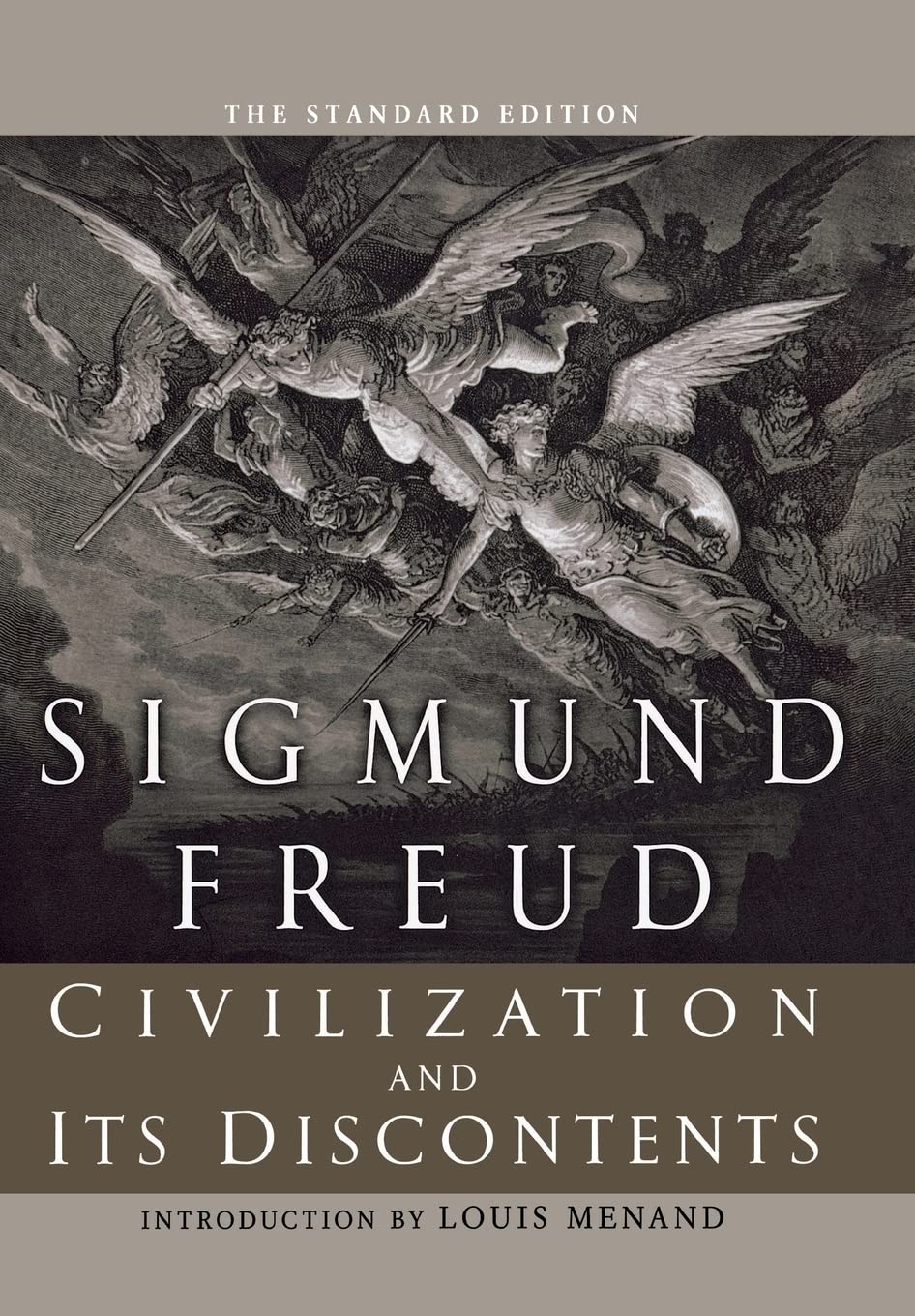
Title
Civilization And Its Discontents (Complete Psychological Works Of Sigmund Freud)
Sold by Ergodebooks, an authorized reseller.
Returns accepted within 30 days | support@ergodebooks.com
Shipping Information
- Free Standard Shipping — United States only
- Processing Time: 3–5 business days
- Estimated Delivery: 6–10 business days after dispatch
- Double-boxed, fully insured & discreetly packaged
- Tracking number sent via email once dispatched
Returns & Refund
Returns accepted within 30 days of delivery.
Damaged or Defective Item
Free return shipping + replacement or full refund
Wrong Item Received
Free return shipping + replacement or full refund
Change of Mind
Return shipping at customer's expense · 25% restocking fee applies
Payment Option

For The 75Th Anniversary, A New Edition Of The Seminal Work With An Introduction By Pulitzer Prizewinning Author Louis Menand. Civilization And Its Discontents May Be Sigmund Freud'S Bestknown Work. Originally Published In 1930, It Seeks To Answer Ultimate Questions: What Influences Led To The Creation Of Civilization? How Did It Come To Be? What Determines Its Course? In This Seminal Volume Of Twentiethcentury Thought, Freud Elucidates The Contest Between Aggression, Indeed The Death Drive, And Its Adversary Eros. He Speaks To Issues Of Human Creativity And Fulfillment, The Place Of Beauty In Culture, And The Effects Of Repression.Louis Menand, Author Of The Pulitzer Prizewinning The Metaphysical Club, Contributor To The New Yorker, And Professor Of English At Harvard University, Reflects On The Importance Of This Work In Intellectual Thought And Why It Has Become Such A Landmark Book For The History Of Ideas.Not Available In Hardcover For Decades, This Beautifully Rendered Anniversary Edition Will Be A Welcome Addition To Readers' Shelves.
⚠️ WARNING (California Proposition 65):
This product may contain chemicals known to the State of California to cause cancer, birth defects, or other reproductive harm.
For more information, please visit www.P65Warnings.ca.gov.
- Q: What is the page count of this book? A: This book has one hundred ninety-four pages. It's a concise yet impactful read on Freud's theories.
- Q: What are the dimensions of this book? A: The book measures six point one inches in length, eight inches in height, and zero point eight inches in width. These dimensions make it easy to handle and store.
- Q: What type of binding does this book have? A: This book is bound in hardcover. This durable binding enhances its longevity and makes it suitable for frequent reading.
- Q: How do I approach reading this book? A: You can read this book at your own pace. It's suitable for anyone interested in psychology, philosophy, or cultural studies.
- Q: Is this book suitable for all ages? A: This book is intended for adult readers. It covers complex psychological concepts that may not be suitable for younger audiences.
- Q: How should I care for this hardcover book? A: To keep this book in good condition, store it upright on a shelf and avoid exposure to direct sunlight. This will prevent fading and wear.
- Q: Can I loan this book to others? A: Yes, you can loan this book to others. Just ensure it is returned in good condition, as it is a valuable addition to any library.
- Q: How do I clean this book if it gets dirty? A: To clean this book, gently wipe the cover with a dry cloth. Avoid using water or cleaning solutions, as these can damage the material.
- Q: How do I know if this book is right for me? A: If you're interested in Freud's theories on civilization and human behavior, this book is an excellent choice for you.
- Q: What themes are explored in this book? A: This book explores themes of civilization, aggression, creativity, and repression. Freud delves into the psychological forces that shape human society.
- Q: Is there an introduction by any notable authors? A: Yes, this edition features an introduction by Pulitzer Prize-winning author Louis Menand. His insights add depth to Freud's work.
- Q: What makes this edition special? A: This edition celebrates the seventy-fifth anniversary of the original publication and is not available in hardcover for decades. It's a significant collectible.
- Q: What are the shipping options for this book? A: Shipping options vary by retailer, but most offer standard and expedited shipping. Check with the seller for specific details.
- Q: What if my book arrives damaged? A: If your book arrives damaged, contact the retailer for return or exchange options. Most retailers have policies in place for such issues.
- Q: Does this book have any awards or recognitions? A: While the book itself may not have specific awards, it is widely recognized as a seminal work in psychology and philosophy.