
Title
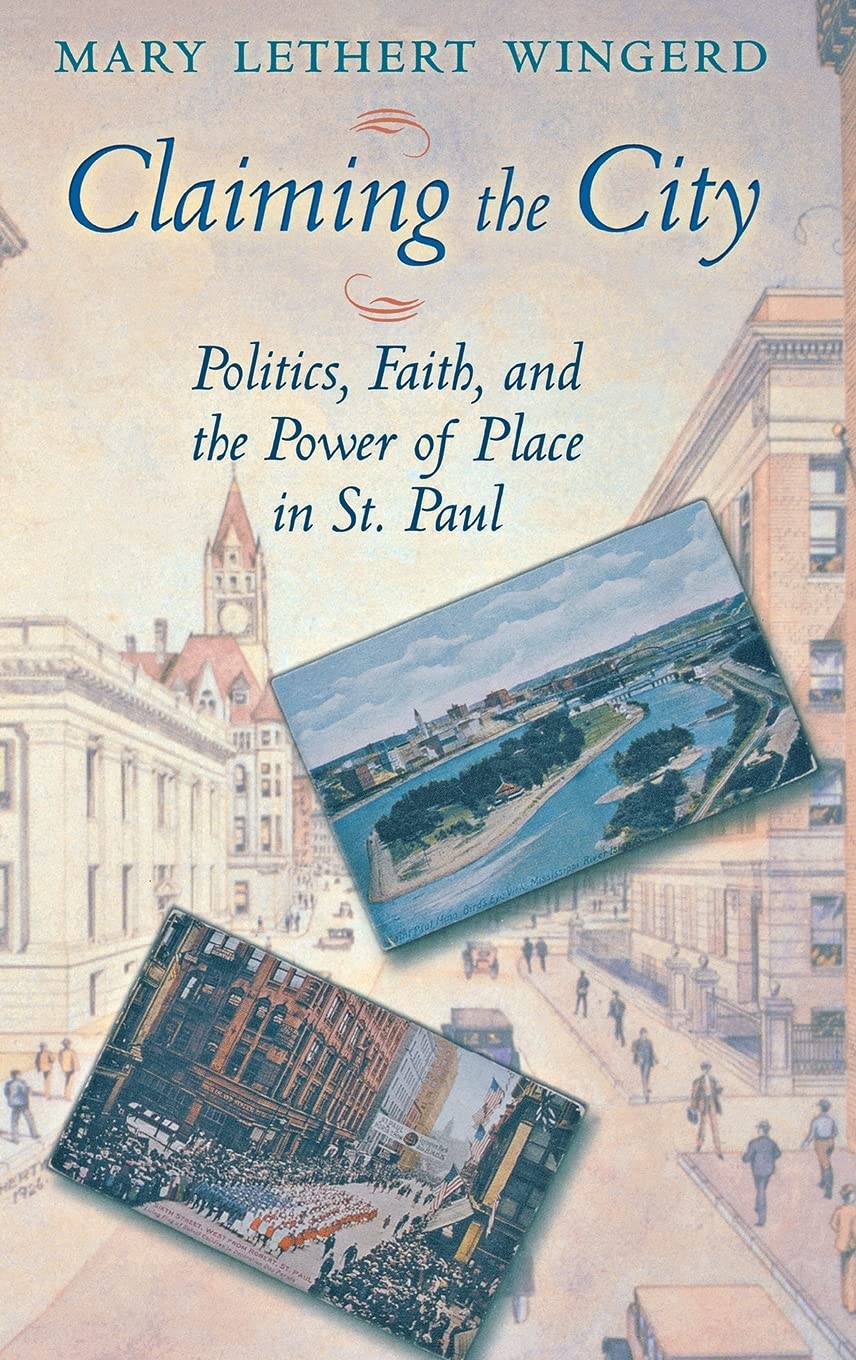
Claiming the City: Politics, Faith, and the Power of Place in St. Paul (Cushwa Center Studies of Catholicism in TwentiethCentur,Used
Sold by Ergodebooks, an authorized reseller.
Returns accepted within 30 days | support@ergodebooks.com
Shipping Information
- Free Standard Shipping — United States only
- Processing Time: 3–5 business days
- Estimated Delivery: 6–10 business days after dispatch
- Double-boxed, fully insured & discreetly packaged
- Tracking number sent via email once dispatched
Returns & Refund
Returns accepted within 30 days of delivery.
Damaged or Defective Item
Free return shipping + replacement or full refund
Wrong Item Received
Free return shipping + replacement or full refund
Change of Mind
Return shipping at customer's expense · 25% restocking fee applies
Payment Option

Are Minneapolis and St. Paul 'Twin Cities' in proximity only? How can two cities, spoken of so often in one breath, differ so greatly in their histories and characteristics? Claiming the City traces the contours of St. Paul's 'civic identity' to show how personal identities and political structures of power are fundamentally informed by the social geography of place. St. Paul proves a particularly fruitful site for such analysis because it has developed along a divergent path from that of Minneapolis, its sister city just across the Mississippi river.While Minneapolis in the last part of the nineteenth century bore the stamp of Scandinavians, Protestants, and Republican Yankee progressives, St. Paul emerged as an Irish, Catholic, Democratic stronghold. Increasingly overshadowed by the economic might of Minneapolis, out of necessity St. Paul evolved complex alliances among business, labor, and the Catholic Church that cut across class and ethnic linesa culture of compromise that sharply contrasted with Minneapolis' more strident labor politics.Mary Lethert Wingerd brings together the voices of citizens and workers and the power dynamics of civic leaders including James J. Hill and Archbishop John Ireland. She crafts a portrait of St. Paul remarkable for its specificity as well as its relevance to broader interpretations of placebased culture and politics.Wingerd's rich and lively history of St. Paul is a clear demonstration that placethe lived experience and memory located in a specific spatial contextis a constitutive element of all other aspects of identity.
⚠️ WARNING (California Proposition 65):
This product may contain chemicals known to the State of California to cause cancer, birth defects, or other reproductive harm.
For more information, please visit www.P65Warnings.ca.gov.
- Q: What is the main focus of 'Claiming the City'? A: The book focuses on the civic identity of St. Paul, Minnesota, exploring how its personal identities and political structures have been shaped by the social geography of the city.
- Q: Who is the author of 'Claiming the City'? A: The author is Mary Lethert Wingerd, who provides a detailed historical analysis of St. Paul's development and its cultural dynamics.
- Q: What is the publication date of this book? A: The book was published on August 21, 2001.
- Q: What type of binding does this book have? A: The book is available in hardcover binding.
- Q: How many pages does 'Claiming the City' have? A: The book contains 352 pages.
- Q: Is this book in new condition? A: Yes, this book is listed as being in new condition.
- Q: What topics are covered in 'Claiming the City'? A: The book covers topics related to economic history, civic identity, and the contrasting political landscapes of St. Paul and Minneapolis.
- Q: Is this book suitable for academic use? A: Yes, this book is suitable for academic use, particularly for studies in economic history and urban development.
- Q: What edition of the book is available? A: This is the first edition of 'Claiming the City'.
- Q: Are there any notable figures mentioned in the book? A: Yes, the book discusses notable figures such as James J. Hill and Archbishop John Ireland, highlighting their influence in St. Paul's history.