If you have any questions, you are always welcome to contact us. We'll get back to you as soon as possible, withing 24 hours on weekdays.
Customer service
All questions about your order, return and delivery must be sent to our customer service team by e-mail at yourstore@yourdomain.com
Sale & Press
If you are interested in selling our products, need more information about our brand or wish to make a collaboration, please contact us at press@yourdomain.com
Help
If you have any questions, you are always welcome to contact us. We'll get back to you as soon as possible, withing 24 hours on weekdays.
Customer service
All questions about your order, return and delivery must be sent to our customer service team by e-mail at yourstore@yourdomain.com
Sale & Press
If you are interested in selling our products, need more information about our brand or wish to make a collaboration, please contact us at press@yourdomain.com
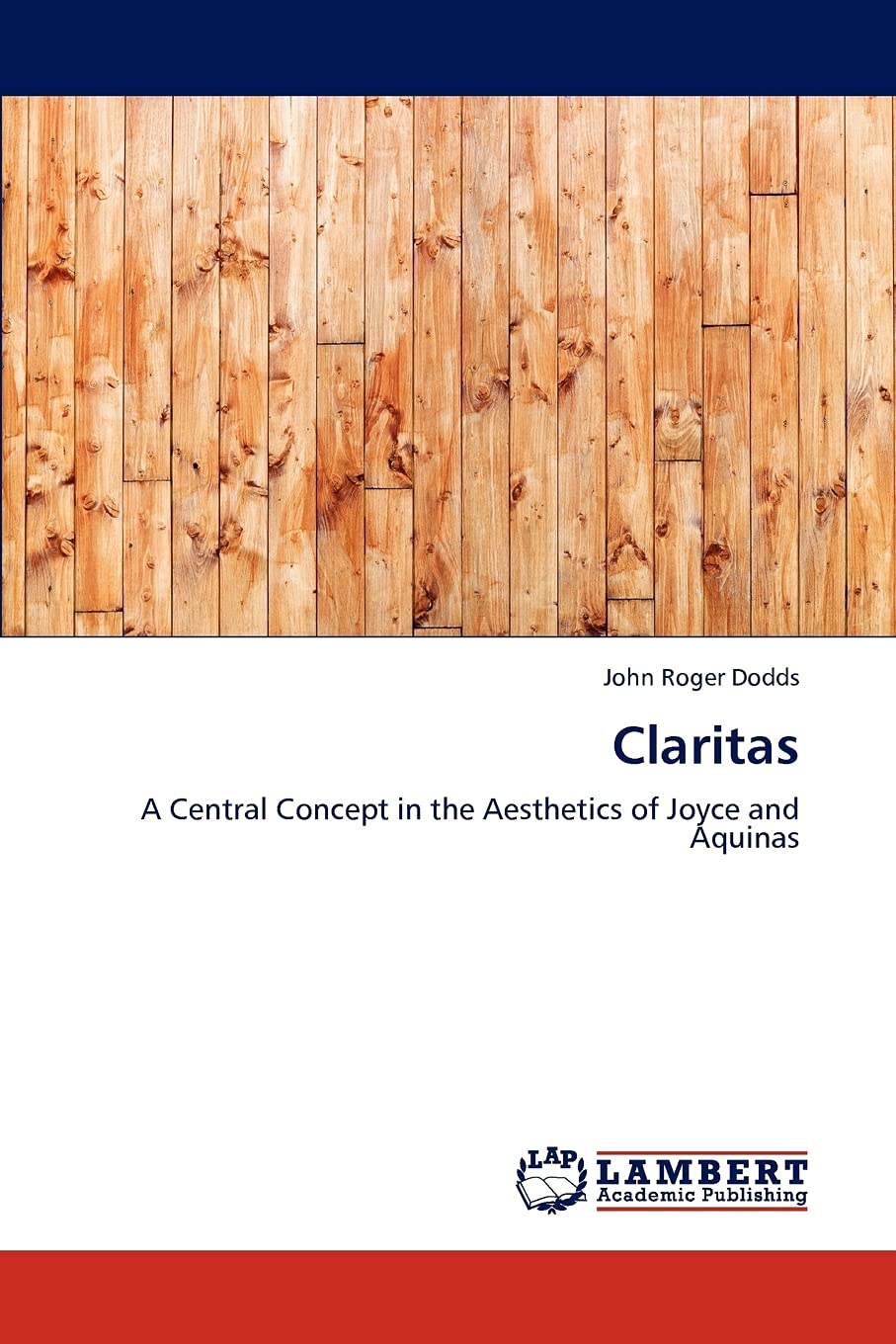
The contested claim is that James Joyce derived part of his aesthetic theory from the opinion of Thomas Aquinas that beauty is marked with unity, harmony, and then radiance, or in Latin, claritas. The last term was puzzling to Stephen Dedalus, in PORTRAIT OF THE ARTIST, until he identified claritas with quidditas or the whatness of a thing. The thesis is that Joyce has effectively grasped the medieval concept in his modernist aesthetic, and may have developed his idea from an acquaintance with the Thomistic theory of knowledge. The demonstration of the case in the SUMMA THEOLOGIAE is what distinguishes this work from its predecessors. The method is to pursue the metaphor of light. Claritas is to be identified with the Neoplatonic intelligible light in Augustine, and this in turn identified with the agent intellect of Aristotle. Aquinas says this intellectual light enables the mind to illuminate senseimages and so render manifest their intelligible nature or quidditas. Thus claritas the radiance of beauty does mark the discovery of quidditas. The implications will engage the fields of aesthetics, intellectual history, modernism, and literary theory.
⚠️ WARNING (California Proposition 65):
This product may contain chemicals known to the State of California to cause cancer,
birth defects, or other reproductive harm.
For MAP (Minimum Advertised Price) violations and Intellectual Property (IP) or Trademark concerns, please contact:
support@ergodebooks.com
⚠️ California Proposition 65 Warning: Some products sold on this website may expose you to chemicals known to the State of California to cause cancer, birth defects, or other reproductive harm. For more information, visit www.P65Warnings.ca.gov.