
Title
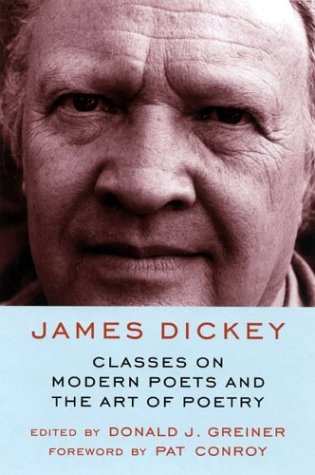
Classes on Modern Poets and the Art of Poetry,Used
Sold by Ergodebooks, an authorized reseller.
Returns accepted within 30 days | support@ergodebooks.com
Shipping Information
- Free Standard Shipping — United States only
- Processing Time: 3–5 business days
- Estimated Delivery: 6–10 business days after dispatch
- Double-boxed, fully insured & discreetly packaged
- Tracking number sent via email once dispatched
Returns & Refund
Returns accepted within 30 days of delivery.
Damaged or Defective Item
Free return shipping + replacement or full refund
Wrong Item Received
Free return shipping + replacement or full refund
Change of Mind
Return shipping at customer's expense · 25% restocking fee applies
Payment Option

Discussions of the modern poetic tradition from the perspective of a practicing writerWidely known as the winner of the 1966 National Book Award and author of the bestselling novel Deliverance, James Dickey devoted himself as much to the critique of the modern literary tradition as to his participation in it. A writer enthralled by teaching, he lectured at several major universities before settling at the University of South Carolina for nearly three decades as poetinresidence. After his death in 1997, a transcription of his lectures was found among his papers. Collected here and published for the first time, these lectures reveal judgments and appraisals Dickey would use to great effect in his teaching. They also contribute to the unraveling of Dickey's art from the largerthanlife myth that surrounded him.In a comprehensive introduction to Dickey's remarks, Donald J. Greiner evaluates the relevance of the writer's often sharply worded opinions. The volume brings to life class sessions planned and delivered soon after Dickey took up fulltime residence at the University of South Carolina, in the triumphal years following his rapid succession of honors. Full of asides, witticisms, and afterthoughts, the sessions suggest not the pontification of a scholar at an academic conference but the confident learning of a practicing poet who happens to enjoy being in the classroom. Clearly setting forth his sense of literary criticism, Dickey repeatedly emphasizes the preeminence of the poet over the critic, the original use of language as a primary criterion for effective poetry, and the centrality of personal reaction to poetry as a measure of its value. Dickey's comments are valuable for their insight into both his own thought processes and those of the poets he reviewed, among them William Butler Yeats, Ezra Pound, Dylan Thomas, A. E. Housman, Gerard Manley Hopkins, Robert Frost, Walter de la Mare, and Robert Bridges.
⚠️ WARNING (California Proposition 65):
This product may contain chemicals known to the State of California to cause cancer, birth defects, or other reproductive harm.
For more information, please visit www.P65Warnings.ca.gov.