If you have any questions, you are always welcome to contact us. We'll get back to you as soon as possible, withing 24 hours on weekdays.
Customer service
All questions about your order, return and delivery must be sent to our customer service team by e-mail at yourstore@yourdomain.com
Sale & Press
If you are interested in selling our products, need more information about our brand or wish to make a collaboration, please contact us at press@yourdomain.com
Help
If you have any questions, you are always welcome to contact us. We'll get back to you as soon as possible, withing 24 hours on weekdays.
Customer service
All questions about your order, return and delivery must be sent to our customer service team by e-mail at yourstore@yourdomain.com
Sale & Press
If you are interested in selling our products, need more information about our brand or wish to make a collaboration, please contact us at press@yourdomain.com
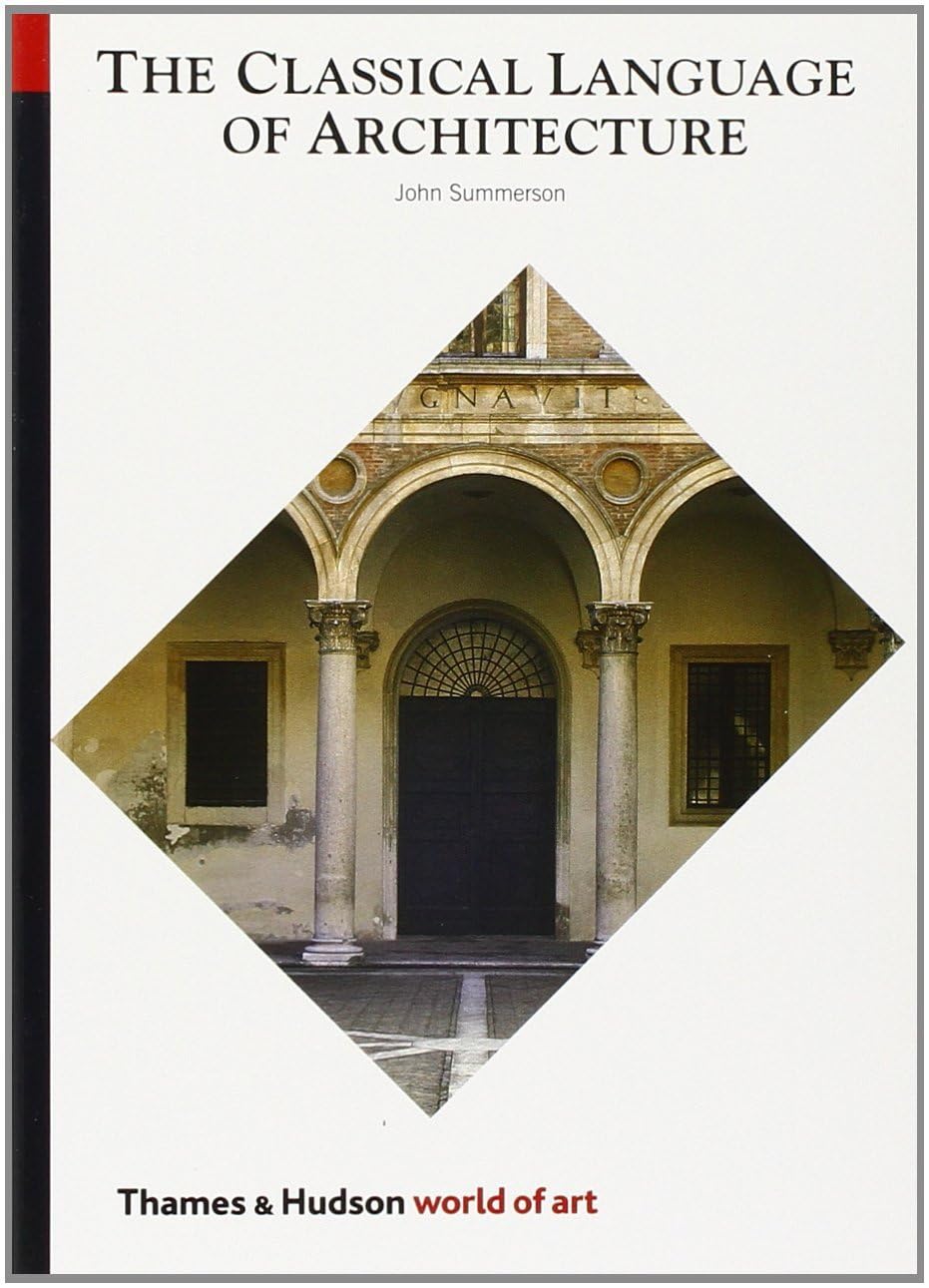
Classical architecture is a visual 'language' and like any other language has its own grammatical rules. Classical buildings as widely spaced in time as a Roman temple, an Italian Renaissance palace and a Regency house all show an awareness of these rules even if they vary them, break them or poetically contradict them. Sir Christopher Wren described them as the 'Latin' of architecture and the analogy is almost exact. There is the difference, however, that whereas the learning of Latin is a slow and difficult business, the language of classical architecture is relatively simple. It is still, to a great extent, the mode of expression of our urban surroundings, since classical architecture was the common language of the western world till comparatively recent times. Anybody to whom architecture makes a strong appeal has probably already discovered something of its grammar for himself.in this book, the author's purpose is to set out as simply and vividly as possible the exact grammatical workings of this architectural language. He is less concerned with its development in Greece and Rome than with its expansion and use in the centuries since the Renaissance. He explains the vigorous discipline of 'the orders' and the scope of 'rustication'; the dramatic deviations of the Baroque and, in the last chapter, the relationship between the classical tradition and the 'modern' architecture of today. The book is intended for anybody who cares for architecture but more specifically for students beginning a course in the history of architecture, to whom a guide to the classical rules will be an essential companion.
⚠️ WARNING (California Proposition 65):
This product may contain chemicals known to the State of California to cause cancer,
birth defects, or other reproductive harm.
For MAP (Minimum Advertised Price) violations and Intellectual Property (IP) or Trademark concerns, please contact:
support@ergodebooks.com
⚠️ California Proposition 65 Warning: Some products sold on this website may expose you to chemicals known to the State of California to cause cancer, birth defects, or other reproductive harm. For more information, visit www.P65Warnings.ca.gov.