
Title
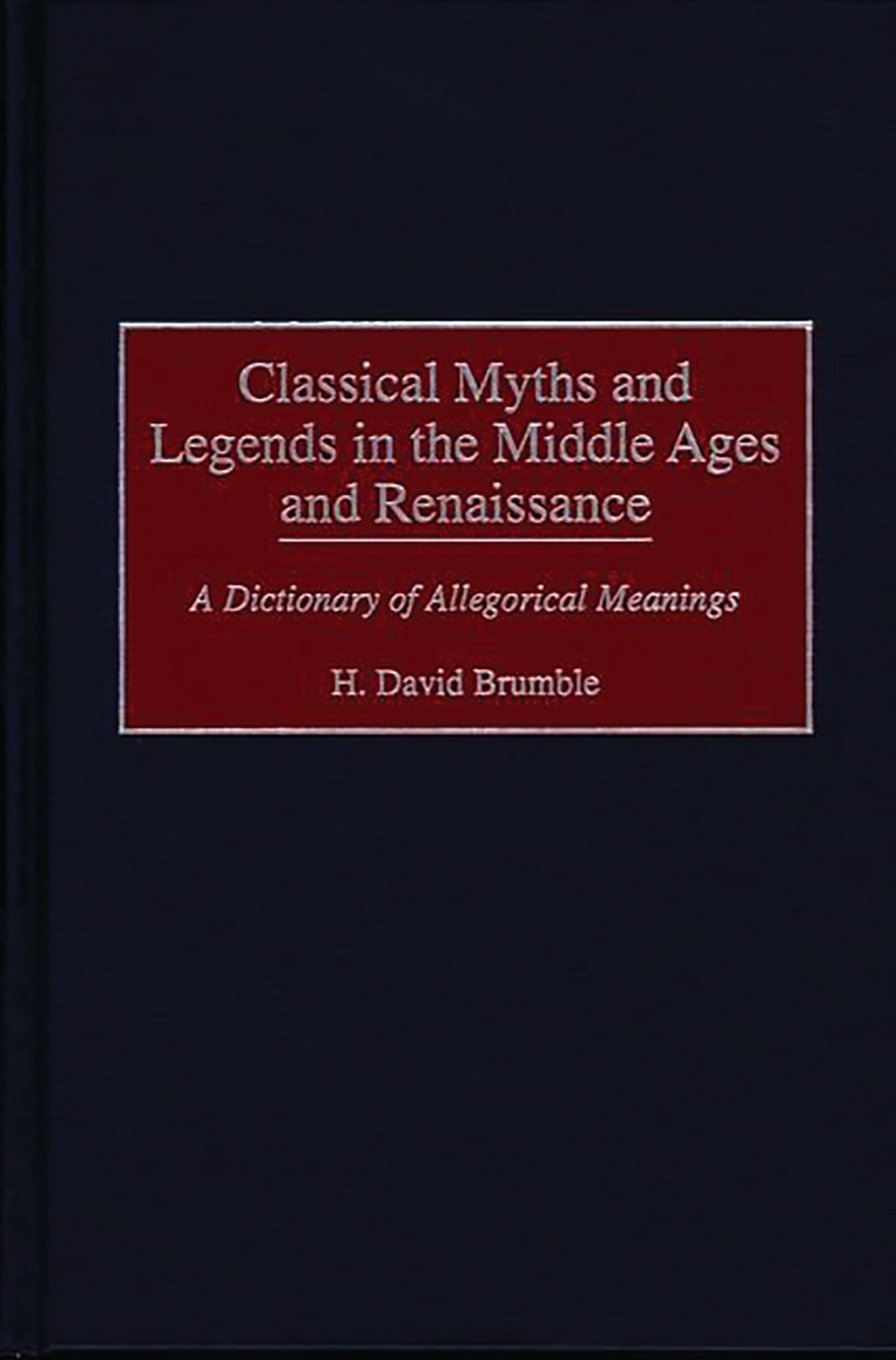
Classical Myths and Legends in the Middle Ages and Renaissance: A Dictionary of Allegorical Meanings,Used
Sold by Ergodebooks, an authorized reseller.
Returns accepted within 30 days | support@ergodebooks.com
Shipping Information
- Free Standard Shipping — United States only
- Processing Time: 3–5 business days
- Estimated Delivery: 6–10 business days after dispatch
- Double-boxed, fully insured & discreetly packaged
- Tracking number sent via email once dispatched
Returns & Refund
Returns accepted within 30 days of delivery.
Damaged or Defective Item
Free return shipping + replacement or full refund
Wrong Item Received
Free return shipping + replacement or full refund
Change of Mind
Return shipping at customer's expense · 25% restocking fee applies
Payment Option

Classical mythology had a vigorous life long after the fall of Rome. Medieval commentators interpreted these myths allegorically. Throughout the Middle Ages and Renaissance, poets and playwrights such as Chaucer and Shakespeare drew upon classical myths to convey Christian beliefs allegorically. While readers of the Middle Ages and Renaissance could be expected to understand the allegorical significance of the ancient myths, contemporary readers are often unfamiliar with the veiled moralizations embedded in the mythological allusions of medieval and early modern authors.While numerous classical dictionaries identify the figures and tales of Greek and Roman mythology, this reference book explains the allegorical significance attached to the myths by Medieval and Renaissance authors. Thus the reader who encounters an allusion to Hercules in a sixteenthcentury drama can quickly discover that Hercules was often interpreted as a personification of virtue during the Renaissance, and that the labors of Hercules could represent the triumph of morality over vice. Included are several hundred alphabetically arranged entries for the gods, goddesses, heroes, heroines, and places of classical myth and legend. Each entry includes a brief account of the classical myth, with reference to the Greek and Latin sources. The entry then discusses how Medieval and Renaissance commentators interpreted the myth allegorically, and how poets, dramatists, and artists employed the allegorization of the myth in their creative works. Each entry includes a bibliography, and the volume concludes with appendices and an extensive bibliography of primary and secondary sources.
⚠️ WARNING (California Proposition 65):
This product may contain chemicals known to the State of California to cause cancer, birth defects, or other reproductive harm.
For more information, please visit www.P65Warnings.ca.gov.