
Title
Classification Methods for Remotely Sensed Data,Used
Sold by Ergodebooks, an authorized reseller.
Returns accepted within 30 days | support@ergodebooks.com
Shipping Information
- Free Standard Shipping — United States only
- Processing Time: 3–5 business days
- Estimated Delivery: 6–10 business days after dispatch
- Double-boxed, fully insured & discreetly packaged
- Tracking number sent via email once dispatched
Returns & Refund
Returns accepted within 30 days of delivery.
Damaged or Defective Item
Free return shipping + replacement or full refund
Wrong Item Received
Free return shipping + replacement or full refund
Change of Mind
Return shipping at customer's expense · 25% restocking fee applies
Payment Option

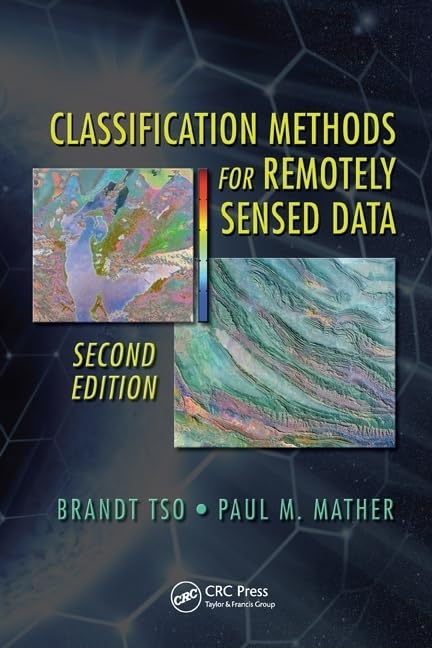
Since the publishing of the first edition of Classification Methods for Remotely Sensed Data in 2001, the field of pattern recognition has expanded in many new directions that make use of new technologies to capture data and more powerful computers to mine and process it. What seemed visionary but a decade ago is now being put to use and refined in commercial applications as well as military ones.Keeping abreast of these new developments, Classification Methods for Remotely Sensed Data, Second Edition provides a comprehensive and uptodate review of the entire field of classification methods applied to remotely sensed data. This second edition provides seven fully revised chapters and two new chapters covering support vector machines (SVM) and decision trees. It includes updated discussions and descriptions of Earth observation missions along with updated bibliographic references. After an introduction to the basics, the text provides a detailed discussion of different approaches to image classification, including maximum likelihood, fuzzy sets, and artificial neural networks.This cuttingedge resource:Presents a number of approaches to solving the problem of allocation of data to one of several classes Covers potential approaches to the use of decision trees Describes developments such as boosting and random forest generation Reviews lopping branches that do not contribute to the effectiveness of the decision treesComplete with detailed comparisons, experimental results, and discussions for each classification method introduced, this book will bolster the work of researchers and developers by giving them access to new developments. It also provides students with a solid foundation in remote sensing data classification methods.
⚠️ WARNING (California Proposition 65):
This product may contain chemicals known to the State of California to cause cancer, birth defects, or other reproductive harm.
For more information, please visit www.P65Warnings.ca.gov.