
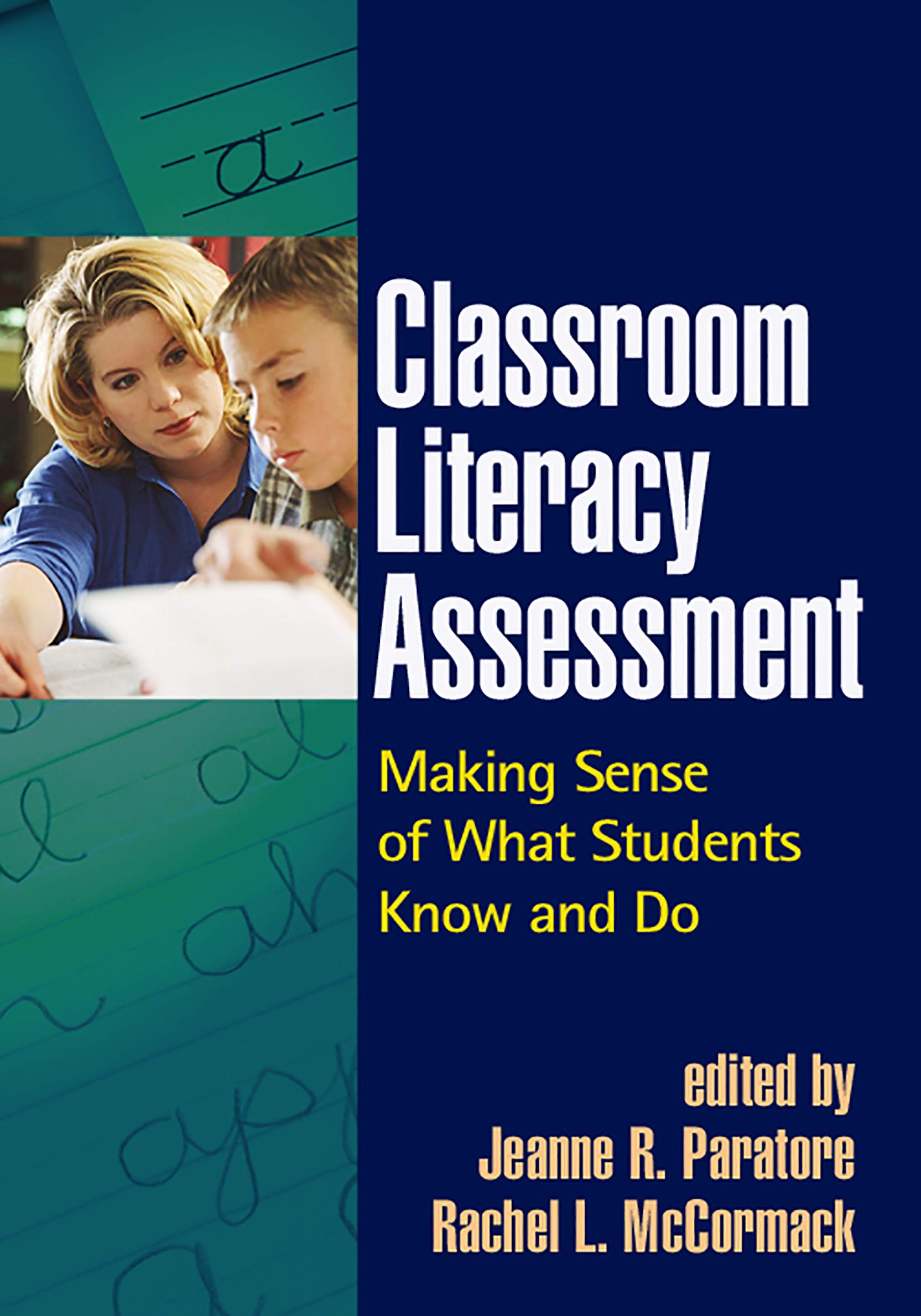
Title
Classroom Literacy Assessment: Making Sense Of What Students Know And Do (Solving Problems In The Teaching Of Literacy)
Sold by Ergodebooks, an authorized reseller.
Returns accepted within 30 days | support@ergodebooks.com
Shipping Information
- Free Standard Shipping — United States only
- Processing Time: 3–5 business days
- Estimated Delivery: 6–10 business days after dispatch
- Double-boxed, fully insured & discreetly packaged
- Tracking number sent via email once dispatched
Returns & Refund
Returns accepted within 30 days of delivery.
Damaged or Defective Item
Free return shipping + replacement or full refund
Wrong Item Received
Free return shipping + replacement or full refund
Change of Mind
Return shipping at customer's expense · 25% restocking fee applies
Payment Option

Showcasing Assessment Practices That Can Help Teachers Plan Effective Instruction, This Book Addresses The Realworld Complexities Of Teaching Literacy In Grades K8. Leading Contributors Present Trustworthy Approaches That Examine Learning Processes As Well As Learning Products, That Yield Information On How The Learning Environment Can Be Improved, And That Are Conducted In The Context Of Authentic Reading And Writing Activities. The Volume Provides Workable, Nutsandbolts Ideas For Incorporating Assessment Into Instruction In All Major Literacy Domains And With Diverse Learners, Including Students In Highpoverty Schools And Those With Special Learning Needs. It Is Illustrated Throughout With Helpful Concrete Examples.
⚠️ WARNING (California Proposition 65):
This product may contain chemicals known to the State of California to cause cancer, birth defects, or other reproductive harm.
For more information, please visit www.P65Warnings.ca.gov.
- Q: How many pages does this book have? A: This book has three hundred thirty-two pages. It provides comprehensive insights into literacy assessment for grades K-8.
- Q: What is the binding type of this book? A: This book is paperback bound. This makes it lightweight and easy to handle for classroom use.
- Q: Who is the author of this book? A: The author is Jeanne R. Paratore. She is known for her expertise in literacy education and assessment.
- Q: What age range is this book suitable for? A: This book is suitable for educators teaching students in grades K through eight. It focuses on literacy assessment practices for diverse learners.
- Q: How can this book help teachers? A: This book helps teachers by showcasing effective assessment practices. It offers practical strategies for planning instruction based on student needs.
- Q: What topics does this book cover? A: This book covers various literacy domains, including reading and writing. It also addresses the challenges faced by diverse learners.
- Q: Is this book illustrated? A: Yes, the book is illustrated throughout with helpful examples. These illustrations support the text and clarify key concepts.
- Q: What assessment practices are discussed in this book? A: The book discusses trustworthy assessment practices that examine both learning processes and products. It emphasizes authentic reading and writing activities.
- Q: Can this book be used in high-poverty schools? A: Yes, this book provides strategies specifically for high-poverty schools. It addresses the unique challenges faced by students in these environments.
- Q: What is the main focus of this book? A: The main focus is on effective literacy assessment practices. It aims to improve teaching and learning outcomes in literacy.
- Q: Does this book offer practical ideas for teachers? A: Yes, it provides workable, nuts-and-bolts ideas for incorporating assessment into instruction. These ideas are applicable across various literacy domains.
- Q: What is the publisher of this book? A: The publisher is The Guilford Press. They are known for their academic and educational publications.
- Q: Is there a focus on special learning needs in this book? A: Yes, the book includes strategies for students with special learning needs. It emphasizes inclusivity in literacy instruction.
- Q: What does the book suggest about the learning environment? A: The book suggests that assessment practices can improve learning environments. It emphasizes the importance of authentic literacy activities.
- Q: What is the significance of the assessment practices discussed? A: These practices are significant because they help inform instruction. They allow teachers to tailor their approaches to meet student needs.