If you have any questions, you are always welcome to contact us. We'll get back to you as soon as possible, withing 24 hours on weekdays.
Customer service
All questions about your order, return and delivery must be sent to our customer service team by e-mail at yourstore@yourdomain.com
Sale & Press
If you are interested in selling our products, need more information about our brand or wish to make a collaboration, please contact us at press@yourdomain.com
Help
If you have any questions, you are always welcome to contact us. We'll get back to you as soon as possible, withing 24 hours on weekdays.
Customer service
All questions about your order, return and delivery must be sent to our customer service team by e-mail at yourstore@yourdomain.com
Sale & Press
If you are interested in selling our products, need more information about our brand or wish to make a collaboration, please contact us at press@yourdomain.com
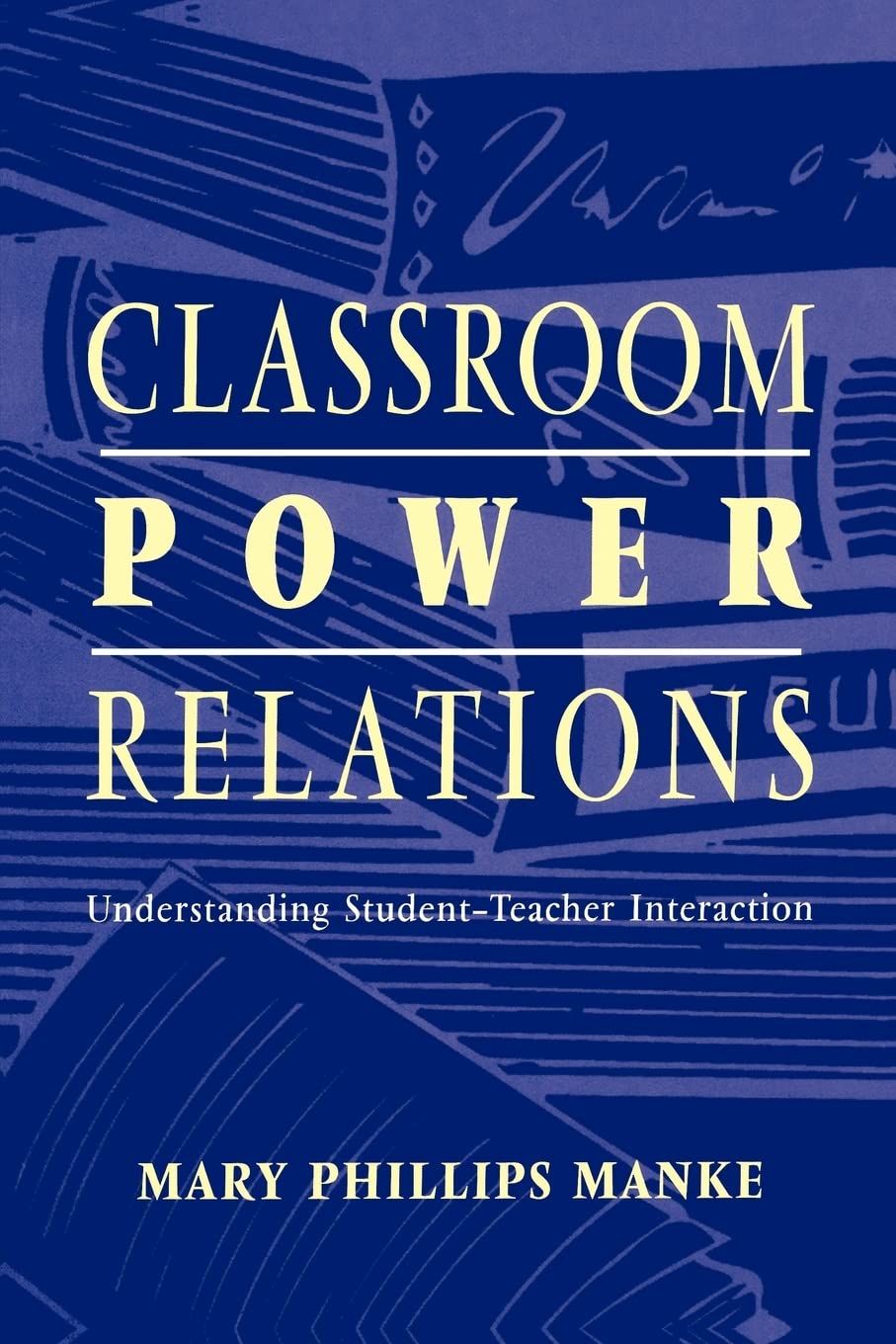
This book is based on a careful theorizing of classroom power relations that sees them as constructed from the actions of all participants. Contrary to the common assumption that the teacher is the source of classroom power, it sees that power as arising from the interaction between students and teachers. If power is owned by the teacher, she is completely responsible for events in the classroom, whether or not she chooses to share her power/control/authority with the students. If, as this book claims, power is the joint creation of all participants, teachers are freed from an excessive and damaging weight of responsibility for classroom events and outcomes. The shared responsibility between students and teachers for what happens in the classroom is brought to light.Based on an ethnographic study of three elementary classrooms, this book offers a careful look at the workings of classroom power. It is of interest both to those seeking to understand power relations from this theoretical viewpoint and to those whose concern is with the daily workings of classrooms, often called classroom management. Questions explored in this book include:* How do teachers organize time and space in classrooms as part of their contribution to the development of classroom power relations?* What kinds of discourse choices do they make, and why?* How do students contribute to defining what will count as classroom knowledge, and how do they resist teacher agendas as they play their part in constructing classroom power relations?
⚠️ WARNING (California Proposition 65):
This product may contain chemicals known to the State of California to cause cancer,
birth defects, or other reproductive harm.
For MAP (Minimum Advertised Price) violations and Intellectual Property (IP) or Trademark concerns, please contact:
support@ergodebooks.com
⚠️ California Proposition 65 Warning: Some products sold on this website may expose you to chemicals known to the State of California to cause cancer, birth defects, or other reproductive harm. For more information, visit www.P65Warnings.ca.gov.