
Title
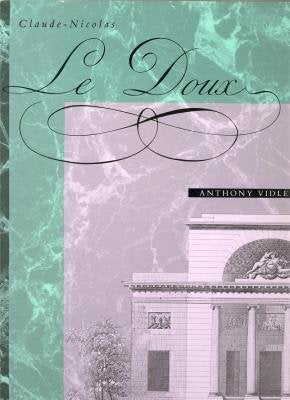
ClaudeNicolas Ledoux: Architecture and Social Reform at the End of the Ancient Regime,Used
Sold by Ergodebooks, an authorized reseller.
Returns accepted within 30 days | support@ergodebooks.com
Shipping Information
- Free Standard Shipping — United States only
- Processing Time: 3–5 business days
- Estimated Delivery: 6–10 business days after dispatch
- Double-boxed, fully insured & discreetly packaged
- Tracking number sent via email once dispatched
Returns & Refund
Returns accepted within 30 days of delivery.
Damaged or Defective Item
Free return shipping + replacement or full refund
Wrong Item Received
Free return shipping + replacement or full refund
Change of Mind
Return shipping at customer's expense · 25% restocking fee applies
Payment Option

Winner, Alice Davis Hitchcock Award, Society of Architectural Historians.The work of the French architect ClaudeNicolas Ledoux has fascinated art historians, social critics, and architects alike since the French Revolution. Criticized in his own time for extravagance and megalomania, Ledoux has since been hailed as a visionary and utopian, and as a radical neoclassicist. In the 1930s Ledoux's designs were seen as anticipating modernist abstraction in architecture, and more recently they have been mined as a source of postmodern imagery.A product of detailed research into lateeighteenthcentury cultural and social history, this book examines the controversial architect's life and work in the context of the Revolutionary period. It discusses Ledoux's education, early career, and the development of his personal idiom as a domestic architect. Vidler analyzes what was, perhaps, the most significant of Ledoux's public works, the Saline de Chaux, one of the most celebrated factory towns of its time and the only work of Ledoux to survive at the scale of its conception. The building of this rural factory, in conjunction with its proposed social and technical program, serves as a case study of Ledoux's early speculations on the relationship of architecture to industrial management.Ledoux was deeply involved in urban projects as well, and Vidler studies a number of them most notably, the Palace of Justice of AixenProvence, the Theater of Besancon, and the tollgates around Paris as examples of Ledoux's attempt to create a 'modern classicism' that would reinvest ancient forms with contemporary meaning and ultimately fashion an aesthetic for the representation of the public realmIn the book's final section, Vidler turns to the more explicitly utopian designs that Ledoux proposed for the 'Ideal City of Chaux,' which he imagined growing up around the saltworks in FranceComte. It was an entire city of symbolic and functional institutions, and Ledoux invented an architectural language to express their social and moral significance.Anthony Vidler is Professor of Architecture at Princeton University, where he also directs the European Cultural Studies Program.
⚠️ WARNING (California Proposition 65):
This product may contain chemicals known to the State of California to cause cancer, birth defects, or other reproductive harm.
For more information, please visit www.P65Warnings.ca.gov.