If you have any questions, you are always welcome to contact us. We'll get back to you as soon as possible, withing 24 hours on weekdays.
Customer service
All questions about your order, return and delivery must be sent to our customer service team by e-mail at yourstore@yourdomain.com
Sale & Press
If you are interested in selling our products, need more information about our brand or wish to make a collaboration, please contact us at press@yourdomain.com
Help
If you have any questions, you are always welcome to contact us. We'll get back to you as soon as possible, withing 24 hours on weekdays.
Customer service
All questions about your order, return and delivery must be sent to our customer service team by e-mail at yourstore@yourdomain.com
Sale & Press
If you are interested in selling our products, need more information about our brand or wish to make a collaboration, please contact us at press@yourdomain.com
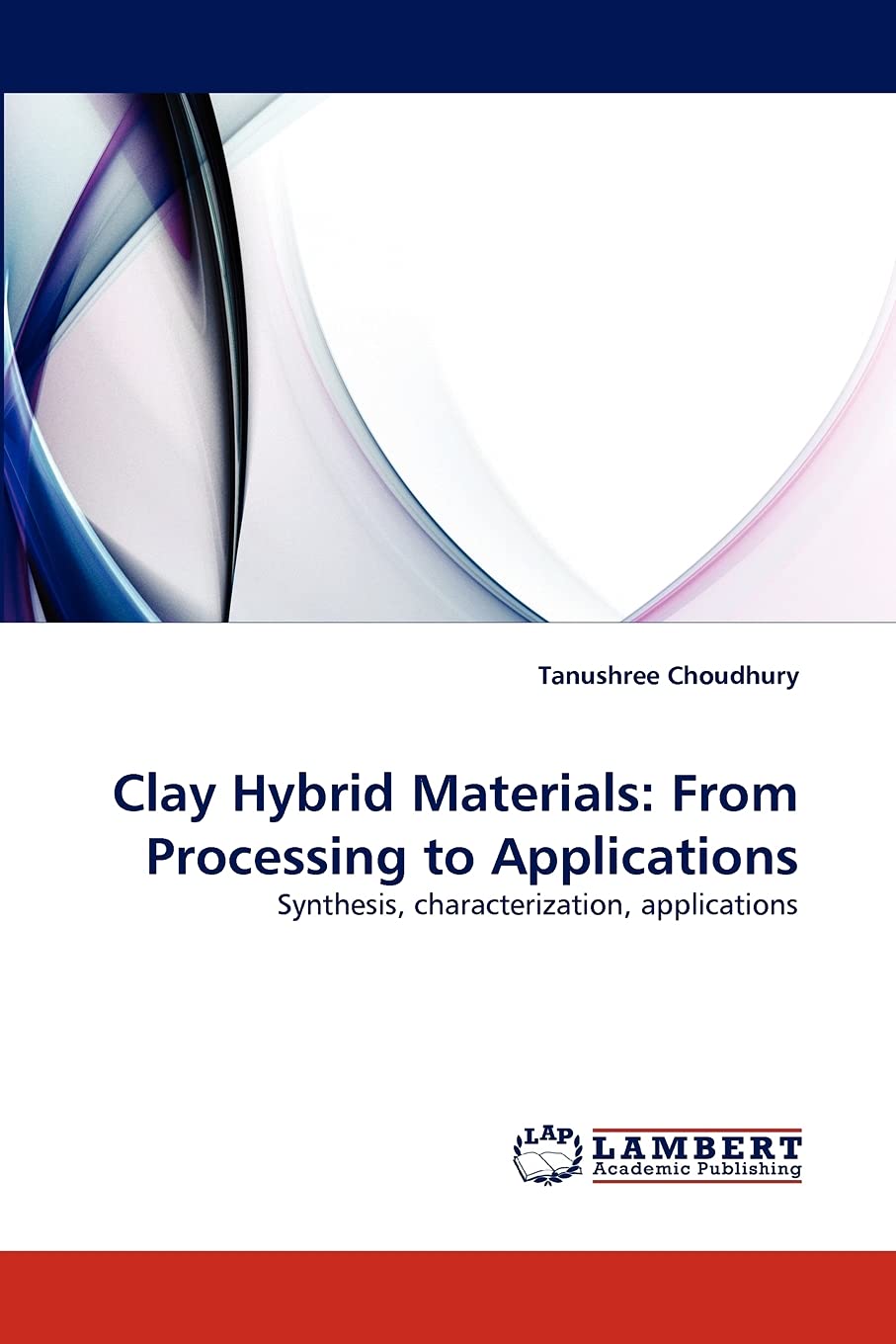
Modern trend is to prepare hybrid materials using nanoclays. Formation of nanoclay, exfoliated clay, proper dispersion in polymer matrix still remains a challenge. There are three specific problems to be dealt with at present. Aspect ratio of the clay particles must be very thin in cross section, present a large surface area in its flat dimension, serves the purpose of maximizing gas permeability. Clay particles that grow on aggregates must be broken down or exfoliated into individual sheets that have thickness of 1 nm. Particles must be compatible with the polymeric substrate. The objective of this work is to disperse clay using various dispersants using natural ones. The green hybrid material so formed by clay polymer matrix has many improved properties such as high Tg, high flame resistance, high tensile strength and improved barrier properties which may find application in textile industry, automobile industry, environmental and polymer engineering fields.
⚠️ WARNING (California Proposition 65):
This product may contain chemicals known to the State of California to cause cancer,
birth defects, or other reproductive harm.
For MAP (Minimum Advertised Price) violations and Intellectual Property (IP) or Trademark concerns, please contact:
support@ergodebooks.com
⚠️ California Proposition 65 Warning: Some products sold on this website may expose you to chemicals known to the State of California to cause cancer, birth defects, or other reproductive harm. For more information, visit www.P65Warnings.ca.gov.