
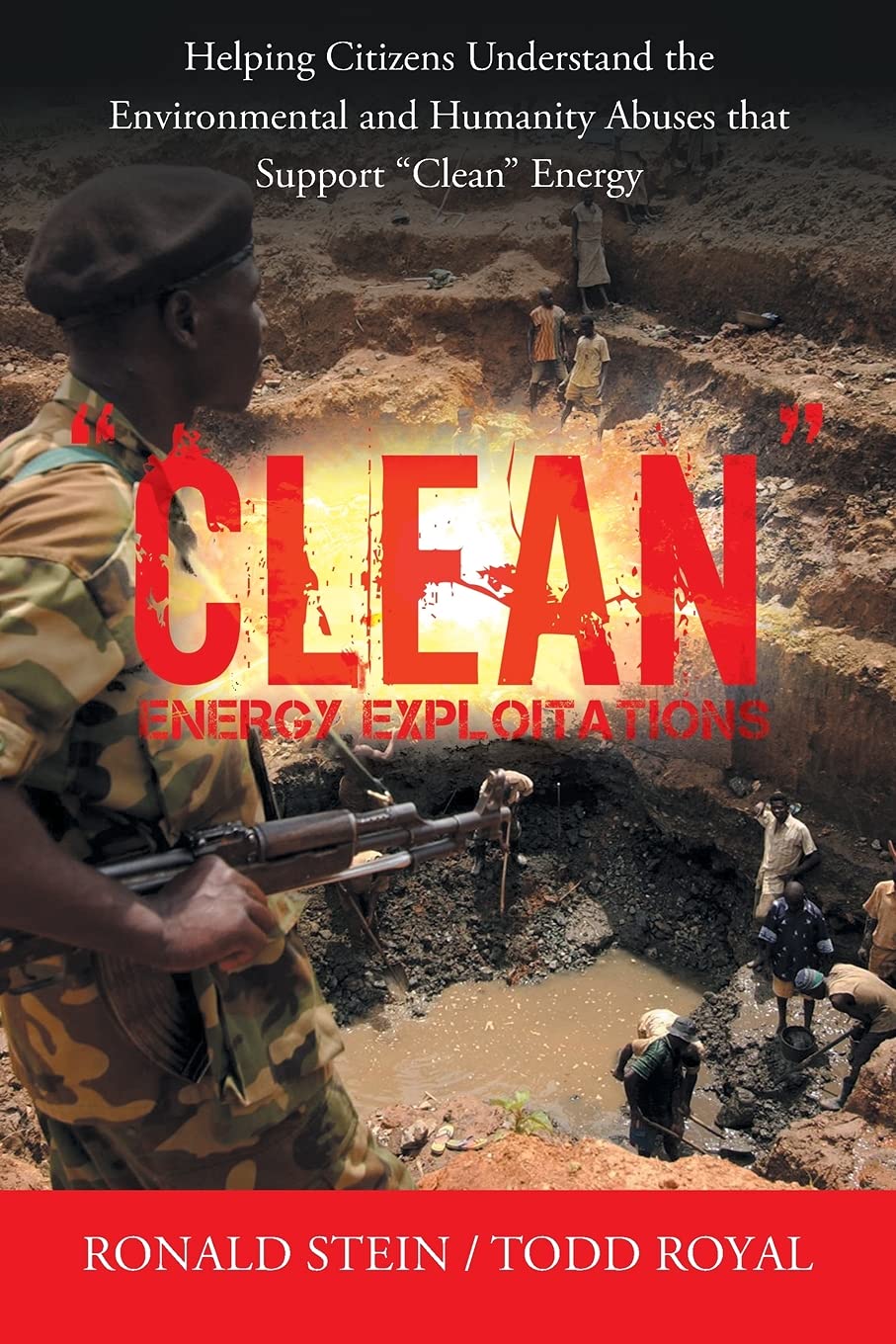
Title
"Clean" Energy Exploitations: Helping Citizens Understand the Environmental and Humanity Abuses That Support "Clean" Energy,Used
Sold by Ergodebooks, an authorized reseller.
Returns accepted within 30 days | support@ergodebooks.com
Shipping Information
- Free Standard Shipping — United States only
- Processing Time: 3–5 business days
- Estimated Delivery: 6–10 business days after dispatch
- Double-boxed, fully insured & discreetly packaged
- Tracking number sent via email once dispatched
Returns & Refund
Returns accepted within 30 days of delivery.
Damaged or Defective Item
Free return shipping + replacement or full refund
Wrong Item Received
Free return shipping + replacement or full refund
Change of Mind
Return shipping at customer's expense · 25% restocking fee applies
Payment Option

The global focus on reducing emissions must be ethical instead of supporting environmental degradation.The book Clean Energy Exploitations Helping citizens understand the environmental and humanity abuses that support clean energy" is a Nominee for the 2022 Pulitzer Prize competition in the General Nonfiction category. Pulitzer Prize Winners and Finalists will be announced in April 2022.They also emphasize the global nature of the problem, noting that the United States of America could cease to exist and wed see environmental problems get worse. In this book, they answer questions such as:Would the Green New Deal cut worldwide emissions?What toll is energy racism and inequality taking on the world?How effective are renewable forms of energy in meeting our needs?Whose duty is it to reduce harmful pollution?Green advocates often say they support sustainable and ethical coffee, sneakers, handbags, and diamondsand they claim they wont tolerate unsafe conditions. But when it comes to green energy and battery energy storage systems for electrical grids and electric vehicles, the authors say it is a different story.
⚠️ WARNING (California Proposition 65):
This product may contain chemicals known to the State of California to cause cancer, birth defects, or other reproductive harm.
For more information, please visit www.P65Warnings.ca.gov.
- Q: How many pages does this book have? A: This book has four hundred twelve pages. It provides an in-depth analysis of the ethical concerns surrounding clean energy.
- Q: What is the binding type of this book? A: The binding type is paperback. This makes it lightweight and easy to carry around.
- Q: What are the dimensions of this book? A: The dimensions are five point nine eight inches by zero point eight three inches by nine point zero two inches. This size is standard for paperback books.
- Q: Who is the author of this book? A: The author is Ronald Stein. He explores critical issues related to clean energy and environmental ethics.
- Q: What themes does this book cover? A: It covers themes of environmental abuse and energy racism. The book aims to educate readers on the ethical implications of clean energy.
- Q: Is this book suitable for all ages? A: Yes, this book is suitable for adults and older teens. It addresses complex social and environmental issues.
- Q: How can I use the information in this book? A: You can use the information to understand the ethical implications of clean energy. It serves as a guide for informed discussions and personal choices.
- Q: Can this book help me understand energy racism? A: Yes, the book discusses energy racism and inequality. It highlights how these issues affect communities worldwide.
- Q: Is this book a good resource for environmental activists? A: Yes, it is an excellent resource for activists. It offers insights and data to support environmental advocacy.
- Q: How should I store this book? A: Store it in a cool, dry place away from direct sunlight. This will help maintain its condition.
- Q: How do I clean this book? A: You can gently wipe the cover with a soft cloth. Avoid using water or cleaning solutions that may damage the pages.
- Q: What if the book arrives damaged? A: If it arrives damaged, you can return it for a replacement. Check the return policy for specific instructions.
- Q: Does this book have any reviews? A: Yes, it has received critical acclaim and is a nominee for the 2022 Pulitzer Prize. Many readers praise its insightful analysis.
- Q: Where can I buy this book? A: You can purchase it from various online retailers and bookstores. Check availability at your preferred store.
- Q: Is there a digital version of this book? A: Yes, there may be a digital version available. Check online platforms for eBook options.
- Q: What is the main argument of the book? A: The main argument is that the focus on clean energy must be ethical and not contribute to environmental degradation. It challenges common perceptions of sustainability.