If you have any questions, you are always welcome to contact us. We'll get back to you as soon as possible, withing 24 hours on weekdays.
Customer service
All questions about your order, return and delivery must be sent to our customer service team by e-mail at yourstore@yourdomain.com
Sale & Press
If you are interested in selling our products, need more information about our brand or wish to make a collaboration, please contact us at press@yourdomain.com
Help
If you have any questions, you are always welcome to contact us. We'll get back to you as soon as possible, withing 24 hours on weekdays.
Customer service
All questions about your order, return and delivery must be sent to our customer service team by e-mail at yourstore@yourdomain.com
Sale & Press
If you are interested in selling our products, need more information about our brand or wish to make a collaboration, please contact us at press@yourdomain.com
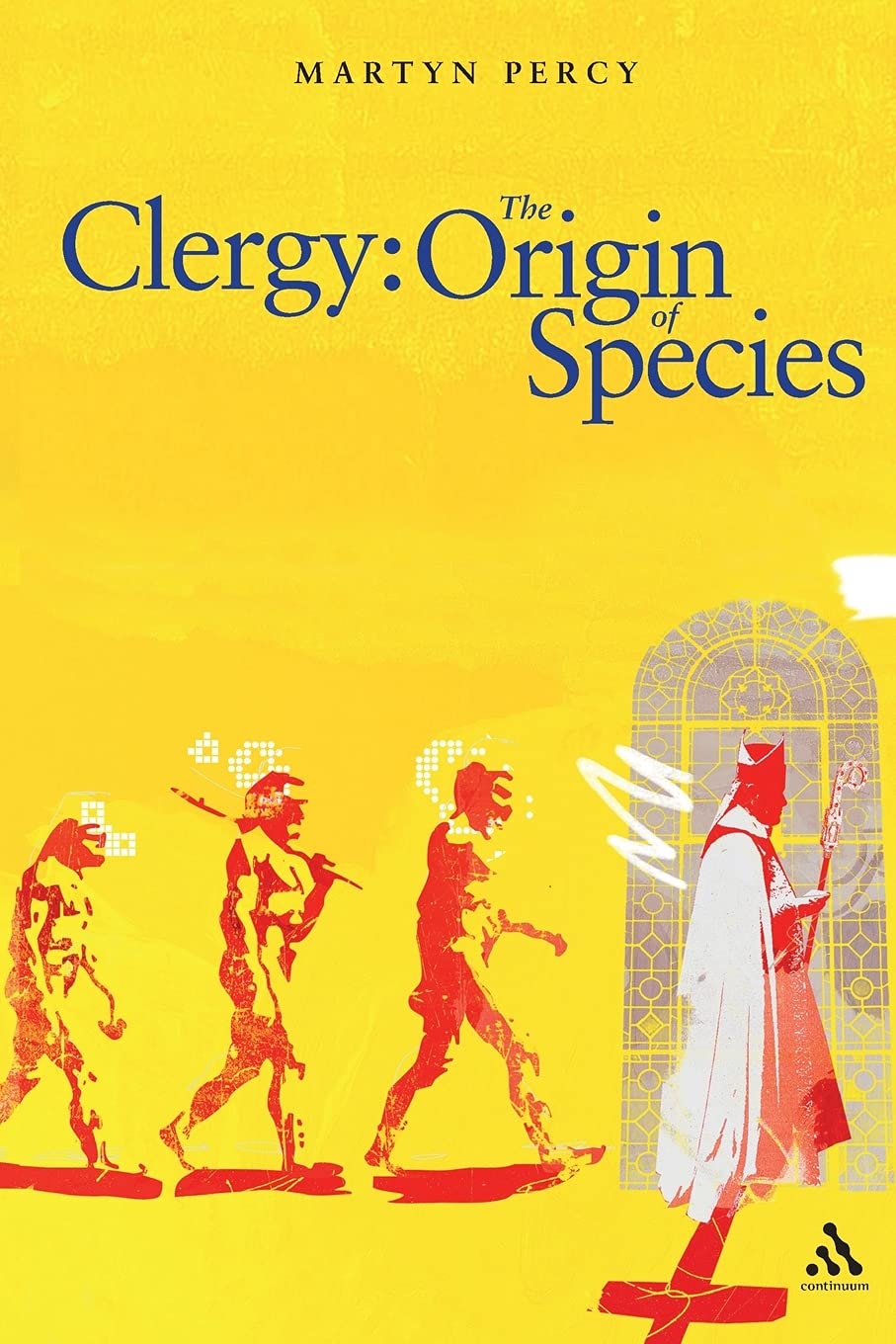
Clergy: The Origin of the Species explores the origins and development of the clergy and offers a study of a profession that, although mostly confined to clerics in the Church of England, will nonetheless have implications for students of cultural studies, social theory, pastoral studies, theological and religious studies. The book uses insights from Darwin and Foucault to chart the rise of the professional clergyperson in modern society. It uses a variety of sources to illustrate how clergy identity has been constructed: 'thumbnail' sketches from various periods of church history, primary sources, pastoral theology, literature and other media. The aim is to show how the identity of the clergy has steadily evolved, so that each variant of the 'species' has proved highly adaptable to each new context/climate. The book offers a serious treatment of material that is, at times, humorous: of hierarchies, manners, clerical dress, stipends, and other 'material' that are often implicit within standard church histories. Percy suggests that although the clergy have now become a highly specialized profession within contemporary society, there are consequences for which Darwin and Foucault can offer insights that provide further illumination. For example, the shape of the profession today selecting, training and deployment makes the clergy more remote from the 'clerisy culture' that Coleridge envisaged in the late eighteenth century. The manner of everday dress also distinguish the clergy from the public in ways that were not known before 1860. The modern clergyperson is, relatively speaking, an innovation.
⚠️ WARNING (California Proposition 65):
This product may contain chemicals known to the State of California to cause cancer,
birth defects, or other reproductive harm.
For MAP (Minimum Advertised Price) violations and Intellectual Property (IP) or Trademark concerns, please contact:
support@ergodebooks.com
⚠️ California Proposition 65 Warning: Some products sold on this website may expose you to chemicals known to the State of California to cause cancer, birth defects, or other reproductive harm. For more information, visit www.P65Warnings.ca.gov.