
Title
Climate Change and Natural Disasters: Transforming Economies and Policies for a Sustainable Future,Used
Sold by Ergodebooks, an authorized reseller.
Returns accepted within 30 days | support@ergodebooks.com
Shipping Information
- Free Standard Shipping — United States only
- Processing Time: 3–5 business days
- Estimated Delivery: 6–10 business days after dispatch
- Double-boxed, fully insured & discreetly packaged
- Tracking number sent via email once dispatched
Returns & Refund
Returns accepted within 30 days of delivery.
Damaged or Defective Item
Free return shipping + replacement or full refund
Wrong Item Received
Free return shipping + replacement or full refund
Change of Mind
Return shipping at customer's expense · 25% restocking fee applies
Payment Option

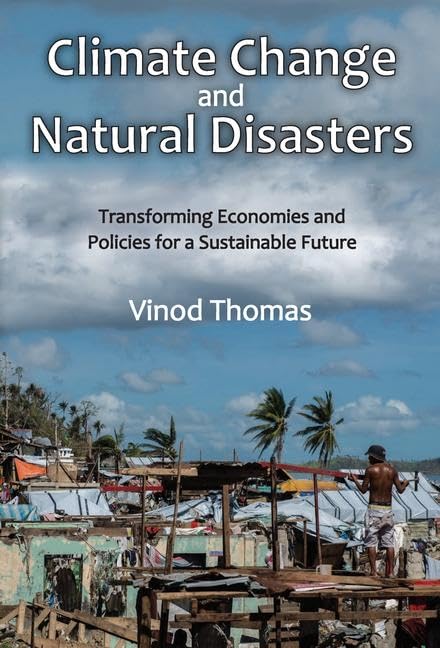
The Open Access version of this book, available at https://www.taylorfrancis.com/books/9781351527927, has been made available under a Creative Commons AttributionNon CommercialNo Derivatives 4.0 licenseThe start of the new millennium will be remembered for deadly climaterelated disasters the great floods in Thailand in 2011, Super Storm Sandy in the United States in 2012, and Typhoon Haiyan in the Philippines in 2013, to name a few. In 2014, 17.5 million people were displaced by climaterelated disasters, ten times more than the 1.7 million displaced by geophysical hazards. What is causing the increase in natural disasters and what effect does it have on the economy? Climate Change and Natural Disasters sends three messages: humanmade factors exert a growing influence on climaterelated disasters; because of the link to anthropogenic factors, there is a pressing need for climate mitigation; and prevention, including climate adaptation, ought not to be viewed as a cost to economic growth but as an investment. Ultimately, attention to climaterelated disasters, arguably the most tangible manifestation of global warming, may help mobilize broader climate action. It can also be instrumental in transitioning to a path of lowcarbon, green growth, improving disaster resilience, improving natural resource use, and caring for the urban environment. Vinod Thomas proposes that economic growth will become sustainable only if governments, political actors, and local communities combine natural disaster prevention and controlling climate change into national growth strategies. When considering all types of capital, particularly human capital, climate action can drive economic growth, rather than hinder it.
⚠️ WARNING (California Proposition 65):
This product may contain chemicals known to the State of California to cause cancer, birth defects, or other reproductive harm.
For more information, please visit www.P65Warnings.ca.gov.