
Title
Climate Policy Changes In Germany And Japan: A Path To Paradigmatic Policy Change (Routledge Research In Comparative Politics)
Sold by Ergodebooks, an authorized reseller.
Returns accepted within 30 days | support@ergodebooks.com
Shipping Information
- Free Standard Shipping — United States only
- Processing Time: 3–5 business days
- Estimated Delivery: 6–10 business days after dispatch
- Double-boxed, fully insured & discreetly packaged
- Tracking number sent via email once dispatched
Returns & Refund
Returns accepted within 30 days of delivery.
Damaged or Defective Item
Free return shipping + replacement or full refund
Wrong Item Received
Free return shipping + replacement or full refund
Change of Mind
Return shipping at customer's expense · 25% restocking fee applies
Payment Option

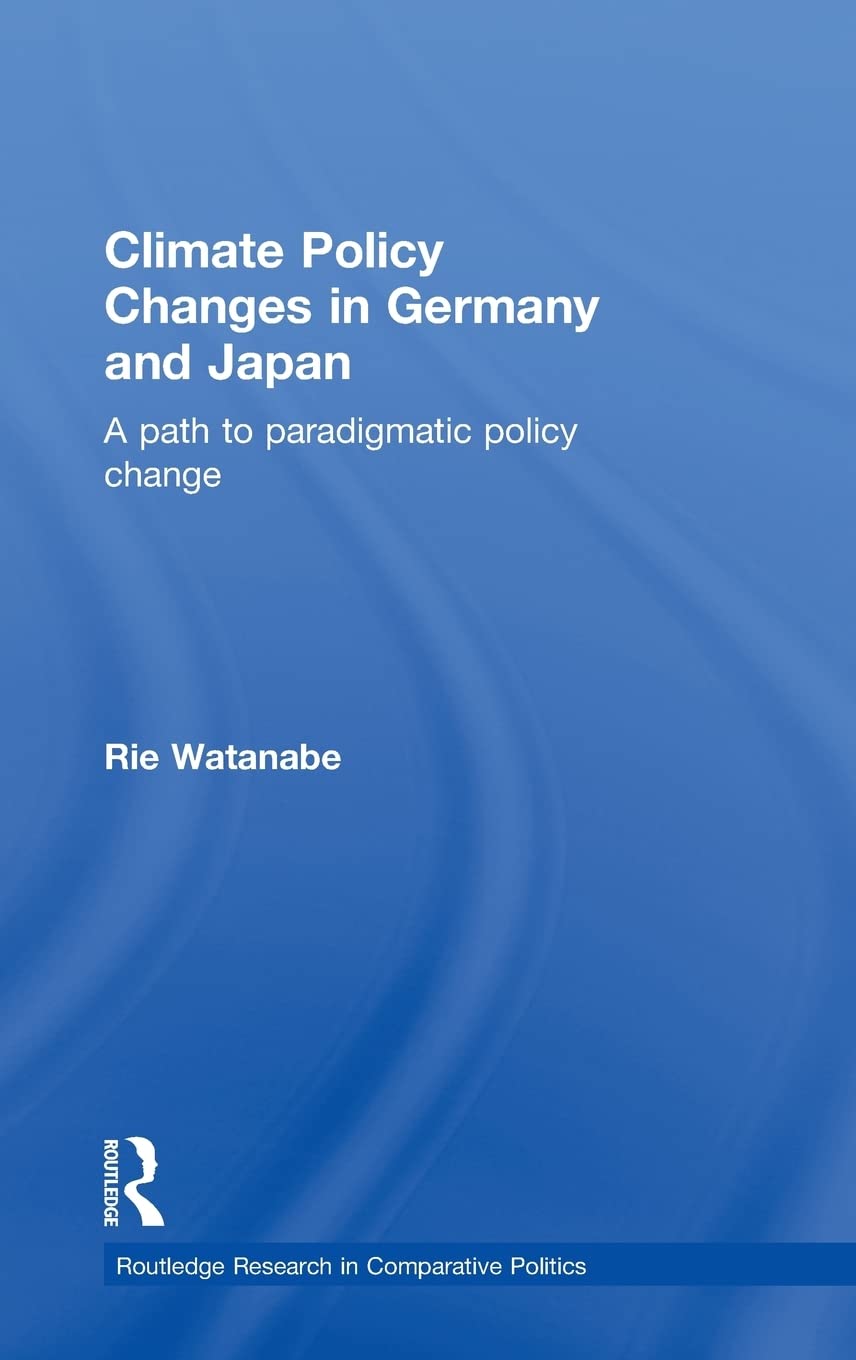
Climate Policy Changes in Germany and Japan compares two decades of climate policy development in Germany and Japan. It examines whether there is any difference between the types and levels of policy change in the two countries, and, if so, what factors account for the difference. Using a comparison of climate policy changes in Germany and Japan from 1987 to 2005 as a basis, it also discusses the effectiveness and the limits of existing theories of policy change and policy process, most notably the Advocacy Coalition Framework (ACF), Punctuated Equilibrium Approach and Multiple Stream Approach, and explores the theoretical question as to how longterm, paradigmatic policy change takes place. The book lastly presents a hypothetical model of the mechanisms of paradigmatic policy change.The two countries form a useful comparative approach to the issue of climate change. They represent the range of types and levels of changes in policies to control CO2 emissions in the industrial and energy sectors (dependent variables), while also demonstrating similarities in a number of independent variables: the size and structure of their economies; their shares in global GHG emissions; their general policymaking styles, including strong administrative systems and close relationships between ministries and industries; and their general environmental policies.Climate Policy Changes in Germany and Japan will be of interest to students and scholars of environmental and comparative politics.
⚠️ WARNING (California Proposition 65):
This product may contain chemicals known to the State of California to cause cancer, birth defects, or other reproductive harm.
For more information, please visit www.P65Warnings.ca.gov.