
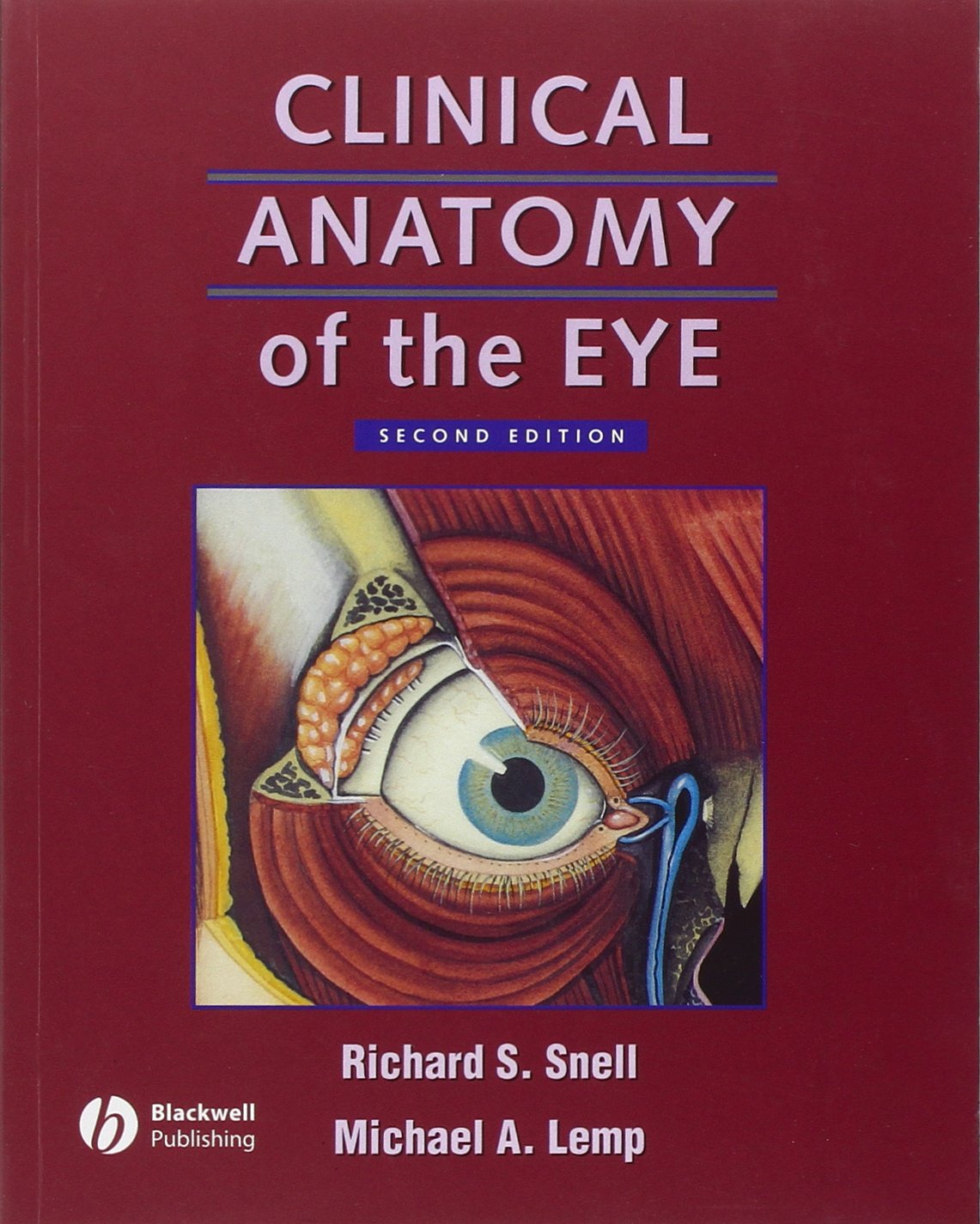
Title
Clinical Anatomy of the Eye,Used
Sold by Ergodebooks, an authorized reseller.
Returns accepted within 30 days | support@ergodebooks.com
Shipping Information
- Free Standard Shipping — United States only
- Processing Time: 3–5 business days
- Estimated Delivery: 6–10 business days after dispatch
- Double-boxed, fully insured & discreetly packaged
- Tracking number sent via email once dispatched
Returns & Refund
Returns accepted within 30 days of delivery.
Damaged or Defective Item
Free return shipping + replacement or full refund
Wrong Item Received
Free return shipping + replacement or full refund
Change of Mind
Return shipping at customer's expense · 25% restocking fee applies
Payment Option

Clinical Anatomy of the Eye has proved to be a very popular textbook for ophthalmologists and optometrists in training all over the world. The objective of the book is to provide the reader with the basic knowledge of anatomy necessary to practice ophthalmology. It is recognised that this medical speciality requires a detailed knowledge of the eyeball and the surrounding structures. The specialist's knowledge should include not only gross anatomic features and their development, but also the microscopic anatomy of the eyeball and the ocular appendages. The nerve and blood supply to the orbit, the autonomic innervation of the orbital structures, the visual pathway, and associated visual reflexes should receive great emphasis. The practical application of anatomic facts to ophthalmology has been emphasised throughout this book in the form of Clinical Notes in each chapter. Clinical problems requiring anatomic knowledge for their solution are presented at the end of each chapter. Illustrations are kept simple and overview drawings of the distribution of the cranial and autonomic nerves have been included.
⚠️ WARNING (California Proposition 65):
This product may contain chemicals known to the State of California to cause cancer, birth defects, or other reproductive harm.
For more information, please visit www.P65Warnings.ca.gov.
- Q: How many pages does 'Clinical Anatomy of the Eye' have? A: This book has four hundred thirty-two pages. It provides comprehensive knowledge essential for ophthalmologists and optometrists.
- Q: What is the binding type of this book? A: The binding type is paperback. This makes it lightweight and easy to carry for students and professionals.
- Q: What are the dimensions of 'Clinical Anatomy of the Eye'? A: The dimensions are seven point four inches in length, zero point seventy-nine inches in width, and nine point three inches in height. These measurements make it a convenient size for reading.
- Q: Who is the author of 'Clinical Anatomy of the Eye'? A: The author is Richard S. Snell. His expertise in ophthalmology enriches the content of the book.
- Q: What is the target audience for 'Clinical Anatomy of the Eye'? A: The target audience includes ophthalmologists and optometrists in training. The book is designed to enhance their understanding of eye anatomy.
- Q: How is the content structured in this book? A: The content is structured with Clinical Notes and clinical problems at the end of each chapter. This format helps to apply anatomical knowledge practically.
- Q: Is 'Clinical Anatomy of the Eye' suitable for beginners? A: Yes, it is suitable for beginners in ophthalmology. The book starts with fundamental concepts before moving to advanced topics.
- Q: Can this book be used for self-study? A: Yes, it is ideal for self-study. The clear explanations and illustrations facilitate independent learning.
- Q: How should I care for this book? A: To care for the book, keep it in a dry place and avoid exposure to direct sunlight. This helps maintain its condition and longevity.
- Q: Is there a specific way to store 'Clinical Anatomy of the Eye'? A: Store it upright on a shelf with other books. This prevents bending and ensures the pages remain intact.
- Q: What should I do if the book arrives damaged? A: If the book arrives damaged, contact customer support immediately for a return or replacement policy. They will guide you through the process.
- Q: Does this book include illustrations? A: Yes, it includes simple illustrations and overview drawings. These visuals help clarify complex anatomical structures.
- Q: Is this book helpful for clinical practice? A: Yes, it emphasizes the practical application of anatomical facts. This makes it a valuable resource for clinical practice.
- Q: What makes this book stand out in ophthalmology? A: Its detailed coverage of both macroscopic and microscopic anatomy sets it apart. It addresses essential knowledge for ophthalmologists.
- Q: Does 'Clinical Anatomy of the Eye' cover visual pathways? A: Yes, it covers the visual pathways extensively. Understanding these pathways is crucial for diagnosing and treating eye conditions.
- Q: Is this edition of the book current? A: Yes, this edition is up-to-date with the latest anatomical research. It reflects current practices in ophthalmology.