
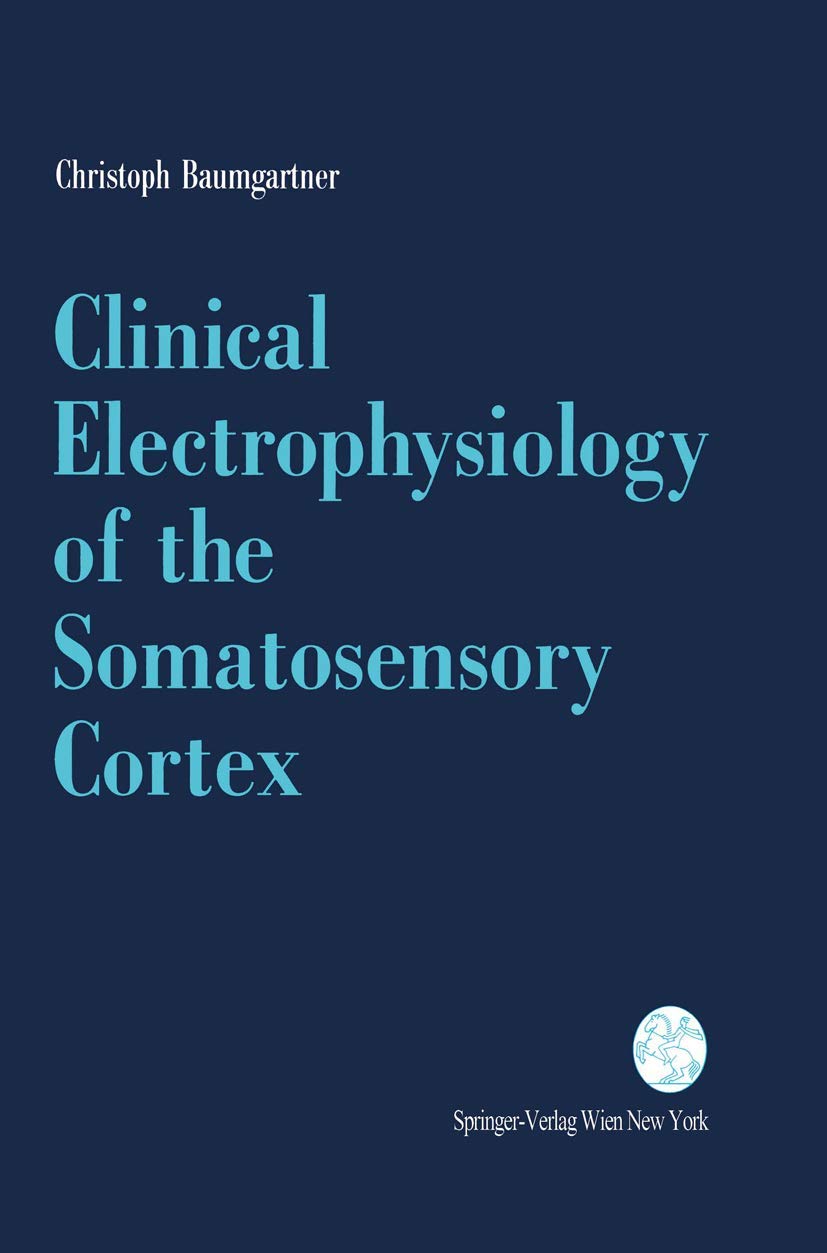
Title
Clinical Electrophysiology Of The Somatosensory Cortex: A Combined Study Using Electrocorticography, Scalpeeg, And Magnetoencep,Used
Sold by Ergodebooks, an authorized reseller.
Returns accepted within 30 days | support@ergodebooks.com
Shipping Information
- Free Standard Shipping — United States only
- Processing Time: 3–5 business days
- Estimated Delivery: 6–10 business days after dispatch
- Double-boxed, fully insured & discreetly packaged
- Tracking number sent via email once dispatched
Returns & Refund
Returns accepted within 30 days of delivery.
Damaged or Defective Item
Free return shipping + replacement or full refund
Wrong Item Received
Free return shipping + replacement or full refund
Change of Mind
Return shipping at customer's expense · 25% restocking fee applies
Payment Option

The functional anatomy of human somatosensory cortex is of both scientific and clinical interest. Scientifically, it provides insights in information processing in the human brain. Clinically, it helps to avoid neurological deficits by sparing essential brain regions during neurosurgical procedures adjacent to central fissure. In the present study the functional organization of the human somatosensory cortex was investigated with electrophysiological techniques using a combined approach of cortical stimulations and somatosensory evoked responses on electrocorticography, scalpEEG, and magnetoencephalography. The spatiotemporal structure of the evoked response was studiedwith biophysical modeling techniqueswhich allowed identification of the threedimensional intracerebral location, time activity, and interaction of the neuronal sources activated following peripheral somatosensory stimulation. Furthermore, the somatotopic organization ofhand and lip somatosensory cortex was investigated. The relative value of invasive (cortical stimulations and electrocorticography) and noninvasive (scalpEEGand magnetoencephalography) was assessed. The combined use ofscalpEEG and magnetoencephalography was useful to increase noninvasive localization accuracy. I want to thank several people who significantly contributed in completion of the present work. Univ. Prof Dr. Luder Deecke, Chairman of the Neurological University Clinic, Vienna, Austria, supported me throughout my career at the Neurological University Clinic in Vienna since 1985. Dr. William W Sutherling, Associate Professor at the University of California, Los Angeles, who was my advisor during my stay from 19871989 at the Department ofNeurology, University of California, Los Angeles where most of the present work was done.
⚠️ WARNING (California Proposition 65):
This product may contain chemicals known to the State of California to cause cancer, birth defects, or other reproductive harm.
For more information, please visit www.P65Warnings.ca.gov.