If you have any questions, you are always welcome to contact us. We'll get back to you as soon as possible, withing 24 hours on weekdays.
Customer service
All questions about your order, return and delivery must be sent to our customer service team by e-mail at yourstore@yourdomain.com
Sale & Press
If you are interested in selling our products, need more information about our brand or wish to make a collaboration, please contact us at press@yourdomain.com
Help
If you have any questions, you are always welcome to contact us. We'll get back to you as soon as possible, withing 24 hours on weekdays.
Customer service
All questions about your order, return and delivery must be sent to our customer service team by e-mail at yourstore@yourdomain.com
Sale & Press
If you are interested in selling our products, need more information about our brand or wish to make a collaboration, please contact us at press@yourdomain.com
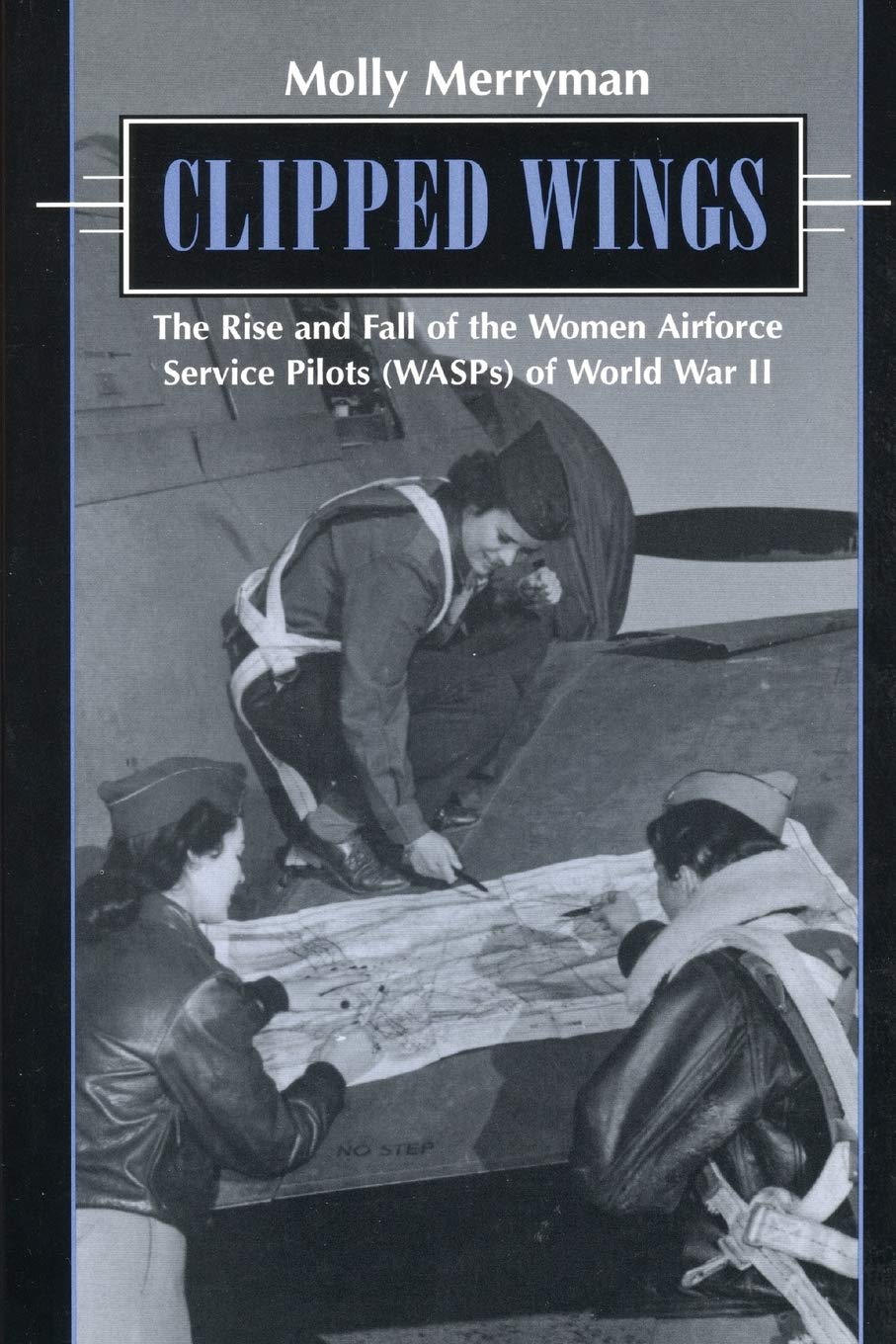
During World War II, all branches of the military had women's auxiliaries. Only the Women Airforce Service Pilot (WASP) program, however, was comprised entirely of women who flew dangerous missions more commonly associated with and desired by men. Within military hierarchies, the World War II pilot was projected as the most dashing and desirable of servicemen. 'Flyboys' were the daring elite of the United States military. More than the WACs (Army), WAVES (Navy), SPARS (Coast Guard), or Women Marines, the WASPs directly challenged these assumptions of male supremacy in wartime culture. WASPs flew the fastest fighter planes and heaviest bombers; they testpiloted experimental models and worked in the development of weapons systems. Yet the WASPs were the only women's auxiliary within the armed services of World War II that was not militarized. In Clipped Wings, Molly Merryman draws upon military documents (many of which were declassified only in the 1980s), congressional records, and interviews with the women who served as WASPs during World War II, to trace the history of the over 1,000 pilots who served their country as the first women to fly military planes. She examines the social pressures which culminated in their disbandment in 1944 even though a wartime need for their services still existed and documents their struggles and eventual success, in 1977, to gain military status and receive veterans benefits.
⚠️ WARNING (California Proposition 65):
This product may contain chemicals known to the State of California to cause cancer,
birth defects, or other reproductive harm.
For MAP (Minimum Advertised Price) violations and Intellectual Property (IP) or Trademark concerns, please contact:
support@ergodebooks.com
⚠️ California Proposition 65 Warning: Some products sold on this website may expose you to chemicals known to the State of California to cause cancer, birth defects, or other reproductive harm. For more information, visit www.P65Warnings.ca.gov.