
Title
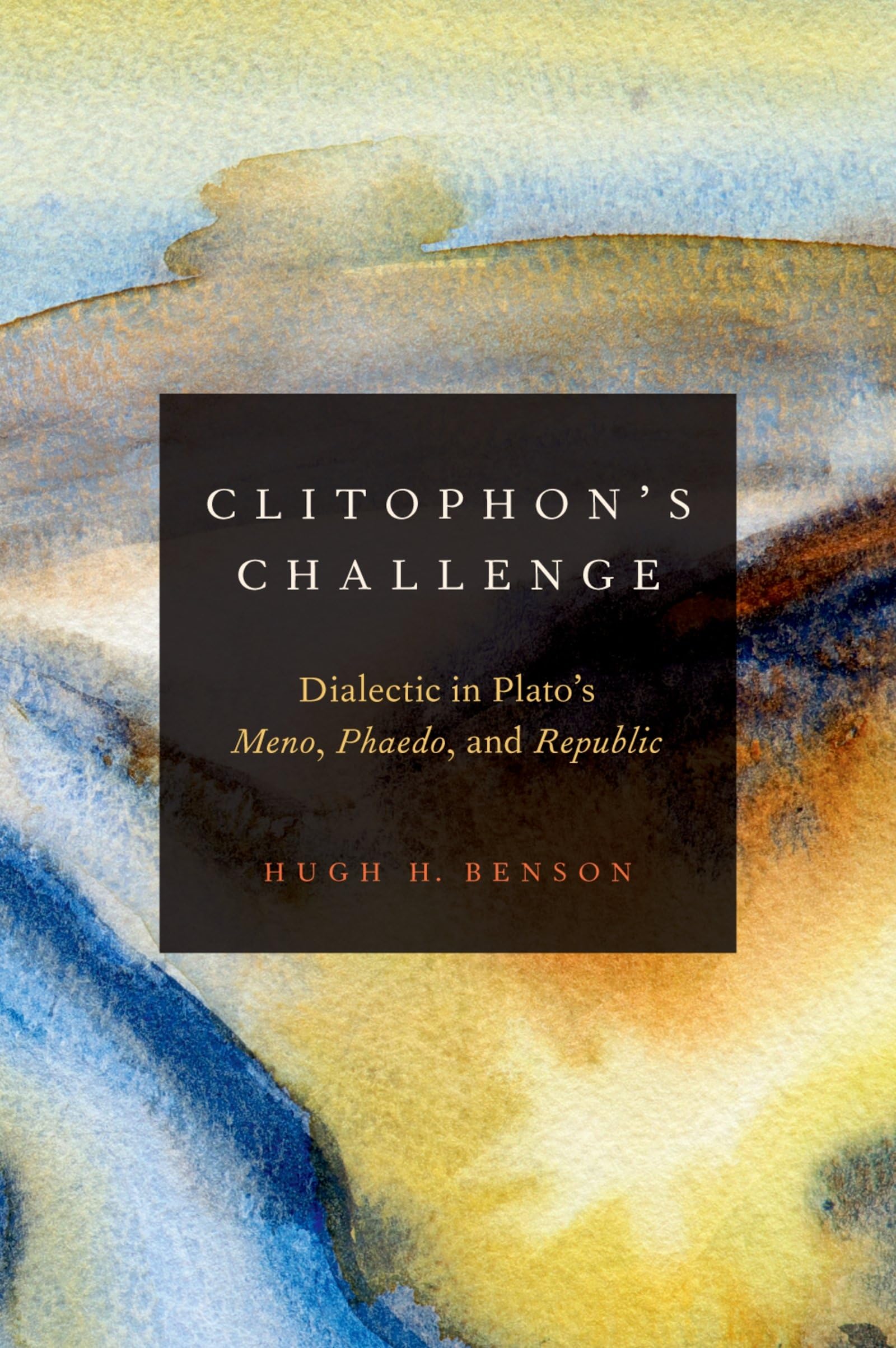
Clitophon'S Challenge: Dialectic In Plato'S Meno, Phaedo, And Republic
Sold by Ergodebooks, an authorized reseller.
Returns accepted within 30 days | support@ergodebooks.com
Shipping Information
- Free Standard Shipping — United States only
- Processing Time: 3–5 business days
- Estimated Delivery: 6–10 business days after dispatch
- Double-boxed, fully insured & discreetly packaged
- Tracking number sent via email once dispatched
Returns & Refund
Returns accepted within 30 days of delivery.
Damaged or Defective Item
Free return shipping + replacement or full refund
Wrong Item Received
Free return shipping + replacement or full refund
Change of Mind
Return shipping at customer's expense · 25% restocking fee applies
Payment Option

Hugh H. Benson Explores Plato'S Answer To Clitophon'S Challenge, The Question Of How One Can Acquire The Knowledge Socrates Argues Is Essential To Human Flourishingknowledge We All Seem To Lack. Plato Suggests Two Methods By Which This Knowledge May Be Gained: The First Is Learning From Those Who Already Have The Knowledge One Seeks, And The Second Is Discovering The Knowledge One Seeks On One'S Own.The Book Begins With A Brief Look At Some Of The Socratic Dialogues Where Plato Appears To Recommend The Former Approach While Simultaneously Indicating Various Difficulties In Pursuing It. The Remainder Of The Book Focuses On Plato'S Recommendation In Some Of His Most Important And Central Dialoguesthe Meno, Phaedo, And Republicfor Carrying Out The Second Approach: De Novo Inquiry. The Book Turns First To The Famous Paradox Concerning The Possibility Of Such An Inquiry And Explores Plato'S Apparent Solution. Having Defended The Possibility Of De Novo Inquiry As A Response To Clitophon'S Challenge, Plato Explains The Method Or Procedure By Which Such Inquiry Is To Be Carried Out. The Book Defends The Controversial Thesis That The Method Of Hypothesis, As Described And Practiced In The Meno, Phaedo, And Republic, Is, When Practiced Correctly, Plato'S Recommended Method Of Acquiring On One'S Own The Essential Knowledge We Lack. The Method Of Hypothesis When Practiced Correctly Is, Then, Platonic Dialectic, And This Is Plato'S Response To Clitophon'S Challenge.This Is A New Book On A Critically Important Topic, Methodology, As It Is Explored In Three Of The Most Important Works By One Of The Most Important Philosophers In The Very Long History Of Philosophy, Written By A Scholar Of International Stature Who Is Working From Many Years Of Experience And Currently At The Top Of His Game. It Promises To Be One Of The Most Important Books Ever Written On This Subject.Nicholas Smith, James F. Miller Professor Of Humanities, Lewis And Clark CollegeThe Thesis Is Bold And The Results Are Important For Our Understanding Of Some Of The Most Studied And Controversial Dialogues By And Philosophical Theses In Plato. In My View, Hugh Benson'S Examination Of The Method Of Hypothesis In The Meno And The Phaedo Is A Tour De Force Of Subtle And Careful Scholarship: I Think That This Part Of The Book Will Be Adopted As The Standard Interpretation Of This Basic Notion In Plato. An Excellent And Important Book.Charles Brittain, Susan Linn Sage Professor Of Philosophy And Humane Letters, Cornell University
⚠️ WARNING (California Proposition 65):
This product may contain chemicals known to the State of California to cause cancer, birth defects, or other reproductive harm.
For more information, please visit www.P65Warnings.ca.gov.
- Q: What are the dimensions of the book? A: The book measures nine point three inches in length, one point two inches in width, and nine point two nine inches in height.
- Q: How many pages does this book have? A: This book contains three hundred twenty-eight pages.
- Q: What type of binding does the book have? A: The book is bound in hardcover, providing durability and a premium feel.
- Q: Who is the author of the book? A: The author is Hugh H. Benson, a recognized scholar in philosophy.
- Q: What topics does this book cover? A: The book explores Plato's dialectic methods and addresses Clitophon’s challenge regarding knowledge acquisition.
- Q: Is this book suitable for beginners in philosophy? A: Yes, it is suitable for those new to philosophy, as it discusses central themes in an accessible manner.
- Q: What philosophical dialogues does the book focus on? A: The book primarily focuses on Plato's dialogues: Meno, Phaedo, and Republic.
- Q: How can I apply the methods discussed in the book? A: You can apply the methods by engaging in de novo inquiry, as advocated by Plato, to seek knowledge independently.
- Q: Is this book appropriate for academic study? A: Yes, this book is an excellent resource for academic study in philosophy and methodology.
- Q: What is the main thesis of the book? A: The main thesis argues that the method of hypothesis is Plato’s recommended approach for acquiring essential knowledge.
- Q: How should I care for this hardcover book? A: To keep the book in good condition, store it upright in a cool, dry place and avoid exposure to direct sunlight.
- Q: Can I return the book if I am not satisfied? A: Yes, you can return the book within the specified return policy period if you are not satisfied.
- Q: What if the book arrives damaged? A: If the book arrives damaged, contact customer support for assistance with a return or replacement.
- Q: Is there a warranty on this book? A: Books typically do not come with a warranty, but you can check the seller's return policy for more details.
- Q: What age group is this book intended for? A: This book is intended for adults and advanced students interested in philosophy.
- Q: How does this book compare to other works on Plato? A: This book offers a unique analysis of Plato’s methods, making it distinct from other philosophical texts.