
Title
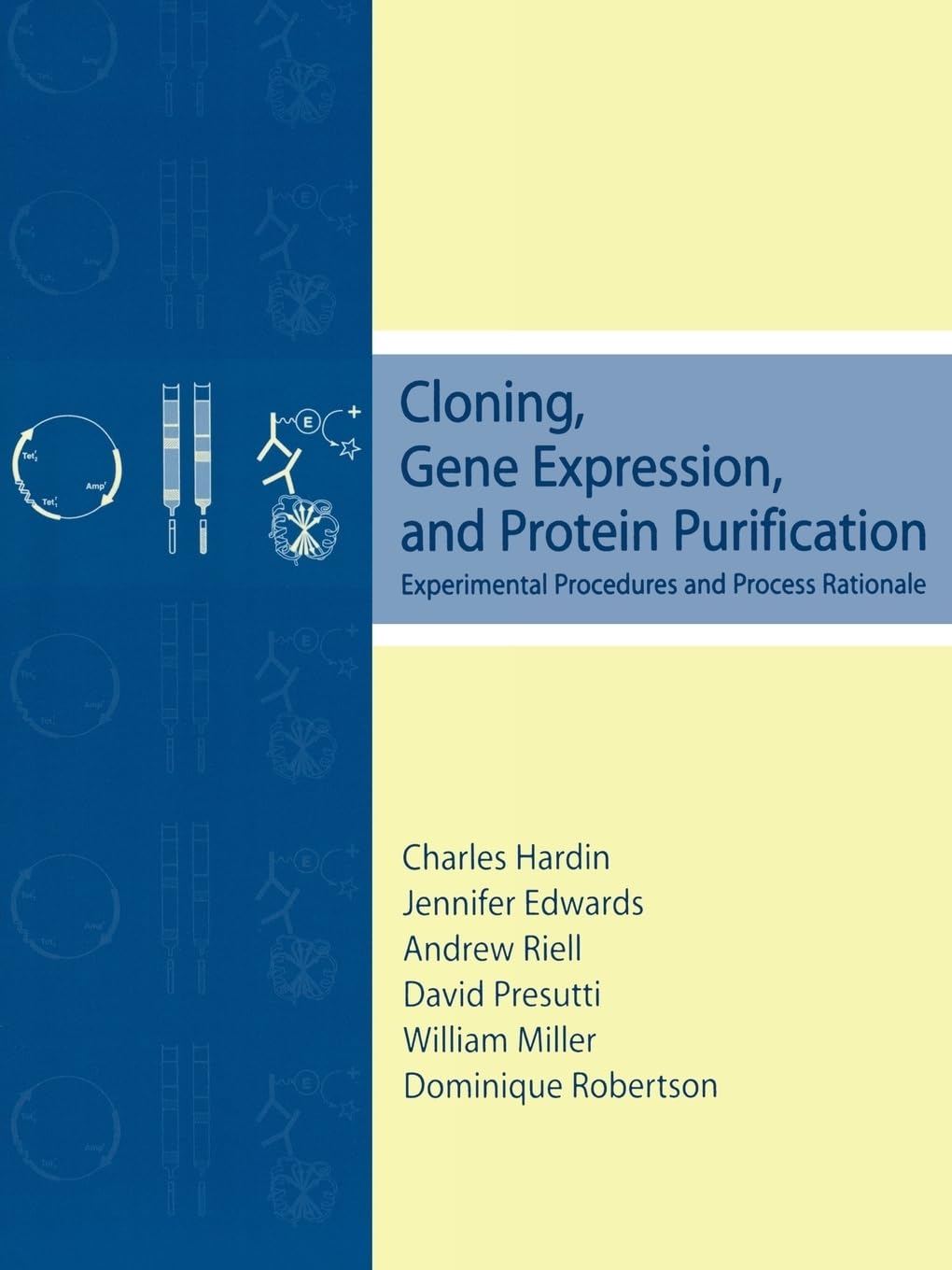
Cloning, Gene Expression, and Protein Purification: Experimental Procedures and Process Rationale,Used
Sold by Ergodebooks, an authorized reseller.
Returns accepted within 30 days | support@ergodebooks.com
Shipping Information
- Free Standard Shipping — United States only
- Processing Time: 3–5 business days
- Estimated Delivery: 6–10 business days after dispatch
- Double-boxed, fully insured & discreetly packaged
- Tracking number sent via email once dispatched
Returns & Refund
Returns accepted within 30 days of delivery.
Damaged or Defective Item
Free return shipping + replacement or full refund
Wrong Item Received
Free return shipping + replacement or full refund
Change of Mind
Return shipping at customer's expense · 25% restocking fee applies
Payment Option

On the forefront of modern scientific innovation, Cloning, Gene Expression and Protein Purification: Experimental Procedures and Process Rationale effectively doubles as a laboratory manual for students and a reference book for professional researchers. Designed for advanced undergraduate and beginning graduate students in molecular biology, this unique combination lecture/laboratory resource presents detailed protocols for the multistep process involved in isolating a gene, cloning and characterizing it, expressing its encoded protein, and purifying and characterizing the protein's basic physical properties. This manageable volume includes both theoretical background and practical procedures and is structured around twenty experiments that demonstrate how to prepare, manipulate, and analyze plasmids, produce fusion proteins in bacteria, and purify these proteins based on unique chemical properties or substrate affinities. The book describes advanced topics such as the use of antibodies and the techniques developed to transform their structures, as well as combinatorial approaches designed to manipulate the structure and functions of proteins and nucleic acids. Supplemental literature provides a variety of theoretical explanations encouraging a more intuitive understanding of the experimental mechanisms and behaviors of the chemical participants, while also giving students the tools needed to become 'capable proactive researchers.' Features: Emphasizes electrophoresis, Southern and Western blotting, and combinatorial techniques Defines clear reaction mechanisms; stipulates the functions of reagents; and helps students think about the precise consequences of solution and procedural manipulations Discusses fluorophores, and solvent effects on protein structure Characterizes plasmids, cDNAs, and antibody probes (available from ATCC) in research literature Includes carefully selected primary source research literature and articles from current vendor literature Contains a glossary of unfamiliar phrases and jargon; important summary statements and conclusions are italicized Provides an alphabetized list of common reagents for rapid reference Offers an extensive index of concepts and terms Categorizes helpful and distinctive information into five types of supplemental literature: Innovation/ Insight, Theory/Principle, Process Rationale, Vendor Literature, and Alternative Approaches
⚠️ WARNING (California Proposition 65):
This product may contain chemicals known to the State of California to cause cancer, birth defects, or other reproductive harm.
For more information, please visit www.P65Warnings.ca.gov.