If you have any questions, you are always welcome to contact us. We'll get back to you as soon as possible, withing 24 hours on weekdays.
Customer service
All questions about your order, return and delivery must be sent to our customer service team by e-mail at yourstore@yourdomain.com
Sale & Press
If you are interested in selling our products, need more information about our brand or wish to make a collaboration, please contact us at press@yourdomain.com
Help
If you have any questions, you are always welcome to contact us. We'll get back to you as soon as possible, withing 24 hours on weekdays.
Customer service
All questions about your order, return and delivery must be sent to our customer service team by e-mail at yourstore@yourdomain.com
Sale & Press
If you are interested in selling our products, need more information about our brand or wish to make a collaboration, please contact us at press@yourdomain.com
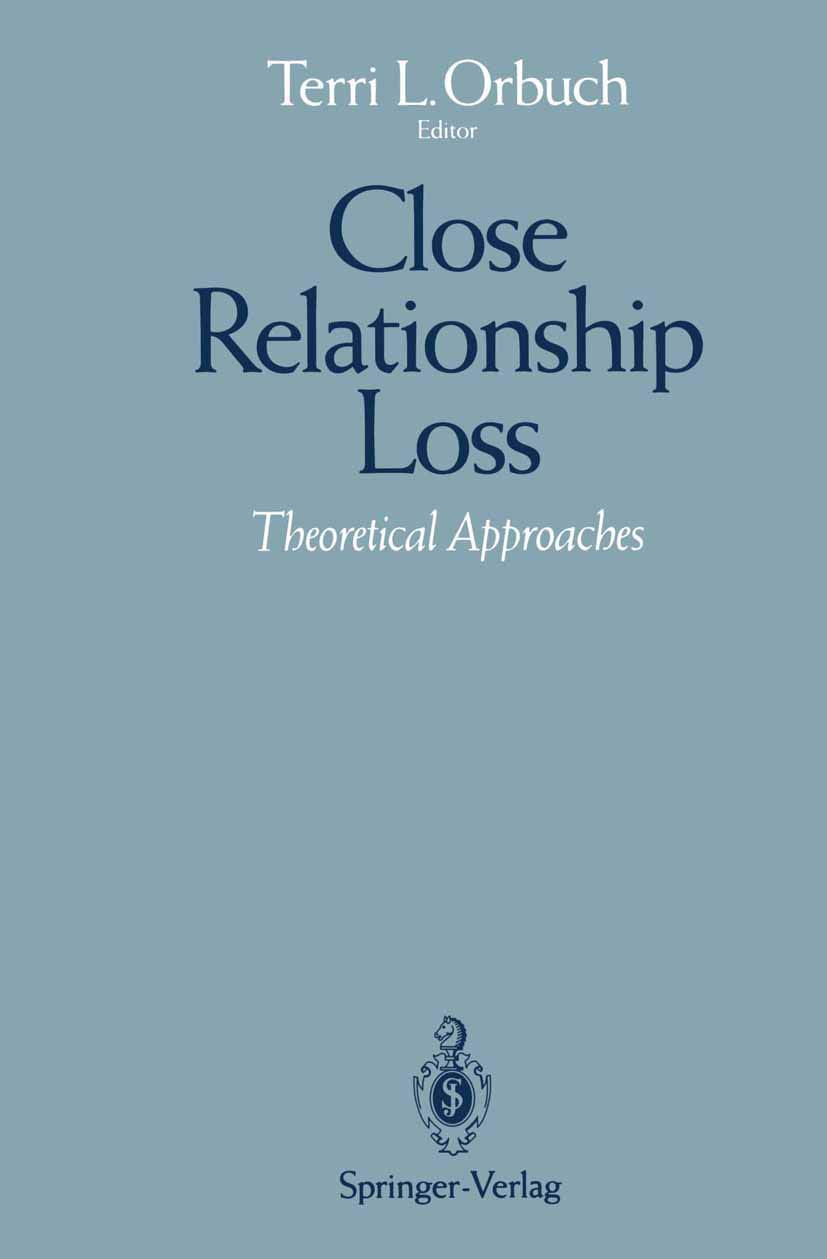
Social scientists from various disciplines have been increasingly concerned with the nature, structure, and function of close relationships. Although most of the early work on the topic of close relationships drew attention to the development of close relationships, since the mid1970s researchers have begun to investigate the many different aspects connected to the loss of close relationships. Despite the change to a more comprehensive conceptual framework, close relationship research is often criticized for being atheoretical; the research is criticized for being purely descriptive in nature and thus lacking a more theoretical framework. Contrary to this belief, I wish to argue that researchers in the area of close relationship loss employ several critical and prominent theoretical perspectives to describe, explain, and understand the endings of relationshipsthus, the fruition of this book. The major aim of this edited book is to present and illuminate, within one volume, some of these major theoretical perspectives. The volume as a whole has several unique qualities. First, within each chapter, the authors provide a general overview of the theoretical per spective or approach within which they examine close relationship loss.
⚠️ WARNING (California Proposition 65):
This product may contain chemicals known to the State of California to cause cancer,
birth defects, or other reproductive harm.
For MAP (Minimum Advertised Price) violations and Intellectual Property (IP) or Trademark concerns, please contact:
support@ergodebooks.com
⚠️ California Proposition 65 Warning: Some products sold on this website may expose you to chemicals known to the State of California to cause cancer, birth defects, or other reproductive harm. For more information, visit www.P65Warnings.ca.gov.