
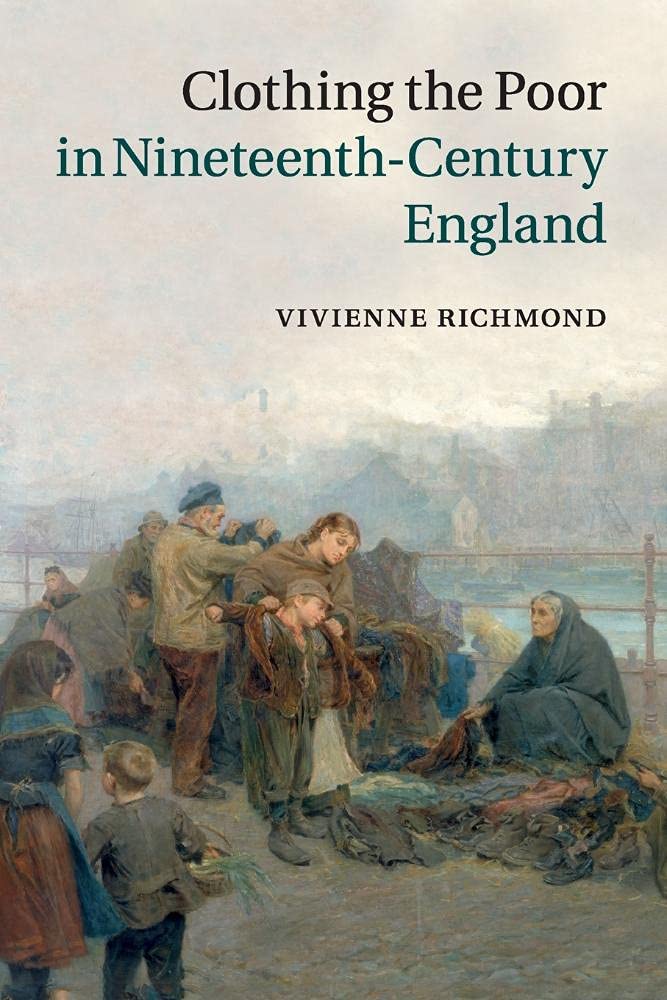
Title
Clothing the Poor in NineteenthCentury England,Used
Sold by Ergodebooks, an authorized reseller.
Returns accepted within 30 days | support@ergodebooks.com
Shipping Information
- Free Standard Shipping — United States only
- Processing Time: 3–5 business days
- Estimated Delivery: 6–10 business days after dispatch
- Double-boxed, fully insured & discreetly packaged
- Tracking number sent via email once dispatched
Returns & Refund
Returns accepted within 30 days of delivery.
Damaged or Defective Item
Free return shipping + replacement or full refund
Wrong Item Received
Free return shipping + replacement or full refund
Change of Mind
Return shipping at customer's expense · 25% restocking fee applies
Payment Option

In this pioneering study Vivienne Richmond reveals the importance of dress to the nineteenthcentury English poor, who valued clothing not only for its practical utility, but also as a central element in the creation and assertion of collective and individual identities. During this period of rapid industrialisation and urbanisation formal dress codes, corporate and institutional uniforms, and the spread of urban fashions replaced the informal dress of agricultural England. This laid the foundations of modern popular dress and generated fears about the visual blurring of social boundaries as new modes of manufacturing and retailing expanded the wardrobes of the majority. However, a significant impoverished minority remained outside this process. Clothed by diminishing parish assistance, expanding paternalistic charity and the secondhand trade, they formed a 'sartorial underclass' whose material deprivation and visual distinction was a cause of physical discomfort and psychological trauma.
⚠️ WARNING (California Proposition 65):
This product may contain chemicals known to the State of California to cause cancer, birth defects, or other reproductive harm.
For more information, please visit www.P65Warnings.ca.gov.