
Title
Clubbing Together: Ethnicity, Civility and Formal Sociability in the Scottish Diaspora to 1930 (Migrations and Identities, 4),Used
Sold by Ergodebooks, an authorized reseller.
Returns accepted within 30 days | support@ergodebooks.com
Shipping Information
- Free Standard Shipping — United States only
- Processing Time: 3–5 business days
- Estimated Delivery: 6–10 business days after dispatch
- Double-boxed, fully insured & discreetly packaged
- Tracking number sent via email once dispatched
Returns & Refund
Returns accepted within 30 days of delivery.
Damaged or Defective Item
Free return shipping + replacement or full refund
Wrong Item Received
Free return shipping + replacement or full refund
Change of Mind
Return shipping at customer's expense · 25% restocking fee applies
Payment Option

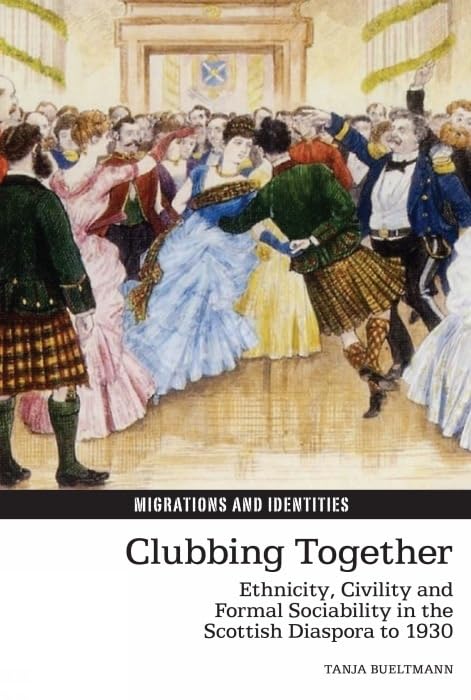
Emigrants carried a rich array of associations with them to the new worlds in which they settled, often 'clubbing together' along ethnic lines shortly after first foot fall. Yet while a crucial element of immigrant community life, one of the richest examples, that of Scottish migrants, has received only patchy coverage. Moreover, no one has yet problematized Scottish associations, such as St Andrew's societies or Burns clubs, as a series of transnational connections that were deeply rooted in the civic life of their respective communities. This book provides the first global study to capture the wider relevance of the Scots' associationalism, arguing that associations and formal sociability are a key to explaining how migrants negotiated their ethnicity in the diaspora and connected to social structures in diverse settlements. Moving beyond the traditional nineteenthcentury settler dominions, the book offers a unique comparative focus, bringing together Scotland's near diaspora in England and Ireland with that in North America, Africa, and Australasia to assess the evolution of Scottish ethnic associations, as well as their diverse roles as sites of memory and expressions of civility. The book reveals that the structures offered by Scottish associations engaged directly with the local, New World contexts, developing distinct characteristics that cannot be subsumed under one simplistic label that of an overseas 'national society'. The book promotes understanding not only of Scottish ethnicity overseas, but also of how different types of ethnic associational activism made diaspora tangible.
⚠️ WARNING (California Proposition 65):
This product may contain chemicals known to the State of California to cause cancer, birth defects, or other reproductive harm.
For more information, please visit www.P65Warnings.ca.gov.