
Title
Coal Cracker Culture: Work and Values in Pennsylvania Anthracite, 18351935,Used
Sold by Ergodebooks, an authorized reseller.
Returns accepted within 30 days | support@ergodebooks.com
Shipping Information
- Free Standard Shipping — United States only
- Processing Time: 1–3 business days
- Estimated Delivery: 3–5 business days after dispatch
- Double-boxed, fully insured & discreetly packaged
- Tracking number sent via email once dispatched
- Orders over $250 require signature upon delivery. Taxes calculated at checkout.
Returns & Refund
Returns accepted within 30 days of delivery.
Damaged or Defective Item
Free return shipping + replacement or full refund
Wrong Item Received
Free return shipping + replacement or full refund
Change of Mind
Return shipping at customer's expense · 25% restocking fee applies
Payment Option

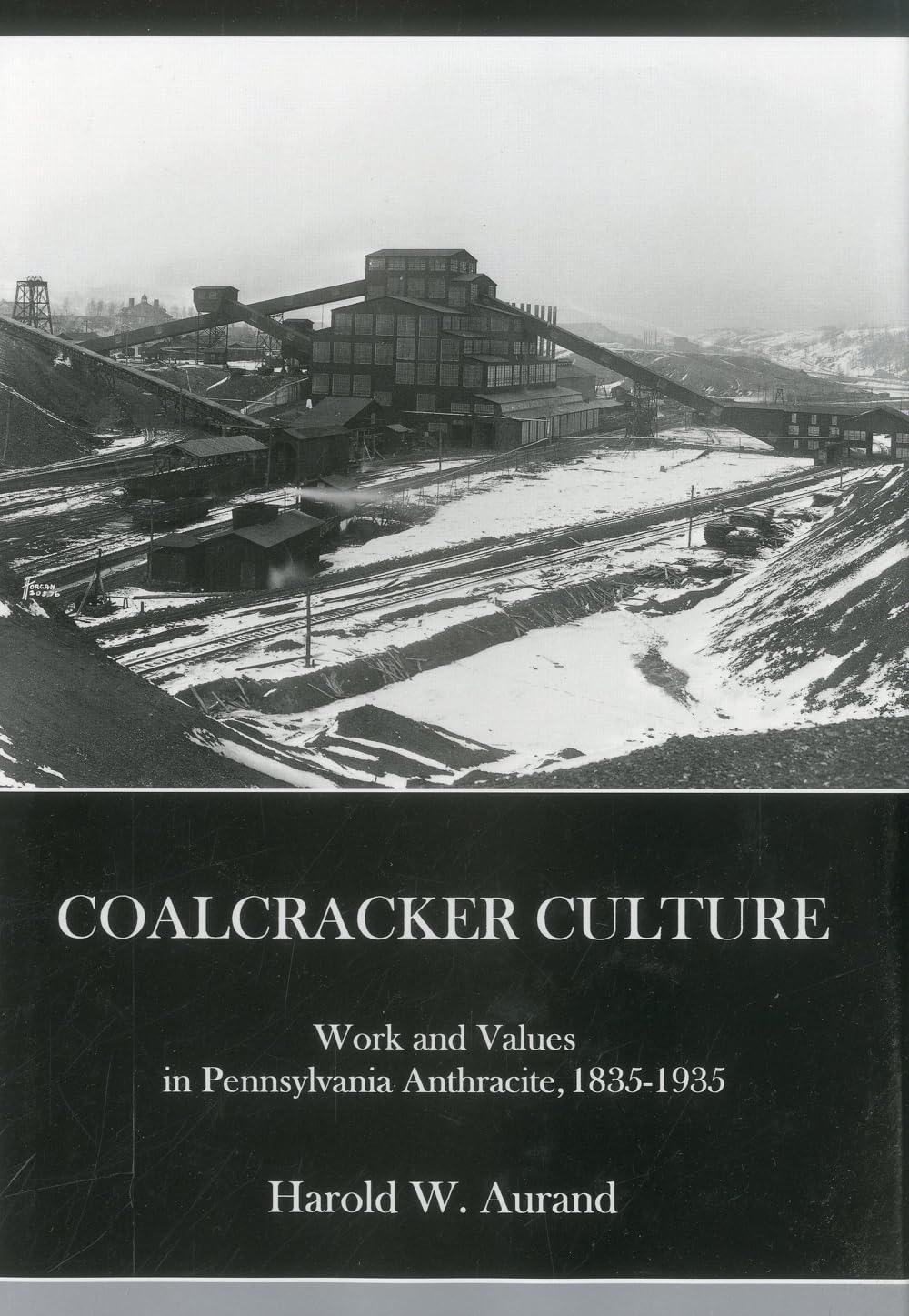
Coalcracker Culture traces the evolution of a distinct regional culture in the anthracite coal fields of Pennsylvania. The study begins by establishing the regions industrial and social contexts. With a handful of companies controlling over ninety percent of total production, the anthracite industry was one of the most formidable cartels in American history. Overcapitalization, first in the form of excess plant and, later, as a large bonded debt, forced the cartel to maintain low labor costs and high profit margins. It secured the surplus of workers required by its labor policy by recruiting immigrants; as many as twentysix languages were spoken in the area at one time. As a result, coal region society fractured as each ethnic group strove to preserve its identity and project its influence in the larger community.Recognizing that work provided a diverse population with its only shared set of experiences, Aurand traces the development of anthracite deep mining. He discovers that despite technological innovations, the anthracite miner remained a tool user and retained control of his behavior on the job. But the consequences of mining were brutal; in a very real sense the miner traded his life for a job. The industrys labor policy funded a precarious standard of living.Aurand then turns his attention to the values fostered by the work of deep mining anthracite. He finds that miners valued the sense of freedom and accomplishment derived from their job. But the price of occupational freedom, physical destruction either quickly by accident or through the slow suffocation of black lung, was steep. Mine workers valued physical toughness for it alone permitted them to cope with their strenuous and dangerous work. The knowledge that they traded their lives for a job generated an overarching fear of losing their income.The prospect of a sudden loss of income encouraged the development of a communitywide support network that was governed by the principle of reciprocity. Focused upon their individual needs, however, they tolerated cheating within the reciprocal relationship. Exploited, they developed a mistrust of others. They internalized numerous allegations of their inferiority while compensating for it by celebrating the overly macho male who never tolerated an insult.Today that culture is widely celebrated. A number of sites about da regionas the anthracite coal fields are fondly calledcan be found on the World Wide Web. Local historical societies and museums are being formed in unprecedented numbers. Books and poetry expound upon the region and its culture. The celebration, however, seems to be a nostalgic attempt to hold on to what is quickly passing, for the very basis of that culturedeep mininghas ceased to exist for all practical purposes.
⚠️ WARNING (California Proposition 65):
This product may contain chemicals known to the State of California to cause cancer, birth defects, or other reproductive harm.
For more information, please visit www.P65Warnings.ca.gov.