
Title
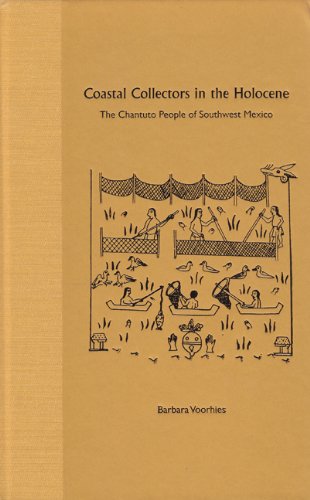
Coastal Collectors in the Holocene: The Chantuto People of Southwest Mexico,Used
Sold by Ergodebooks, an authorized reseller.
Returns accepted within 30 days | support@ergodebooks.com
Shipping Information
- Free Standard Shipping — United States only
- Processing Time: 3–5 business days
- Estimated Delivery: 6–10 business days after dispatch
- Double-boxed, fully insured & discreetly packaged
- Tracking number sent via email once dispatched
Returns & Refund
Returns accepted within 30 days of delivery.
Damaged or Defective Item
Free return shipping + replacement or full refund
Wrong Item Received
Free return shipping + replacement or full refund
Change of Mind
Return shipping at customer's expense · 25% restocking fee applies
Payment Option

This is the only fullscale archaeological study of the ancient Mesoamericans who lived in a coastal habitat immediately prior to the onset of an agricultural way of life. Known as the last huntergathererfishers of the south Pacific coast of Mexico, the Chantuto people lived between 7,500 and 3,500 years ago, during the Middle and Late Archaic periods. They were the last people in the region to rely principally upon wild plants and animals. Because their successors were primarily farmers, the lives of the Chantuto people span the transition from foraging to farmingwhen permanent villages came to replace a nomadic existencein a hot, humid environment. Working with thirty years of data from shell mounds and other site types in Pacific coastal Chiapas, the contributors to this important investigation present information on past and present environments, local geological processes, and detailed accounts of technical analyses of recovered food and artifactual remains. These data form the basis for inferences about the settlement system and economic lifeways of the ancient Chantuto people.Since the 1960s, when a trailblazing study revealed how prehistoric inhabitants of an upland Mexican valley became increasingly dependent on only a few plants, archaeologists have sought comparable information for the tropical lowlands. This book supplies it in depth, exploring the surviving material culture of the Chantuto people and their ecological relationships to their biophysical environment. The archaeological sites are dated by means of radiocarbon assays and the methods of data recovery and interpretation range from replication experiments to ethnographic analogy.Especially useful for specialists in huntergatherer studies, this work makes an important contribution to the debate about the origins of agriculture. It will be invaluable for archaeologists interested in an uptodate, comprehensive summary of a transitional society in the tropical lowlands of Mesoamerica.
⚠️ WARNING (California Proposition 65):
This product may contain chemicals known to the State of California to cause cancer, birth defects, or other reproductive harm.
For more information, please visit www.P65Warnings.ca.gov.