If you have any questions, you are always welcome to contact us. We'll get back to you as soon as possible, withing 24 hours on weekdays.
Customer service
All questions about your order, return and delivery must be sent to our customer service team by e-mail at yourstore@yourdomain.com
Sale & Press
If you are interested in selling our products, need more information about our brand or wish to make a collaboration, please contact us at press@yourdomain.com
Help
If you have any questions, you are always welcome to contact us. We'll get back to you as soon as possible, withing 24 hours on weekdays.
Customer service
All questions about your order, return and delivery must be sent to our customer service team by e-mail at yourstore@yourdomain.com
Sale & Press
If you are interested in selling our products, need more information about our brand or wish to make a collaboration, please contact us at press@yourdomain.com
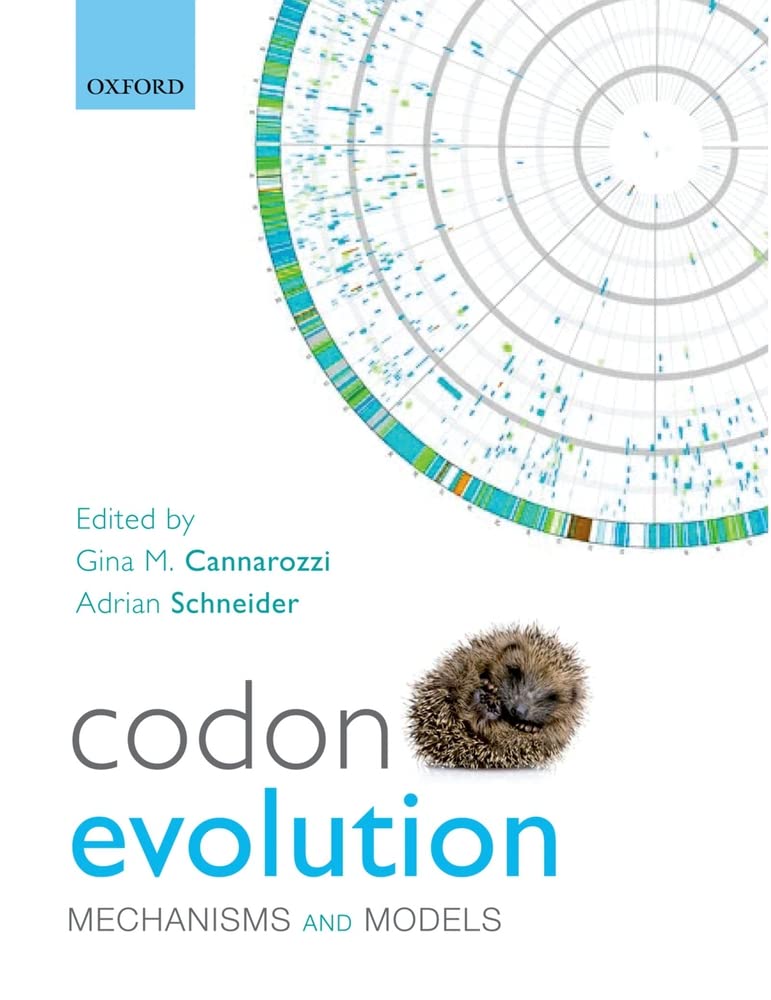
Codonbased models of evolution are a relatively new addition to the toolkit of computational biologists, and in recent years remarkable progress has been made in this area. The study of evolution at the codon level captures information contained in both amino acid and synonymous DNA substitutions. By combining these two types of information, codon analyses are more powerful than those of either amino acid or DNA evolution alone. This is a clear benefit for most evolutionary analyses, including phylogenetic reconstruction, detection of selection, ancestral sequence reconstruction, and alignment of coding DNA. Despite the theoretical advantages of codon based models, their relative complexity delayed their widespread use. Only in recent years, when largescale sequencing projects produced sufficient genomic data and computational power increased, did their usage become more common.In Codon Evolution, leading researchers in the field of molecular evolution provide the latest insights from codonbased analyses of genetic sequences. The first part of the book provides comprehensive coverage of the developments of various types of codon substitution models such as parametric and empirical models used in maximum likelihood as well as Bayesian frameworks. Subsequent chapters examine the use of codon models to infer selection and other applications of codon models to biological systems. The second part of the book focuses on codon usage bias. Both the underlying mechanisms as well as current methods to analyse codon usage bias are presented.
⚠️ WARNING (California Proposition 65):
This product may contain chemicals known to the State of California to cause cancer,
birth defects, or other reproductive harm.
For MAP (Minimum Advertised Price) violations and Intellectual Property (IP) or Trademark concerns, please contact:
support@ergodebooks.com
⚠️ California Proposition 65 Warning: Some products sold on this website may expose you to chemicals known to the State of California to cause cancer, birth defects, or other reproductive harm. For more information, visit www.P65Warnings.ca.gov.