If you have any questions, you are always welcome to contact us. We'll get back to you as soon as possible, withing 24 hours on weekdays.
Customer service
All questions about your order, return and delivery must be sent to our customer service team by e-mail at yourstore@yourdomain.com
Sale & Press
If you are interested in selling our products, need more information about our brand or wish to make a collaboration, please contact us at press@yourdomain.com
Help
If you have any questions, you are always welcome to contact us. We'll get back to you as soon as possible, withing 24 hours on weekdays.
Customer service
All questions about your order, return and delivery must be sent to our customer service team by e-mail at yourstore@yourdomain.com
Sale & Press
If you are interested in selling our products, need more information about our brand or wish to make a collaboration, please contact us at press@yourdomain.com
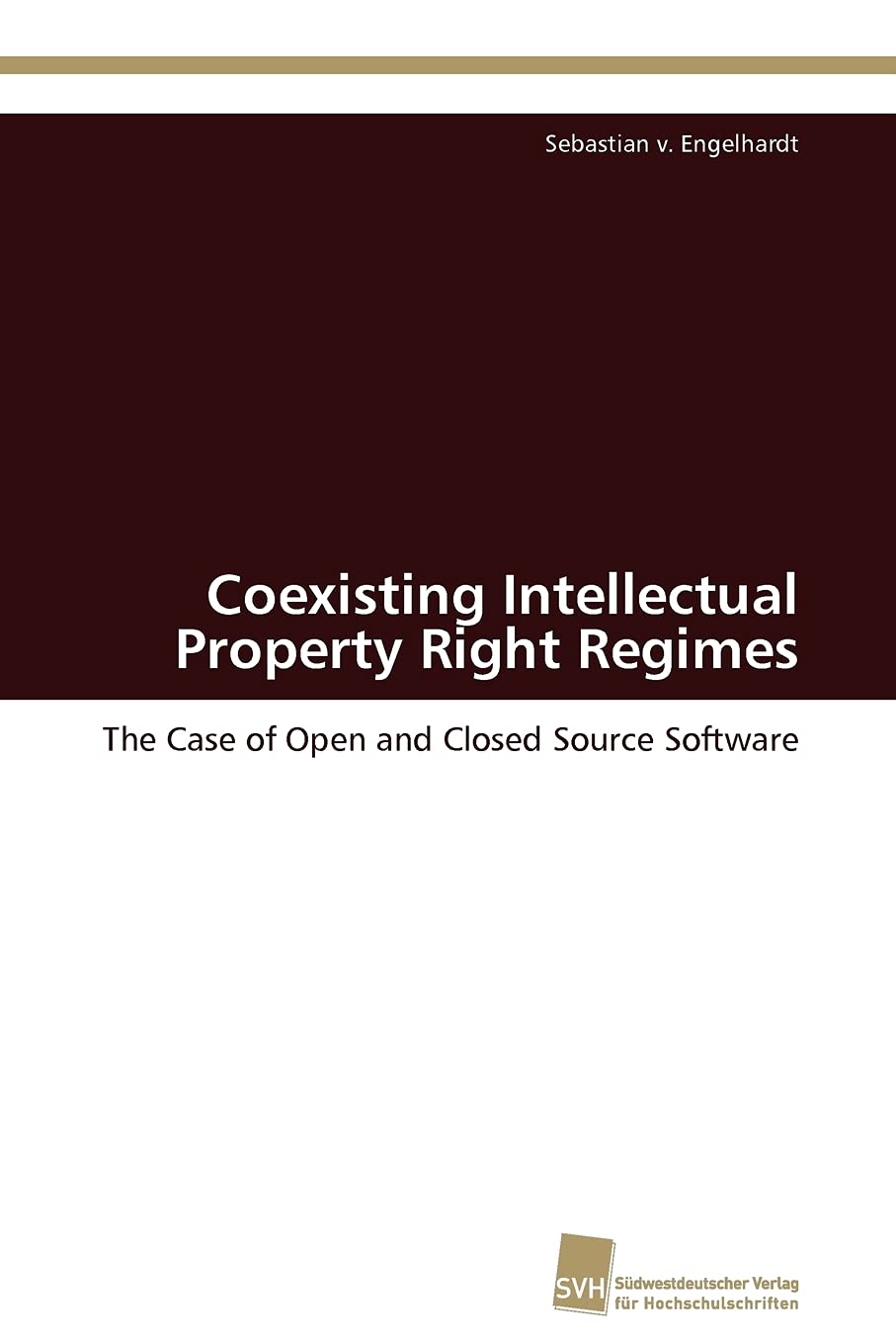
This book addresses a critical issue of the digital economy: how should intellectual property rights be defined? Is the "open source" method the promising new paradigm? Or do we better rely on traditional "closed source" principles? The answer is: we need both. Open source software (OSS) is marked by free access to the software and its source code, and is developed in a public, collaborative way. The success OSS has challenged the conventional wisdom of the role of intellectual property rights. However, this new paradigm has not completely replaced its counterpart closed source software (CSS). The study shows that both principles belong to the digital economy and that the coexistence is beneficial. It first analyzes the impact of institutional and cultural factors on the world wide allocation of OSS activities. The next part presents the rationale for both intellectual property right regimes, OSS and CSS. The third part analyzes the coexistence of firms with OSS and CSSbased business models, compares the market outcome with the welfareoptimal result and discuss possible government interventions. Finally the study analyzes the difference between OSS and CSSbased startups
⚠️ WARNING (California Proposition 65):
This product may contain chemicals known to the State of California to cause cancer,
birth defects, or other reproductive harm.
For MAP (Minimum Advertised Price) violations and Intellectual Property (IP) or Trademark concerns, please contact:
support@ergodebooks.com
⚠️ California Proposition 65 Warning: Some products sold on this website may expose you to chemicals known to the State of California to cause cancer, birth defects, or other reproductive harm. For more information, visit www.P65Warnings.ca.gov.