If you have any questions, you are always welcome to contact us. We'll get back to you as soon as possible, withing 24 hours on weekdays.
Customer service
All questions about your order, return and delivery must be sent to our customer service team by e-mail at yourstore@yourdomain.com
Sale & Press
If you are interested in selling our products, need more information about our brand or wish to make a collaboration, please contact us at press@yourdomain.com
Help
If you have any questions, you are always welcome to contact us. We'll get back to you as soon as possible, withing 24 hours on weekdays.
Customer service
All questions about your order, return and delivery must be sent to our customer service team by e-mail at yourstore@yourdomain.com
Sale & Press
If you are interested in selling our products, need more information about our brand or wish to make a collaboration, please contact us at press@yourdomain.com
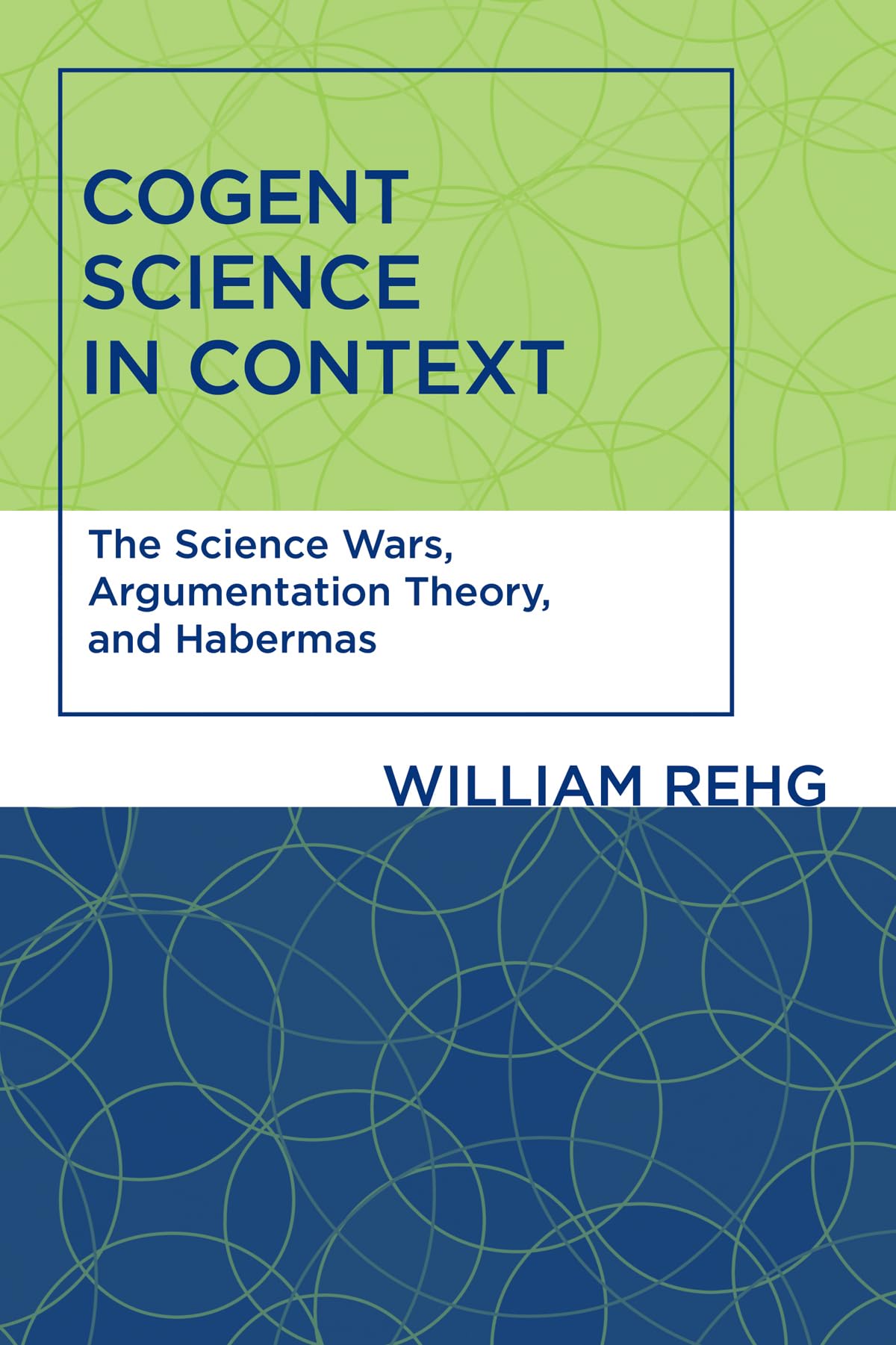
A proposal for an interdisciplinary, contextsensitive framework for assessing the strength of scientific arguments that melds Jrgen Habermas's discourse theory and sociological contextualism.Recent years have seen a series of intense, increasingly acrimonious debates over the status and legitimacy of the natural sciences. These "science wars" take place in the public arenawith current battles over evolution and global warmingand in academia, where assumptions about scientific objectivity have been called into question. Given these hostilities, what makes a scientific claim merit our consideration? In Cogent Science in Context, William Rehg examines what makes scientific arguments cogentthat is, strong and convincingand how we should assess that cogency. Drawing on the tools of argumentation theory, Rehg proposes a multidimensional, contextsensitive framework both for understanding the cogency of scientific arguments and for conducting cooperative interdisciplinary assessments of the cogency of actual scientific arguments. Rehg closely examines Jrgen Habermas's argumentation theory and its implications for understanding cogency, applying it to a case from highenergy physics. A series of problems, however, beset Habermas's approach. In response, Rehg outlines his own "critical contextualist" approach, which uses argumentationtheory categories in a new and more contextsensitive way inspired by ethnography of science.
⚠️ WARNING (California Proposition 65):
This product may contain chemicals known to the State of California to cause cancer,
birth defects, or other reproductive harm.
For MAP (Minimum Advertised Price) violations and Intellectual Property (IP) or Trademark concerns, please contact:
support@ergodebooks.com
⚠️ California Proposition 65 Warning: Some products sold on this website may expose you to chemicals known to the State of California to cause cancer, birth defects, or other reproductive harm. For more information, visit www.P65Warnings.ca.gov.