
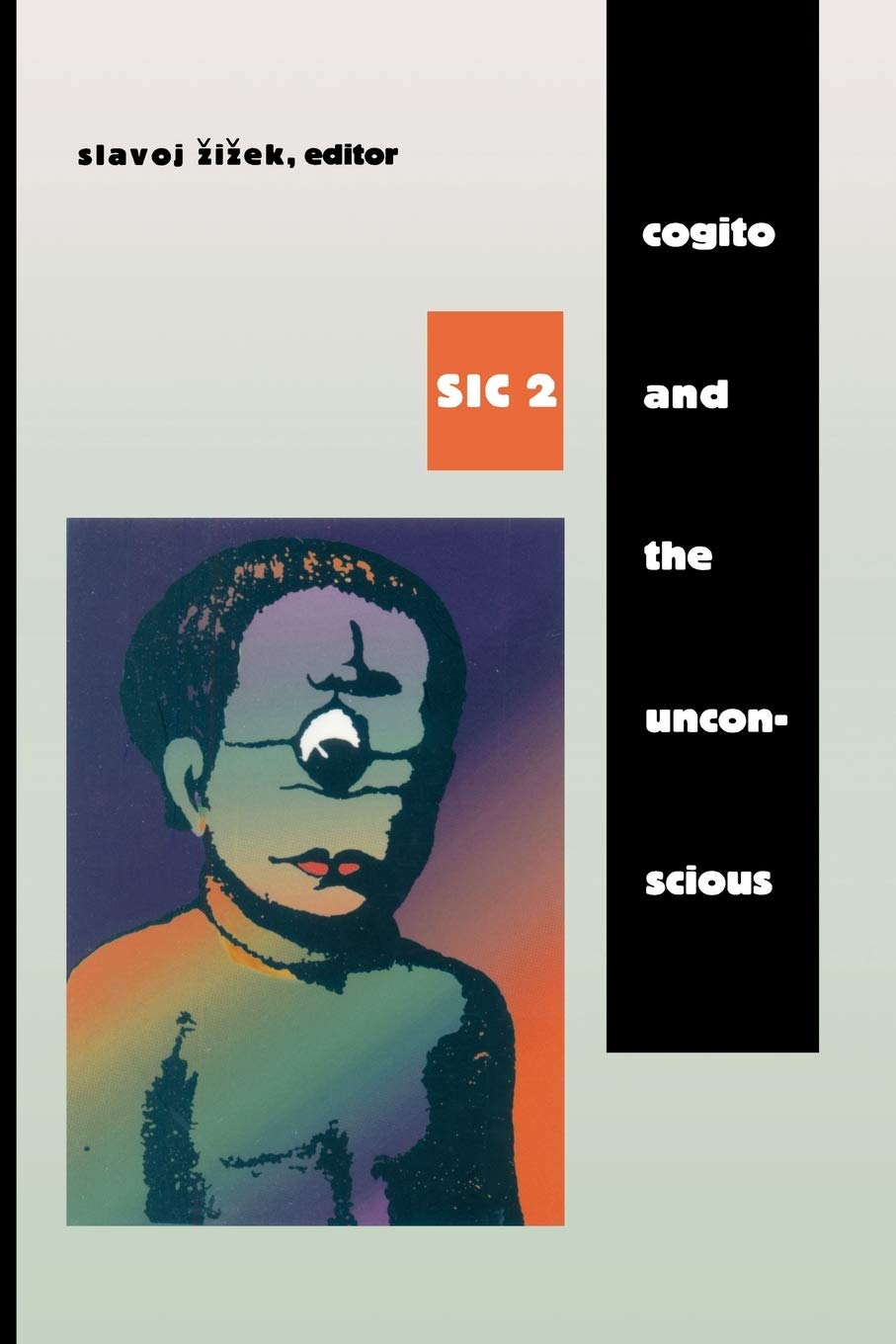
Title
Cogito And The Unconscious (Series: Sic 2)
Sold by Ergodebooks, an authorized reseller.
Returns accepted within 30 days | support@ergodebooks.com
Shipping Information
- Free Standard Shipping — United States only
- Processing Time: 3–5 business days
- Estimated Delivery: 6–10 business days after dispatch
- Double-boxed, fully insured & discreetly packaged
- Tracking number sent via email once dispatched
Returns & Refund
Returns accepted within 30 days of delivery.
Damaged or Defective Item
Free return shipping + replacement or full refund
Wrong Item Received
Free return shipping + replacement or full refund
Change of Mind
Return shipping at customer's expense · 25% restocking fee applies
Payment Option

The Cartesian Cogitothe Principle Articulated By Descartes That I Think, Therefore I AmIs Often Hailed As The Precursor Of Modern Science. At The Same Time, The Cogito'S Agent, The Ego, Is Sometimes Feared As The Agency Of Manipulative Domination Responsible For All Present Woes, From Patriarchal Oppression To Ecological Catastrophes. Without Psychoanalyzing Philosophy, Cogito And The Unconscious Explores The Vicissitudes Of The Cogito And Shows That Psychoanalyses Can Render Visible A Constitutive Madness Within Modern Philosophy, The Point At Which I Think, Therefore I Am Becomes Obsessional Neurosis Characterized By If I Stop Thinking, I Will Cease To Exist.Noting That For Lacan The Cartesian Construct Is The Same As The Freudian Subject Of The Unconscious, The Contributors Follow Lacan'S Plea For A Psychoanalytic Return To The Cogito. Along The Path Of This Return, They Examine The Ethical Attitude That Befits Modern Subjectivity, The Inherent Sexualization Of Modern Subjectivity, The Impasse In Which The Cartesian Project Becomes Involved Given The Enigmatic Status Of The Human Body, And The Cartesian Subject'S Confrontation With Its Modern Critics, Including Althusser, Bataille, And Dennett. In A Style That Has Become Familiar To Iek'S Readers, These Essays Bring Together A Strict Conceptual Analysis And An Approach To A Wide Range Of Cultural And Ideological Phenomenafrom The Sadist Paradoxes Of Kant'S Moral Philosophy To The Universe Of Ayn Rand'S Novels, From The Question Which, If Any, Is The Sex Of The Cogito? To The Defense Of The Cogito Against The Onslaught Of Cognitive Sciences.Challenging Us To Reconsider Fundamental Notions Of Human Consciousness And Modern Subjectivity, This Is A Book Whose Very Lacanian Orthodoxy Makes It Irreverently Transgressive Of Predominant Theoretical Paradigms. Cogito And The Unconscious Will Appeal To Readers Interested In Philosophy, Psychoanalysis, Cultural Studies, And Theories Of Ideology.Contributors. Miran Bozovic, Mladen Dolar, Alain Grosrichard, Marc De Kessel, Robert Pfaller, Renata Salecl, Slavoj Iek, Alenka Zupancic
⚠️ WARNING (California Proposition 65):
This product may contain chemicals known to the State of California to cause cancer, birth defects, or other reproductive harm.
For more information, please visit www.P65Warnings.ca.gov.
- Q: How many pages does the book 'Cogito and the Unconscious' have? A: The book contains two hundred eighty-eight pages. This length allows for an in-depth exploration of the themes presented.
- Q: What is the binding type of 'Cogito and the Unconscious'? A: The book is available in paperback binding. This makes it lightweight and easy to carry for readers.
- Q: What are the dimensions of 'Cogito and the Unconscious'? A: The book measures six inches in length, zero point seventy-two inches in width, and nine point twenty-five inches in height. These dimensions make it a standard size for a paperback.
- Q: Who is the author of 'Cogito and the Unconscious'? A: The author is Slavoj Žižek. He is a prominent philosopher known for his work in psychoanalysis and cultural criticism.
- Q: What is the genre of 'Cogito and the Unconscious'? A: This book falls under the genre of Psychoanalysis. It explores complex themes related to philosophy and psychology.
- Q: How do I read 'Cogito and the Unconscious' effectively? A: To read this book effectively, approach it with an understanding of philosophical concepts. Engaging with the essays will enhance comprehension of its themes.
- Q: Is 'Cogito and the Unconscious' suitable for beginners in philosophy? A: Yes, it can be suitable for beginners, but prior knowledge of basic philosophical concepts may enhance understanding. The essays are accessible yet intellectually engaging.
- Q: Can I use 'Cogito and the Unconscious' for academic purposes? A: Yes, this book can be used for academic purposes. It contains valuable insights and analyses that can support various philosophical discussions.
- Q: How should I store 'Cogito and the Unconscious' to keep it in good condition? A: Store the book in a cool, dry place away from direct sunlight. This will help maintain the quality of the pages and binding.
- Q: Is there a specific care instruction for 'Cogito and the Unconscious'? A: No specific care instructions are required, but it is advisable to handle the book gently. Avoid bending the spine excessively to preserve its condition.
- Q: What if 'Cogito and the Unconscious' arrives damaged? A: If the book arrives damaged, you can return it for a replacement or refund. Check the retailer's return policy for specific instructions.
- Q: Are there any warranty options for 'Cogito and the Unconscious'? A: No, books typically do not come with a warranty. However, retailers may offer return policies for damaged items.
- Q: How do I contact support if I have issues with 'Cogito and the Unconscious'? A: You can contact the retailer's customer support for assistance. They will guide you on resolving any issues related to your purchase.
- Q: What makes 'Cogito and the Unconscious' different from other philosophy books? A: The unique blend of psychoanalytic theory and philosophical critique sets it apart. It challenges traditional views on consciousness and subjectivity.
- Q: Is 'Cogito and the Unconscious' recommended for those interested in cultural studies? A: Yes, it is highly recommended for readers interested in cultural studies. The essays address various cultural and ideological phenomena.