If you have any questions, you are always welcome to contact us. We'll get back to you as soon as possible, withing 24 hours on weekdays.
Customer service
All questions about your order, return and delivery must be sent to our customer service team by e-mail at yourstore@yourdomain.com
Sale & Press
If you are interested in selling our products, need more information about our brand or wish to make a collaboration, please contact us at press@yourdomain.com
Help
If you have any questions, you are always welcome to contact us. We'll get back to you as soon as possible, withing 24 hours on weekdays.
Customer service
All questions about your order, return and delivery must be sent to our customer service team by e-mail at yourstore@yourdomain.com
Sale & Press
If you are interested in selling our products, need more information about our brand or wish to make a collaboration, please contact us at press@yourdomain.com
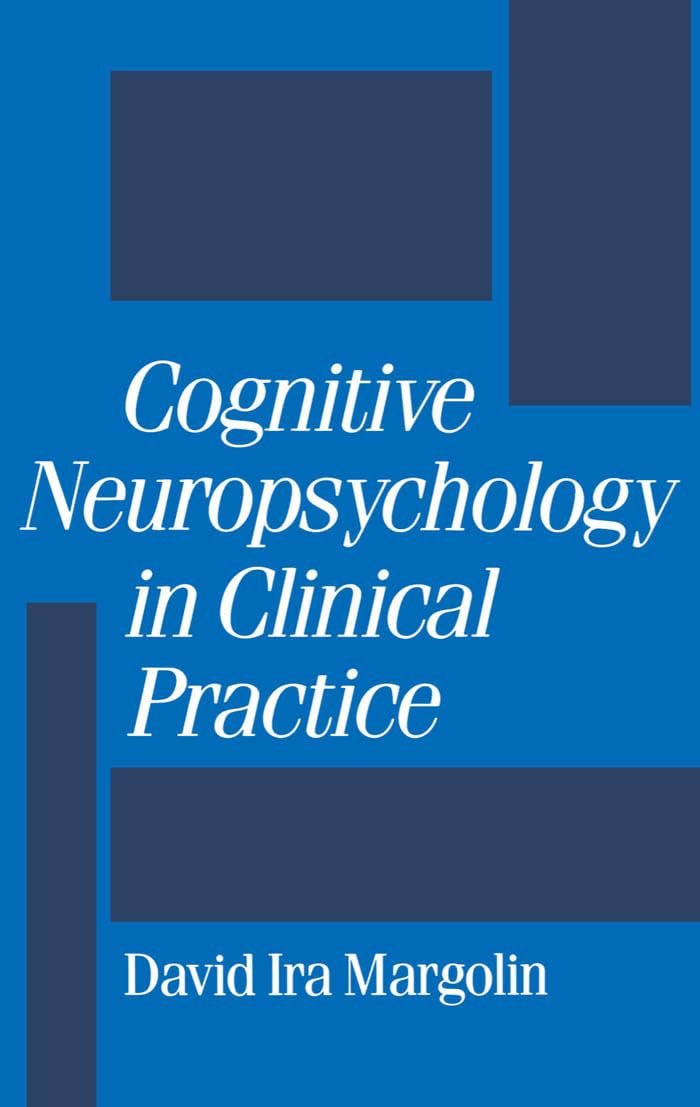
The goal of this book is to introduce cognitive neuropsychology to a broad audience of clinicians and researchers. To orient readers who are interested in disorders of higher cortical function, but have little background in psychology, sufficient introductory material is provided, and yet each topic is explored in enough depth to serve as a reference for cognitive psychologists and cognitive neuropsychologists. The editor, David Margolin, M.D., Ph.D., has assembled a prominent group of researchers and clinicians, and each describes how the vocabulary, theoretical framework, and informationprocessing models of cognitive psychology are applied to various disorders of higher cortical function. Each chapter provides an overview of the disorder being discussed, develops a rationale for selecting the stimulus materials, and demonstrates how a given patient's deficits can be understood in terms of a breakdown in one or more cognitive domains. The contributors gear the chapters toward the practicing clinicians and use a stepbystep description of how one goes about determining the locus of the deficit in a patient. This cognitive neuropsychological approach is applied to disorders of attention, memory, language, vision, calculation, and motor control. A final chapter introduces the important role of neuroimaging techniques in diagnosis, which will continue to aid our understanding of brainbehavior relationships. Professionals in the fields of neuropsychology, neurology, clinical psychology, psychiatry, as well as practicing speech therapists and pathologists, will find this volume a comprehensive introduction to this increasingly important discipline.
⚠️ WARNING (California Proposition 65):
This product may contain chemicals known to the State of California to cause cancer,
birth defects, or other reproductive harm.
For MAP (Minimum Advertised Price) violations and Intellectual Property (IP) or Trademark concerns, please contact:
support@ergodebooks.com
⚠️ California Proposition 65 Warning: Some products sold on this website may expose you to chemicals known to the State of California to cause cancer, birth defects, or other reproductive harm. For more information, visit www.P65Warnings.ca.gov.