
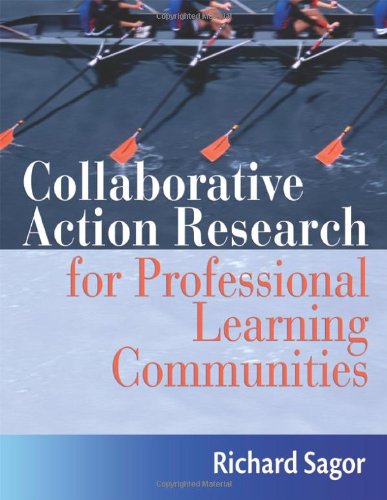
Title
Collaborative Action Research for Professional Learning Communities,Used
Sold by Ergodebooks, an authorized reseller.
Returns accepted within 30 days | support@ergodebooks.com
Shipping Information
- Free Standard Shipping — United States only
- Processing Time: 3–5 business days
- Estimated Delivery: 6–10 business days after dispatch
- Double-boxed, fully insured & discreetly packaged
- Tracking number sent via email once dispatched
Returns & Refund
Returns accepted within 30 days of delivery.
Damaged or Defective Item
Free return shipping + replacement or full refund
Wrong Item Received
Free return shipping + replacement or full refund
Change of Mind
Return shipping at customer's expense · 25% restocking fee applies
Payment Option

This book is designed to assist individual teachers, groups of teachers, and school leaders who work with professional learning community (PLC) teams to become disciplined and deliberative with data as they design and implement program improvements to enhance student learning. The evidence suggests that when constant, highquality collaborative inquiry becomes the norm in a PLC, not only do students prosper but the school culture becomes enriched and teachers enjoy greater professional satisfaction. In dysfunctional organizations, norms and habits of behavior work counter to goals. In contrast, a PLC has a tight functional culture. Its members are bound by a commitment to shared norms, values, and behaviors. One nurtures a functional culture by reinforcing those habitual behaviors or norms. This book discusses five habits of inquiry that contribute to successful professional learning and provides detailed steps for developing each of them. Habit of Inquiry 1: Clarifying a Shared Vision for Success. The essence of this habit is regular discussion, both formally and informally, of valued outcomes. Habit of Inquiry 2: Articulating Theories of Action. Research needs to be guided by a framework or theory. This habit of inquiry shows how to use group action planning to develop theories of action that can be displayed visually, in the form of graphics. Habit of Inquiry 3: Acting Purposefully While Collecting Data. This habit of inquiry involves using specific strategies and tools when collecting data for research that will uncover the story embedded in the data. . Habit of Inquiry 4: Analyzing Data Collaboratively. This habit of inquiry provides processes for analyzing data collectively. Habit of Inquiry 5: Informed Team Action Planning. Based upon the thoughtful collaborative work of analyzing the data, learning communities revise the original theory of action and share the results with the community.
⚠️ WARNING (California Proposition 65):
This product may contain chemicals known to the State of California to cause cancer, birth defects, or other reproductive harm.
For more information, please visit www.P65Warnings.ca.gov.
- Q: What is the page count of this book? A: This book has one hundred seventy-six pages. It provides ample content for understanding collaborative action research within professional learning communities.
- Q: What is the binding type of this book? A: This book is a paperback. This makes it lightweight and easy to handle while reading or carrying.
- Q: Who is the author of this book? A: The author of this book is Richard Sagor. He focuses on practical strategies for professional learning communities.
- Q: How can I apply the strategies in this book? A: You can apply the strategies by discussing shared visions and analyzing data collaboratively. The book provides detailed steps for effective implementation.
- Q: Is this book suitable for individual teachers? A: Yes, this book is suitable for individual teachers. It offers insights for both individual educators and groups working within professional learning communities.
- Q: Can school leaders benefit from this book? A: Yes, school leaders can benefit from this book. It guides leaders in fostering a disciplined culture focused on data-driven improvements.
- Q: How should I store this book? A: Store this book in a dry place away from direct sunlight. This will help preserve its physical condition and readability.
- Q: Can this book be used in professional development workshops? A: Yes, this book can be used in professional development workshops. It provides valuable frameworks and habits for effective collaborative inquiry.
- Q: What should I do if the book arrives damaged? A: If the book arrives damaged, contact the seller for a return or exchange. Most sellers have policies in place to address such issues.
- Q: Is this book appropriate for beginners in education? A: Yes, this book is appropriate for beginners in education. It breaks down complex concepts into manageable steps for all levels of experience.
- Q: How do I keep this book in good condition? A: Keep this book in a protective cover and avoid exposing it to moisture. This will help maintain its quality over time.
- Q: Are there any specific strategies discussed in the book? A: Yes, the book discusses five specific habits of inquiry. These include clarifying a shared vision and analyzing data collaboratively.
- Q: Is there a specific audience for this book? A: Yes, the primary audience includes educators and school leaders involved in professional learning communities. It's designed to enhance data-driven decision-making.
- Q: What if I need help understanding the concepts? A: If you need help, consider joining a study group or professional learning community. Engaging with others can enhance understanding of the concepts.
- Q: Does this book include practical examples? A: Yes, this book includes practical examples and steps for implementing strategies. It aims to provide real-world applications of the concepts discussed.